Clinical Innovations to be acquired by LABORIE Medical Technologies

SALT LAKE CITY–(BUSINESS WIRE)– Clinical Innovations, one of the largest medical device companies dedicated to labor and delivery and neonatal intensive care, has signed a definitive agreement to be acquired by LABORIE Medical Technologies for an enterprise value of $525M. The deal will support and strengthen Clinical Innovations’ long-standing commitments to helping mothers and babies, product innovation and serving diverse markets around the world.
Unknown

LABORIE is a leading global developer and manufacturer of medical diagnostics and devices in the pelvic health and gastroenterology market. LABORIE is owned by Patricia Industries, a part of Investor AB. Patricia Industries makes control investments in best-in-class companies with strong market positions, brands and corporate cultures within industries positioned for secular growth.

“This is a promising deal that will add scale to the overall business,” said Ken Reali, president and CEO of Clinical Innovations. “We share a similar vision for the continued growth of Clinical Innovations. The combination of Clinical Innovations and LABORIE will have a positive impact for mothers, babies and healthcare professionals.”

Clinical Innovations’ market-leading products are used in more than 90 countries to help millions of mothers and babies every year. Its devices include the Kiwi® Vacuum-Assisted Delivery System, babyLance™ Safety heel stick, ROM Plus® Rupture of Membranes Test, ClearView® Uterine Manipulator, Koala® Intrauterine Pressure Catheter and ebb® Complete Tamponade System. Clinical Innovations added SweetUms sucrose solution and the BoogieBaby oral and nasal suction device to its growing NICU product lineup earlier in December.

“Acquiring Clinical Innovations marks an important step in the evolution of our business and our continued investment in market-leading technologies for high-growth medical specialties that deliver clinical, access and economic advantages,” said Michael Frazzette, president and CEO of LABORIE Medical Technologies. “Clinical Innovations, which will form a stand-alone global business unit, immediately provides LABORIE with a strong global presence in the L&D and NICU specialties. The company’s diversified, differentiated product portfolio truly makes a difference for clinicians and their patients.”

Established in 1993, Clinical Innovations has quickly grown its global footprint in recent years, expanding to new territories while also building a direct commercial organization in more developed markets such as the United States, Western Europe, Australia and China. The company has 250 employees.

LABORIE has agreed to acquire Clinical Innovations from funds managed by EQT.

“Clinical Innovations and the global network of clinicians who rely on its devices every day are crucial contributors to the health of mothers and babies,” said Brendan Scollans, partner at EQT Partners and Investment Advisor to EQT Mid Market US. “We have been proud to support the development and growth of the company in partnership with the management team and look forward to following its continued success.”

The deal is expected to close in early 2020.

About Clinical Innovations

Founded in 1993, Clinical Innovations is one of the largest medical device companies exclusively focused on labor and delivery and neonatal intensive care. The company is a market-leader in several categories with products such as the Kiwi® Vacuum-Assisted Delivery System, SweetUms sucrose solution, BoogieBaby oral and nasal suction device, Koala® Intrauterine Pressure Catheter, ROM Plus® Rupture of Membranes Test, traxi® Panniculus Retractor, ClearView® Uterine Manipulator and the babyLance™ Safety heel stick. Clinical Innovations is expanding its global presence while directly researching and developing state-of-the-art technologies and innovative medical devices that fulfill its mission of improving the lives of mothers and their babies throughout the world. For more information, visit clinicalinnovations.com.

AI-based heart failure screening from Eko, Mayo Clinic earns FDA breakthrough nod

Dive Brief:

  • Digital health company Eko said Wednesday it received FDA’s breakthrough device designation for priority review of the company’s algorithm to detect heart failure with a specialized stethoscope during a routine physical exam.
  • The algorithm helps identify reduced left ventricular ejection fraction, an indication of a weakened heart that is a measure for heart failure, using 15 seconds of echocardiogram data collected by the company’s Eko Duo digital stethoscope.
  • The low ejection fraction screening algorithm uses a neural network developed in collaboration with Mayo Clinic. Research on the algorithm was published in the journal Nature Medicine in January and presented at the American Heart Association’s (AHA) annual meeting in November.cf7a10c85f91ef41980784a6be26cea0

    Dive Insight:

    About 5.7 million U.S. adults are living with heart failure, and about half of those who develop the condition die within five years of diagnosis, according to statistics from the Centers for Disease Control and Prevention. The AHA predicts more than 8 million people will have the condition by 2030. 

    However, echocardiogram imaging tests typically are not conducted during a physical exam, and heart failure is often diagnosed late. Eko and the Mayo Clinic are backing the idea of giving physicians an inexpensive, noninvasive tool to detect heart disease earlier, before it develops into a more serious illness.

    “In effect, by imbedding the technology in a commonly used clinical tool – the stethoscope – all caregivers carry some of the diagnostic prowess of an expert cardiologist with them,” Paul Friedman, chair of the Department of Cardiovascular Medicine at the Mayo Clinic, said in a statement from Eko. Friedman and the Mayo Clinic have a financial interest in the technology.

    In results presented at the AHA meeting last month, a test of 100 patients showed the AI algorithm combined with the Duo stethoscope was able to detect ejection fraction below 35% with an area under the curve of 0.90.

    The research is comparable to the findings previously published in Nature Medicine, the company said. For that test, researchers paired 12-lead ECG and echocardiogram data, including the left ventricular ejection fraction, from 44,959 patients at the Mayo Clinic, to train a neural network to identify patients with ventricular dysfunction, defined as ejection fraction at or below 35%.

    When tested on an independent set of 52,870 patients, the network model showed sensitivity, specificity, and accuracy of 86.3%, 85.7%, and 85.7%, respectively. In patients without ventricular dysfunction, those with a positive AI screen were at four times the risk of developing future ventricular dysfunction compared with those with a negative screen, the researchers said.

    FDA breakthrough device status can accelerate the regulatory review of a device and is awarded to novel innovations that demonstrate the potential to address unmet medical needs for life-threatening or irreversibly debilitating diseases.

Tandem wins FDA go-ahead for 1st interoperable, automated insulin dosing software

Dive Brief:

  • FDA on Friday authorized the third and final type of diabetes management technology necessary for a fully interoperable, automated insulin dosing system.
  • The De Novo clearance went to Tandem Diabetes’ Control-IQ glycemic control algorithm, which is designed to in part use blood sugar readings from an integrated continuous glucose monitor to properly adjust insulin delivery from a similarly interoperable pump. The company touts the dosing software as the first to deliver automatic correction boluses of insulin if blood glucose levels are predicted to exceed a predefined threshold.
  • It’s the latest move by FDA to encourage more choice in the management of diabetes via a new premarket review structure that considers the pieces of an automated insulin dosing system separately, rather than under a single umbrella manufacturer.ee54f42a8cafe3720cea8b37de795d3f

    Dive Insight:

    Until now, the only hybrid closed loop, or artificial pancreas, system authorized by FDA has been Medtronic’s 670G, an entirely Medtronic product granted premarket approval in September 2016.

    But gradually, the agency has cleared individual pieces of an automated insulin dosing system that could be paired with similarly interoperable devices from other manufacturers. Each of those pieces was reviewed through the De Novo path, allowing future interoperable devices for diabetes management to be cleared via the 510(k) process.

    Dexcom won De Novo clearance in March 2018 for its G6 device, establishing the integrated continuous glucose monitor (iCGM) category. In February, Tandem became the first manufacturer with an FDA-designated interoperable insulin pump, creating the alternate controller enabled (ACE) pump classification. And Friday, FDA rounded out the new regulatory paradigm with the authorization of Tandem’s Control-IQ as the first interoperable automated glycemic controller.

    An iCGM, ACE pump, and interoperable automated glycemic controller, when combined, are what FDA considers a complete automated insulin dosing system.

    The technology is backed by an NIH-supported study published in The New England Journal of Medicine that found people using the Control-IQ system experienced 71% time in range per day on average, compared to 59% in a control group not on closed-loop therapy. Diabetes nonprofit JDRF helped fund clinical testing of Control-IQ, and president Aaron Kowalski in a statement Friday called the FDA nod “a huge win” for people with Type 1 diabetes and ” yet another reason why health plans should cover all FDA authorized diabetes management tools.”

    Other companies have already looked to take advantage of the new paradigm. Insulet received ACE pump designation for its Omnipod Dash insulin pump in September. Abbott is seeking iCGM designation for its FreeStyle Libre 2 device, still under review by FDA. Tandem and Abbott announced in October they plan to develop and commercialize integrated glucose sensing and insulin delivery technologies, but offered few details on the intended products or timelines from such a partnership.

    Tandem said it will begin shipping new pumps functioning with Control-IQ by the end of January, and all in-warranty current pump users will be able to upgrade to the technology during that time as well. The algorithm is currently allowed for use in people 14 years and older.

    Tandem will also continue to support its existing Basal-IQ software. Whereas the existing technology is designed to prevent low glucose, Control-IQ is made to predict blood sugar levels half an hour in advance and increase, decrease or suspend insulin dosing accordingly. The algorithm can also deliver correction boluses if blood sugar levels are expected to exceed a certain threshold. Tandem also built in optional settings for sleep and exercise “that will change the treatment values to better match the different physiologic needs during these activities,” the company said.

    Analysts at Cowen called Control-IQ “amongst the most anticipated pump product launches ever.” During its third quarter earnings call, Tandem executives attributed a slight pause in U.S. pump purchases to patients wanting to wait for the launch of Control-IQ to switch to a Tandem pump. Shares in Tandem rose more than 5% following the news.

George Clinical and Guangdong Provincial People’s Hospital to Collaborate in Clinical Research

BEIJING, December 19, 2019 – George Clinical, a global scientifically-backed clinical research organization (CRO), and Guangdong Provincial People’s Hospital (GDPH) have executed a memorandum of understanding (MoU) laying out broad collaboration in the area of clinical research in China.  The memorandum outlines several areas the two organizations will pursue including: training and education in clinical trial services, scientific networking and involvement in trial-related activities, provision of medical monitoring, in depth feasibility services and investigator networks

0

“We have been pleased with the progress of our existing clinical trials with the hospital and we are looking forward to the strengthening of our collaboration for the betterment of clinical research across the entire region,” said James Cheong, COO of George Clinical.  “This relationship will be a key part of our expanding presence in China.”

The collaboration will address several key areas of clinical trial research operations. George Clinical will arrange for training of GDPH personnel including investigators, study coordinators, and those relatively new to global clinical trials to build expertise in Good Clinical Practices (GCP) in areas such as basic GCP training, workshops, and inspection preparation.  Consultation in setting up a clinical trials unit at GDPH will seek to bring world-class competency using the collaboration methodologies established in previous trial work.

GDPH will become a hub for investigator networks in China as well as George Clinical trials in China and the Asia-Pacific region.   The hospital will be included in the feasibility of new studies in selected therapeutic areas such as nephrology, oncology and cardiovascular diseases. The partnership will benefit from the recommendations of key opinion leaders from GDPH for trial related activities such as data safety monitoring boards (DSMB), steering committees, and more.

The memorandum also notes the referral of clinicians at GDPH and their networks for the provision of medical monitoring services in China under the standard operating procedures of George Clinical.  This will also comprise the referral of GDPH staff for the provision of bio-statistical and data management services under the training and oversight of George Clinical.

“At the beginning of 2019, the CPC Central Committee and the State Council issued the Development Planning Outline of the Greater Bay Area which identified academic cooperation and scientific research as the bridge to in-depth cooperation for Guangdong, Hong Kong and Macau in the field of medical health. It is hoped with our bilateral cooperation as a starting point, we can focus on the development goal of the regional integration in the Greater Bay Area, promote in-depth cooperation in the medical and health field, establish a platform for communication and cooperation and build a medical cooperative brand with international influence that can be held up as a model,” stated Xueqing Yu, President of the Guangdong Provincial People’s Hospital.   

In its drive to develop itself as a premium hospital and a national cardiovascular regional medical center, Guangdong Provincial People’s Hospital will focus on three areas developing a staff platform and projects in the key areas of “strengthening the heart, strengthening the lungs, strengthening the kidneys, respecting the elderly, and the achievement of tranquillity.” The hospital will strive to bring in medical talent with international cutting-edge expertise as well as strong international cooperation with the goal of building a professional team that will scale to the apex of medicine and science.

Takeda Strikes Potential $1 Billion Oncology Deal with Turnstone

One day after Takeda and Cerevance teamed up to tackle diseases of the gastrointestinal tract, the company forged a collaboration worth up to $1 billion with Turnstone Biologics to tackle a number of cancer indications using that company’s vaccinia virus platform.

ed5e67d5-e551-4758-acdb-bcb2393886b6

The two companies will pair up to advance Turnstone’s lead program, RIVAL-01 in multiple cancer studies and will also work together to identify additional novel product candidates based on Turnstone’s vaccinia virus platform for future independent development.

Under terms of the agreement, Takeda will provide Turnstone with $120 million in an upfront payment, as well as near-term milestones and future equity investment. Takeda gains an exclusive worldwide license to co-develop and co-commercialize RIVAL-01 with Turnstone. Global costs and profit-sharing will be on a 50:50 basis, the companies said. Takeda will also have the right to license select candidates that result from the other studies based on the vaccinia virus platform. If everything hits, Turnstone will be eligible to receive an additional $900 million in potential development, regulatory and commercial milestones across all programs, and receive royalty payments on net sales of each licensed product.

Takeda’s Chris Arendt, head of the company’s oncology drug discovery unit, said the Turnstone platform provides the potential to harness the power of the immune system in unique ways in order to address some of the most difficult-to-treat cancers.

Turnstone’s proprietary vaccinia virus platform has been engineered for enhanced immune-stimulation and tumor cell selectivity, potent oncolysis, and large transgene carrying capacity, according to the company. Lead asset RIVAL-01 consists of the vaccinia virus backbone encoding transgenes for Flt3 ligand, anti-CTLA-4 antibody, and IL-12 cytokine. The transgenes are designed to be expressed when the vaccinia virus enters and replicates in cancer cells throughout the body. The resulting local production of these therapeutics at the site of tumors add to the inherent oncolytic and microenvironment-modifying properties of the virus, to form a powerful multi-modal attack on the disease, the company said.

Turnstone R&D chief Mike Burges said the company’s platform is “is exquisitely engineered to enhance virus-mediated cancer cell killing and better harness the power of the immune system against tumors.” With RIVAL-01, Burgess said the aims it to deliver “three powerful immune-modulating agents to primary and metastatic tumor sites and limit their expression to the local tumor environment, reducing the potential for systemic toxicity.” The therapy has the potential to drive immune activity in the tumor that is not otherwise achievable, Burgess added in a statement.

Sammy Farah, president and chief executive officer of New York-based Turnstone, said the collaboration with Takeda will combine the company’s “exciting viral immunotherapy platform” with Takeda’s immuno-oncology research development expertise. The potential medications that can come from this collaboration will have the potential to address critical gaps in the treatment of cancer that exist today, Farah said.

“Importantly, this partnership allows us to co-develop and co-commercialize RIVAL-01 together with Takeda, enabling us to broaden our internal capabilities and expand our viral immunotherapy pipeline, while retaining our ability to independently develop other candidates based on this technology,” Farah said in a statement.

How Regeneron, DNAnexus Sequenced Half A Million UK Biobank Samples

In 2006, the UK Biobank (UKB)—a national and internationally-available long-term biobank funded by the Wellcome Trust and the UK Medical Research Council (MRC)—began an ambitious project in which they recruited 500,000 people between the ages of 40-69 to create a database that would be readily available to researchers in order to improve the prevention, diagnosis, and treatment of a wide range of diseases.

During the recruitment process the UKB collected a wide range of data, from blood pressure measurements to blood and urine samples. The result of such a large-scale collection is 500,000 samples with over 800,000 data files and more than 10 million variants.

Along with the initial collection of data, UKB’s principal investigator Rory Collins tells Clinical Research News the coordinating team has kept in close contact with consented participants.

“We’ve been sending out web questionnaires for them to complete, initially to get more information about their exposures, such as their diet, lifetime occupational history, which it wasn’t possible to get during their initial assessment due to time pressures,” Collins says. “But increasingly, we’re using this approach to follow aspects of their health beyond what we would get from their medical records – information that may be under-diagnosed and under-recorded in traditional health records, such as cognitive function, mood and depression, and quality of life.”

These data add a broader range of information about the participants’ health, something Collins says will increase biobank’s value for researchers.

The intended aim of the UKB was to provide rich, raw data for researchers who would then analyze the data, and enrich it, with derived data that they generate feedback into the resource for others to use.Cheadle-495

“Any researcher can come along and say, ‘We’d like to have access to data for this specific health-related research.’ We review that request, and the researcher then gains access to the data for their stated research purpose,” says Collins.

As the amount of data has grown, however, the UKB realized they needed a different approach to how researchers access their data.

“[We] want to build a data analysis platform where these samples will reside,” says Collins. “Whereas up ‘til now we have been sending the samples to researchers for analysis, this will become increasingly more difficult due to the sheer scale of the biobank… [With our platform], researchers can go to the data rather than the data going to them.”

This will be a major step in democratizing access to the data, Collins says, “especially for researchers who don’t have a big IT capacity to store and analyze the data that we currently send to researchers.”

In the meantime, research groups (including those in companies) with substantial IT firepower are at an advantage in using the biobank.

“We are also now seeing researchers come along and say, ‘It would be great if we could do assays of the samples to turn the samples into data, which can then be used by other researchers’,” Collins says.

Enter: Regeneron, who wanted to undertake the exome sequencing and analysis of all 500,000 samples.

A “Win-Win” Scenario

Regeneron approached UKB and set up an agreement to sequence samples while creating a consortium of several major pharma companies, who all agreed to collaborate and help finance the sequencing.

Sequencing began initially with 100,000 samples, which proved daunting for Regeneron and—more specifically—their consortium partners, as many members were unable to process the 265 terabyte (TB) dataset that resulted from the sequencing.

Regeneron reached out to DNAnexus for assistance in providing a comprehensive delivery experience by combining scalable cloud tooling with a visual data integration solution, Richard Daly, CEO of California-based enterprise omics technology company DNAnexus, tells Clinical Research News. Fortunately, DNAnexus already had the necessary tools with its Apollo Platform, enabling researchers globally to perform at-scale clinico-genomic data science exploration, analysis, and discovery.

“[Apollo] was designed to alleviate the concerns that [the consortium had],” George Asimenos, DNAnexus’ CTO, tells Clinical Research News. “Not only the data but the metadata as well is presented   in an  easy to use  experience enabling visual exploration and data analytics.”

DNAnexus designed a modified version of Apollo for Regeneron’s project, adding a cohort browser that was designed to democratize data access, giving diverse teams the ability to browse through 3,000 phenotypic fields and 15,000,000 genomic variants across the 100,000 samples.

Over 10,000 registered researchers are using the UKB on more than 1,000 research projects. Collins hopes the data analysis platform, which is expected to be in place during 2020, will make the resource even more widely available to researchers from around the world, increasing the rate of discovery.

DNAnexus has continued to build out both their tech and partnerships, picking up a European Innovations Award, as well as a $20 million contract from the US Food and Drug Administration (FDA) to power their cloud-based collaborative omics environment, precisionFDA.

Asimenos says they’re still working closely with Regeneron as well, who have set the goal of completing whole exome sequencing of all 500,000 UKB by the end of this year. Such an “aggressive” timeline is a testament to the collaboration Regeneron’s been able to cultivate, according to Asimenos, as well as being an indication of how far the technology has come.

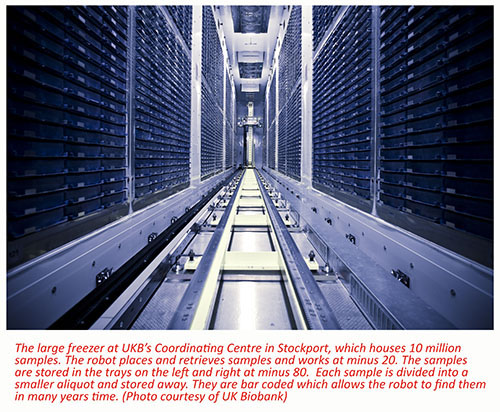
“The thought of anyone saying, ‘I’m going to sequence half a million exomes’ in that short amount of time is incredible,” Asimenos says. “It’s an incredible feat in the sense that [Regeneron has] managed to set the infrastructure all the way from robotics that automatically handle preparing the samples, down to the automation that DNAnexus provides for uploading to the cloud and generating the results.”

“It’s become an industry-wide project,” Daly says. “We’re privileged to play a role in that.”

Astellas and Seattle Genetics Win Accelerated Approval for Bladder Cancer Drug

Astellas Pharma and Seattle Genetics received an early present from the U.S. Food and Drug Administration (FDA)accelerated approval for Padcev, a first-of-its-kind treatment for adult patients with metastatic urothelial bladder cancer.

Late Wednesday, the FDA granted the two companies approval for the drug. Specifically, the approval is for adult patients who have previously received a PD-1/L1 inhibitor and a platinum-containing chemotherapy before (neoadjuvant) or after (adjuvant) surgery or in a locally advanced or metastatic setting. Padcev (enfortumab vedotin-ejfv) was approved under the FDA’s Accelerated Approval Program based on tumor response rate. The FDA’s Accelerated Approval Program allows approval of a medicine based on a surrogate endpoint if the medicine fills an unmet medical need for a serious condition. A global, randomized Phase III confirmatory clinical trial (EV-301) is underway and is also intended to support global registrations, the companies said.

Padcev is a first-in-class antibody-drug conjugate (ADC) that is directed against Nectin-4, a protein located on the surface of cells and highly expressed in bladder cancers. Accelerated approval was granted after the companies released data from a pivotal Phase II trial in June that showed Padcev rapidly shrank tumors in most patients. Patients treated with Padcev in the EV-201 study demonstrated a 44% objective response rate, with the median duration of tumor response at 7.6 months. Complete responses were observed in 12% of patients. Median overall survival (OS) was 11.7 months and the median progression-free survival was 5.8 months. Most responses occurred within the first cycle of treatment, and were observed across all pre-specified patient subgroups irrespective of lines of therapy, response to prior PD-1/L1 inhibitor, or presence of liver metastases, the companies said at the time of the announcement.

Astellas and Seattle Genetics noted that about 80 percent of people with this kind of cancer do not respond to treatment with checkpoint inhibitors and are desperately in need of additional treatment options.5a25c778-6bdd-4f12-9c32-cc126ca168b2

Approximately 80,000 people in the U.S. will be diagnosed with bladder cancer this year. Urothelial cancer accounts for 90 percent of all bladder cancers and can also be found in the renal pelvis, ureter and urethra. Metastatic urothelial cancer is an aggressive and devastating disease with limited treatment options.

Roger Dansey, chief medical officer at Washington-based Seattle Genetics, said Padcev is the first antibody-drug conjugate approved for patients facing the aggressive cancer. The medication is the culmination of years of innovative work on this technology, he said.

“This approval underscores our commitment to develop novel medicines that address unmet patient needs, and we’re grateful to the patients and physicians whose participation led to this outcome,” Andrew Krivoshik, Oncology Therapeutic Area Head at Astellas, said in a statement.

Andrea Maddox-Smith, chief executive officer of the Bladder Cancer Advocacy Network, called the approval of Padcev welcome news. While there have been new medications for bladder cancer approved over the past several years, Maddox-Smith said, “most people living with advanced stages of this disease face a difficult journey with few treatment options.” One of those newly-approved drugs for bladder cancer is Janssen’s Balversa, which won FDA approval in April. Balversa, a once-daily, oral fibroblast growth factor receptor (FGFR) kinase inhibitor, was approved for the treatment of adults with locally advanced or metastatic urothelial carcinoma (mUC) which has susceptible fibroblast growth factor receptor (FGFR)3 or FGFR2 genetic alterations and who have progressed during or following at least one line of prior platinum-containing chemotherapy.

Will Wearable Device Become First-line Treatment For Migraines?

Israeli biomedical technology company Theranica is intent on making its new-to-market remote electrical neuromodulation wearable device a first-line treatment for migraines of every type. As of early December, early adopters of Nerivio included 2,176 patients at nearly 150 headache clinics around the US, increasing at the rate of about 100 users daily, according to Alon Ironi, co-founder and CEO of Theranica.

Unknown

The US Food and Drug Administration (FDA) authorized Nerivio for marketing in May for the acute treatment of migraines in adults who do not have chronic migraine. In October, Theranica launched a pilot with the headache clinics as a proving ground for the software-controlled device, says Ironi.

Specialized headache clinics are run by leading migraine experts and generally the highest-level resort for patients unable to find pain relief elsewhere, he points out. “If we can convince them of the efficacy and safety of the device then the rest of the journey will be easier.”

Theranica’s mission directly and deliberately challenges the Western medicine norm of treating maladies with either a drug or surgery, says Ironi. “Theranica is trying to demonstrate that this is not the only way to treat certain diseases. Drugs are extremely potent… but not necessarily the best solution for pain, especially idiopathic pain.”

Based on the clinical data collected from Nerivio to date, including a study published in The Journal of Headache and Pain in July, the device is comparably effective to commonly prescribed migraine medications but with fewer side effects, says Ironi. The price is also attractive at $8.25 per migraine, on par with generic drugs and far below other treatment regimens that can run upwards of $75 per dose.

During the limited market launch, Theranica will be using feedback from pilot participants to improve patient education materials and refine the software-controlled device itself, Ironi says.

Nerivio runs off an app on a smartphone, which controls the electrical current that gets painlessly delivered through battery-powered electrodes attached to a patient’s arm—as has been demonstrated on most of the 269 physicians now prescribing it to their patients, Ironi says. “Stimulation is very well perceived, but not painful. A lot of patients would describe it as a comfortable, tingling sensation.”

Patients don’t need to be glued to their phone during the 45-minute treatment, he adds. At the completion of treatment, the device shuts down automatically, “even if you drop your phone into the ocean.”

After 12 uses of Nerivio, users pick up a new device and can mail the old one for recycling to the California Electronic Asset Recovery (CEAR), Ironi says.

Getting the device into clinical use was no small feat, Ironi notes. Market approval of Nerivio required meeting the same clinical efficacy and safety standards as prescription medications, in addition to all the regulatory expectations of medical devices and healthcare software.

Whether to pursue payer reimbursement remains an open question. Many patients and physicians have discouraged Theranica from jumping through the hoops with payers, since Nerivio is affordably priced at $99 for 12 treatments, says Ironi. Payers, meanwhile, have been encouraging Theranica to raise the price closer to $400 or $500 and give them a share of the profits via rebates.

How It Works

Nerivio induces conditioned pain modulation, based on the well-described “pain-inhibits-pain” phenomena discovered in the late 1970s in experiments with mice, says Ironi. It wasn’t until around 2003 that different groups of researchers in the US, Israel and Italy started to investigate the mechanism of action in humans. Nerivio is the first instance of the concept being applied in a therapeutic device, he adds.

Treatments activate the descending mechanism of pain processing rather than inhibiting ascending pain signal transmission, as is done with transcutaneous electrical nerve stimulation (TENS) units, says Ironi. The stimulation provided by Nerivio is “designed to travel to specific locations in the brain stem to trigger this endogenous pain mechanism and… release neurotransmitters throughout the entire body to shut down certain types of pain, and migraine happens to be one of them.”

Although the pain mechanism he describes is native to the human body, it is dysfunctional in migraine patients. Like a perfectly good car that won’t start, they need “another car and a set of jumper cables,” says Ironi, making the analogy with Nerivio.

Unfortunately, migraine is a chronic disease even in patients that experience symptoms episodically, Ironi continues. In the absence of a cure, the quest is to end the pain one migraine attack at a time. Even preventive remedies, such as Botox injections and more recently calcitonin gene-related peptide (CGRP), can at best reduce the frequency of migraines.

A Nerivio prescription typically provides access to between 12 and 24 device refills and, when refills are about to be exhausted, patients are alerted by the smartphone app, Ironi says. Prescription fulfillment, dispensing, and home delivery is currently provided by Quick Care Pharmacy, based in Rancho Cucamonga, California.

Generating Evidence

With Nerivio, the goal is to treat migraine pain at the onset of an attack. In a May 2019 study published in Headache, it was found to achieve pain relief at two hours in 66.7% of patients—comparable to the “very best medications on the market” although not in a head-to-head contest, Ironi says.

The device is currently approved for use in adult patients experiencing migraines with or without aura, and its utility in treating chronic migraines (at least 15 days of migraines a month) is now under study, says Ironi.

Guidelines of the International Headache Society recommend exploring the benefits of new acute treatments in individuals with chronic migraine only after completion of initial efficacy trials with episodic sufferers, he notes. To that end, Theranica recently started a clinical study with about a dozen US-based hospitals specifically targeting chronic migraine patients. Results are expected to be presented in May 2020.

Another study also just started at another 13 clinics around the US to test the efficacy and safety of Nerivio for the treatment of acute migraines in adolescents aged 12 to 18 years old. This is an even bigger area of unmet need, Ironi says, because physicians are much more reluctant to prescribe drugs to adolescents and their parents also have reservations. The indications for use of most migraine drugs are limited to adults.

The study with adolescents is scheduled to end next summer and the data will be submitted to the FDA, says Ironi. Other clinical studies will follow near the end of 2020 and won’t necessarily focus on migraine but several other indications, including post-traumatic headache.

Widescale Availability

Based on early positive feedback and results from the headache clinics, the pilot has been shortened from an initially planned six months to four, says Ironi. The next step is to provide telemedicine access to Nerivio, details of which will be publicly shared at the end of January.

Nerivio has already been gifted with some free publicity by being named one of TIME’s best inventions of 2019, Ironi points out. Calls and emails have been flooding in from physicians and patients seeking access to the device.

Partnerships with a pair of telemedicine companies on the east and west coasts of the US will effectively broaden device availability to migraine patients nationwide, he says. Patients will be able to click a link to be redirected to one of the telemedicine platforms where they can fill out a questionnaire and have an affiliated physician decide if they are an appropriate candidate for Nerivio.

Starting next year, additional specialty pharmacies may be needed to process prescriptions from brick-and-mortar clinics, says Ironi. A soon-to-be-named medical device distributor will also expand product access to urgent care centers, emergency rooms and hospitals.

The market potential is enormous. In the US alone, $3 billion is spent annually on migraine medications, roughly 60% specific to drugs for acute treatment, says Ironi. “After speaking to hundreds of physicians in the American Headache Society, I cannot think of a reason why Nerivio would not be the first-line treatment for everybody with migraine. We’re aiming high… not viewing this device as an esoteric adjunct.”


FDA Approves Pfizer’s Extended Release Xeljanz for Ulcerative Colitis

Pfizer’s Xeljanz (tofacitinib) won approval from the U.S. Food and Drug Administration (FDA)as a treatment for patients with moderately to severely active ulcerative colitis (UC), after an inadequate response or intolerance to tumor necrosis factor inhibitor (TNFi) blockers.

92ed59a7-974d-48e0-9e61-bd2fe1c550b2

The FDA approved extended-release 11 mg and 22 mg tablets as a once-daily treatment from the chronic inflammatory condition. A 10 mg twice-per-day dose of Xeljanz was approved for moderately to severely active ulcerative colitis last year.

Ulcerative colitis is an inflammatory bowel disease that causes long-lasting inflammation and ulcers in the digestive tract. Symptoms typically develop over time but the discomfort can be debilitating and can sometimes lead to life-threatening complications, according to the Mayo Clinic. Some medications can reduce the signs and symptoms of the disease and bring about remission, but there is no cure. Ulcerative colitis affects approximately 907,000 people in the United States.

Michael Corbo, chief development officer of inflammation and immunology at Pfizer Global Product Development, said the symptoms, flares and complications of ulcerative colitis can “affect a patient’s quality of life and be emotionally burdensome.” Xeljanz can now be used to remedy those effects of the disease, Corbo said in a statement.

Pfizer noted in its announcement that 10 mg of Xeljanz twice per day and 22mg once per day is the recommended dose for a treatment period of eight to 16 weeks. That period of time can then be followed with twice per day 5mg doses of Xeljanz or 11 mg once per day.  The medication is not recommended in combination with biological therapies for UC or with potent immunosuppressants such as azathioprine and cyclosporine, Pfizer added.

The latest approval for Xeljanz marks the third in the United States. The medication has also been approved for patients with moderately to severely active rheumatoid arthritis after methotrexate failure, active psoriatic arthritis after disease-modifying antirheumatic drug failure.

The approval of Xeljanz comes after concerns were raised earlier this year regarding high doses of the medication. In February, Pfizer announced it was shifting patients who had been taking 10 mg doses of the medication twice daily to a lower 5 mg dose twice per day in a post-marketing study required by the U.S. Food and Drug Administration. The monitoring board said that patients who received the 10 mg dose “had a statistically and clinically important difference in the occurrence of pulmonary embolism, compared with patients in this study who were treated with a TNFi.”

Following that, in July, the FDA approved new warnings about an increased risk of blood clots and of death in ulcerative colitis patients taking the 10 mg dose. The 10 mg twice daily dose of tofacitinib is only approved for the initial treatment of ulcerative colitis and for long-term use in limited situations. While the increased risks of blood clots and death were seen in patients taking this dose for RA, these risks may also apply to those taking tofacitinib for ulcerative colitis, the FDA said.

GSK leanest with R&D spend in big pharma – but gets bang for its buck

GlaxoSmithKline’s CEO Emma Walmsley has made great play of her company’s new approach to R&D under the leadership of its guru Hal Barron.

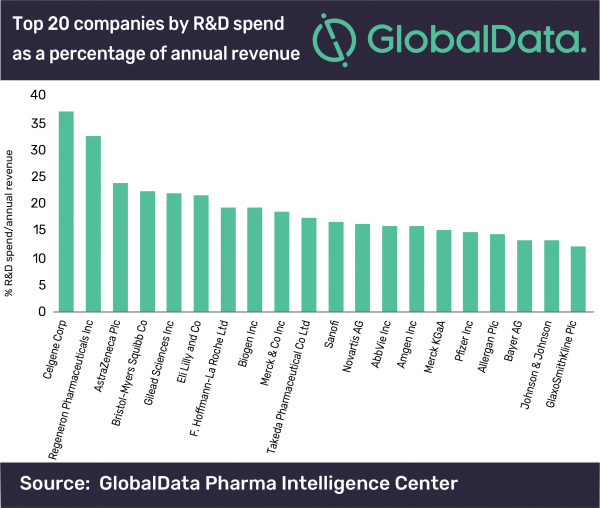
After taking over in 2017 Walmsley is looking for a new direction in research focused on areas such as cancer and respiratory diseases – but according to a new analysis by GlobalData, the UK pharma is the lowest in the top 20 largest drugs firms when it comes to money spent on R&D.

The company’s profits had been propped up for years by the ageing respiratory diseases blockbuster Advair in the US, but its sales are sliding after the FDA finally approved generic rivals following years of delays and knockbacks.

But according to GlobalData’s analysis GlaxoSmithKline’s R&D spend stands at just 12%, a fraction of that spent by Celgene – now part of Bristol-Myers Squibb – where research spend was equal to 37% of its annual revenue.

GSK_RD-600x508

The US pharma is spending big as it faces up to the patent expiry on its blood cancer blockbuster Revlimid, which generated sales of $9.7 billion in 2018.

But while big pharma’s spend on R&D is increasing, the return on the investment is decreasing according to Madeleine Roche, Associate Global Pharmaceutical Analyst at GlobalData.

She added that GSK may be getting more bang per buck in terms of its R&D investment, with seven drugs in pre-registration phase compared with Celgene’s eight at the same stage of development.

Roche noted that BMS’ $74 billion acquisition of Celgene in November was a bet on the latter’s late-stage pipeline, including three potentially lucrative drugs.

She said: “The acquisition itself takes a gamble on R&D, and contingent value rights issued with Celgene’s shares mean that profitability is hinged on the success of pipeline drugs ozanimod, liso-cel and bb2121.

“Already placing third for percentage R&D spend/annual revenue pre-acquisition, it seems BMS decided to bolster spending with more spending.

“Spare cash, decreasing valuations and key patent losses in the last few years may well have spurred this acquisition from BMS’s side.”

Visit Us On TwitterVisit Us On Google PlusVisit Us On LinkedinVisit Us On Facebook