TrialScope Acquires Clinical Trial Connect

TrialScope has acquired Clinical Trial Connect, a platform used by disease foundations and advocacy groups that connects their community members to relevant clinical trials. As part of the acquisition, founder Mike Wenger will share his technological expertise as part of the TrialScope team.
Unknown

A brain tumor diagnosis led Wenger to develop his own algorithm for matching patients to clinical trials and, ultimately, to founding Clinical Trial Connect. Fortunately for Wenger, the tumor was benign. Now, several years later, Wenger and TrialScope have made the perfect match.


This acquisition delivers innovation to the clinical trial community. The combination of TrialScope and Clinical Trial Connect helps close the gap on some of the industry’s biggest recruiting challenges: structuring of complex clinical trial data, trial data accuracy, and availability and improved trial matching for patients, clinicians and other healthcare providers.

TrialScope, whose customers are clinical trial sponsors, plans on leveraging the technology behind Clinical Trial Connect to enhance its own platform. The result, says CEO Jeff Kozloff, “will be the most comprehensive platform for clinical trial transparency and data re-use.” He added that, “TrialScope will build upon the valuable relationships with advocacy groups that Wenger has established.”

“The acquisition of Clinical Trial Connect further strengthens TrialScope’s commitment to clinical trial disclosure, data sharing and patient engagement,” says Kozloff. “Mike Wenger has built an impressive technology platform that numerous advocacy groups deploy to help their members quickly and accurately match to relevant clinical trial options. This adds fuel to our innovation engine as we work to shift perception of transparency from a regulatory requirement to a strategic advantage.” 

Similar to TrialScope Engage, powering clinical trial websites with robust data automation and search functionality, Clinical Trial Connect matches patients searching online for clinical trials. While the goal of both platforms is to help patients find clinical trials, TrialScope Engage does so via sponsor websites; Clinical Trial Connect reaches patients through advocacy sites.

“TrialScope processes a jaw-dropping amount of data that is posted to ClinicalTrials.gov, over 40 percent of all industry studies,” says Wenger. “This reach, coupled with a customer roster of more than 25 of the world’s largest pharmaceutical sponsors, makes TrialScope the perfect home for Clinical Trial Connect’s technology. Together, we’ll reach and serve more life sciences companies, patients and families with tools to accelerate clinical trial searching and recruiting.”


Oracle Health Sciences and Phlexglobal Collaborate

Oracle Health Sciences, Clinical technology provider and Phlexglobal, provider of Trial Master File (TMF) technology and services for the global life sciences industry, have announced enhanced integrations designed to speed and accuracy of regulatory compliance and inspection readiness in clinical trials.

Unknown

A TMF is a requirement that all sponsors and contract research organizations (CROs) must meet to assure that the rights, safety and well-being of trial subjects are protected, that their trials are being conducted in accordance with Good Clinical Practice (GCP) principles, and that the clinical trial data is credible to ensure audit readiness.


Phlexglobal’s PhlexEview TMF management system uses, has an open architecture to ensure easy data integration, and provides functionality designed to better facilitate TMF Management.

The Oracle Health Sciences eClinical platform, integrated with the TMF, provides a comprehensive, proven and best-in-class clinical trial ecosystem for life science organizations. Oracle Health Sciences provides key integration components (i.e., data staging, business rule compliance, target data staging, and API processing) to ensure  successful integrations with its applications.

Standards are critical

Other eClinical solutions only support clinical trial functions in silos. The ability to bring together the collective institutional memory and the facilitation between systems and team members is critical, and addresses an unmet need. The challenges in integration of eClinical systems stem from the lack of standards.

Phlexglobal’s Chief Strategy Officer Karen Roy is highly active in the TMF Reference Model, an industry-led initiative to define these standards. In addition, the group has developed an exchange mechanism for vendor interoperability. This initiative establishes a common language (both business and technical exchange mechanism) enabling different organizational departments and companies to automate the exchange of information, which satisfies end-to-end requirements and validation.

The adoption of industry standards is critical to plug-and-play coexistence in the eClinical ecosystem and what is required is a deep understanding of the right type of integration at the right time for the different integration points. The TMF Reference Model Exchange mechanism facilitates these integrations by providing a common language amongst all eClinical vendors. Eliminating inefficiencies and bottlenecks associated with disparate data silos is critical to the goal of reducing cycle times in clinical trials. Today, regulatory authorities are placing more emphasis on contemporariness and timeliness of the TMF content they receive from sponsors and CROs. To achieve this, it is critical to ensure and document most of the content quality, as specified in the ALCOA-C guidance, prior to the content being transferred to the TMF. Together, Oracle Health Sciences and Phlexglobal address this challenge.  

“Our integration with Oracle Health Sciences’ industry-leading applications will save organizations significant resources, as documents only have to be checked once early in the process, which will ensure that any issues can be found and corrected in a timely manner enhancing overall quality,” said John McNeill, CEO of Phlexglobal. “Our collaboration represents a leap forward in improving clinical trials and controlling runaway costs and timelines. Our life science customers will be able to leverage industry KPIs to support business process optimization and business intelligence in clinical study startup, strengthening our regulatory compliance and global trial oversight capabilities.”

“Adoption of industry standards is critical to plug-and-play coexistence in the eClinical ecosystem,” said James Streeter, global vice president life sciences product strategy, Oracle Health Sciences. “What’s required is a deep understanding of the right type of integration at the right time for the different integration points. The TMF Reference Model Exchange Mechanism facilitates these integrations by providing a common language amongst all eClinical vendors. We strongly support this initiative.”

Phlexglobal is a Silver level member of Oracle PartnerNetwork (OPN).

Veeva Survey Finds CROs Undergoing Major Changes

Contract research organizations (CROs) are making significant progress in advancing the industrywide move to improve clinical trial performance, according to the Veeva 2019 Unified Clinical Operations Survey: Annual CRO Report. The findings from Veeva Systems reveal that CROs are eliminating manual processes and modernizing key areas of clinical trial execution to enhance partner collaboration and improve study performance.

images

Streamlining trial collaboration

All CROs surveyed cite the need to streamline information exchange among study partners. Today, CROs share trial data and documents with sponsors and sites in multiple ways, many of which are manual. Email is CROs’ primary method to exchange information with sites and sponsors, and most still use paper shipments and file shares.


CROs say the state of information exchange causes major challenges with tracking and reporting (71%), misfiled or missing documents (59%), and a host of other issues that limit collaboration and compliance.

As a result, CROs are initiating change to simplify information exchange with study partners, which they expect to yield significant benefits, including reduction in manual processes (77%), streamlined collaboration (65%), improved study quality (64%), and faster study execution (64%).

Accelerating study start-up

Study start-up is one of the most resource-intensive phases of clinical trials and has the most opportunity to drive greater efficiency and speed. All CROs report significant challenges with study start-up and more than three-quarters use spreadsheets to manage this area.

Site contracting and budgeting is the most cited and fastest growing issue during the study start-up process. The majority of CROs (70%) say it is their top challenge, up 11 percentage points since 2018. It is also among the primary drivers for change.

For most (80%), faster study start-up time is also a primary driver. Majorities say fewer spreadsheets and manual processes (60%), easier collaboration with sponsors and sites (55%), and better resource planning (55%) would also speed the study start-up process.

Increasing adoption of advanced clinical applications

CROs are adopting more clinical technologies to eliminate manual processes and improve operational performance. The use of RTSM, eTMF, and CTMS systems has increased the most since 2017. In addition, more CROs are adopting purpose-built study start-up applications than sponsors to speed cycle times (35% of CROs vs. 23% of sponsors).

Replacing manual processes with technology for specific functions has created efficiencies, but it has also created silos. Integration (73%) and reporting across multiple applications (64%) are the top two challenges reported as a result of application silos.

CROs cite the need to streamline fragmented clinical processes and systems to improve study execution. All CROs say they need to unify clinical applications (100%). Better visibility and oversight (74%), faster trials (68%), and easier stakeholder collaboration (63%) are the top drivers to unify.

“CROs are leading the industrywide drive to improve execution and collaboration for faster clinical trials,” said Jim Reilly, vice president of Vault Clinical. “As more organizations reduce the manual and fragmented processes that are prevalent today, drug development will become much more streamlined and study partners will improve how they work together throughout the course of a trial.”

The Veeva 2019 Unified Clinical Operations Survey Report: Annual CRO Report examines CROs’ progress toward a unified clinical operating environment by gathering the experiences and opinions of CRO respondents from around the world. This annual research details the drivers, barriers, and benefits of a unified clinical operating model and tracks the industry’s progress toward unifying clinical systems and processes and aligning stakeholders throughout study execution. The full report is available online at veeva.com/CROreport

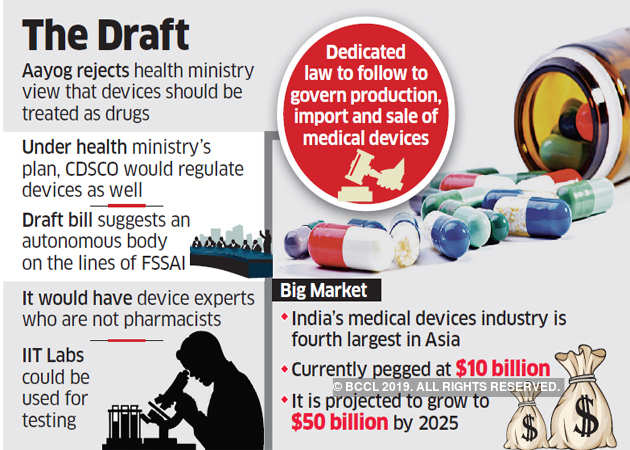
Niti Aayog proposes separate regulator for medical devices

People aware of the matter said the Aayog has instead moved a draft Bill proposing that medical devices be governed by a separate regulator.

NEW DELHI: Government think tank Niti Aayog has rejected the health ministry’s proposal to bring medical devices under the Central Drugs Standard Control Organisation (CDSCO), saying the body does not have the required expertise. People aware of the matter said the Aayog has instead moved a draft Bill proposing that medical devices be governed by a separate regulator.

Earlier this month, the ministry had issued a draft notification saying that all medical devices would come under the category of drugs from December 1 and would be regulated under the Drugs & Cosmetics Act.

A senior official confirmed to ET that there is some support for Niti Aayog’s view in the government that it is inappropriate to allow CDSCO to regulate medical devices as they have expertise in pharmacy/chemicals and not in devices.

People familiar with the development told ET that the Aayog has floated a draft Bill to regulate over 6,000 bio medical devices in the country.

“The Bill proposes a separate regulator for medical devices on the lines of the Food Safety and Standards Authority of India (FSSAI), an autonomous body under the health ministry,” one of the persons cited earlier said, requesting not to be named.


71798654.cms

In India, only 23 categories of medical devices are regulated under the Drugs and Cosmetics (D&C) Act. The ministry’s notification said all medical devices will be brought under regulation in a phased manner.

It has proposed seven categories of devices intended for use in human beings or animals as drugs with effect from December 1, 2019, while ultrasound equipment would be treated as drugs from November 1, 2020.

“Ministry of health should clearly define that its current regulations to define devices as drugs and their regulation by CDSCO is a temporary measure till a separate medical devices law and a competent regulatory authority is formed as devices are not drugs,” Rajiv Nath, forum coordinator of the Association of Indian Medical Devices Industry said.

India’s medical devices market is the fourth largest in Asia–after Japan, China and South Korea–at over $10 billion and is projected to grow to $50 billion by 2025.

Biocon’s biologics portfolio comes into its own

Five years ago, Biocon’s biologics business largely consisted of insulin clones and was worth about ₹400 crore. At the time, Biocon was valued at just under $1 billion.

fortuneindia-2018-04-104e76a2-14ab-4b23-a58f-2318e8f8ec75-kiran_mazumdar_shaw

Announcing its second-quarter results on Wednesday, MD and chairperson Kiran Mazumdar-Shaw said that the biologics business grew about 40% during the period to touch a revenue of ₹516 crore, compared to the year ago quarter. The company also reiterated its long-term plans for Biocon Biologics, a newly formed entity that will exclusively house the biologics business, to be a $1 billion business by 2022. Last year, the business was worth about $200 million.

On Thursday, however, Biocon’s stock fell 5%, as analysts felt costs had increased leading to lower profitability growth. Biocon increased its R&D outlay and employee benefits as the company hired new talent to run its newly formed biologics unit. Biocon’s R&D cost increased 36% to ₹104 crore for expansion of its portfolio, while its employee benefit expenses grew 22%, the company said.

The results during the quarter looked tepid as profits were strictly not comparable with that of the same period last year. The company reported a net profit of ₹215.7 crore for the quarter ended September 30, 2019 compared to ₹354.7 crore for the corresponding period last year. However, last year’s profit included a one-time gain of ₹171 crore as the company fair valued its investment in the U.S.-based Equillium, as per its filing on the BSE. Excluding the impact of the one-time gain last year, the profit would have been higher by 3% at ₹189 crore, Biocon said in its release.

The consolidated total income of the company grew at 17% to ₹1,610.6 crore for the quarter under consideration as against ₹1,375.4 crore. Thanks to the increase in costs, its operating margins were down 200 basis points to 27%. “A disproportionate percentage of the company’s capital employed goes into biologics. So any increase in costs related to that business looks like a negative until results are shown. So, in the short term the stock looks rather expensive,” says an analyst, who did not wish to be named.

A company executive, on condition of anonymity, said the results are not being seen in perspective of the unique business the company operates in. Unlike most other domestic pharmaceutical companies, Biocon’s revenues from biologic drugs are as much as its small molecule (chemical generics) business. Now, biologics are hard to make and have longer investment cycles, but are the preferred drugs of treatment in several chronic illnesses especially cancer.

Biocon’s Mazumdar-Shaw began investing in biologics in the late 90s, when it was just another buzz word. As Biocon did not have too many products to show, its valuation did not go past $1 billion for a long time. Thanks to a consistent show in biologics in the last five years, Biocon’s valuation is over $4 billion and the new focus on the segment will only augur well for its growth. Biocon is now the seventh most-valuable company in the segment among 165 listed firms.

Revenue from biologics was fuelled by sales of Fulphila (a biosimilar of anti-cancer drug Pegfilgrastim) in the U.S.; Hulio (a biosimilar of Adalimumab) in Europe; and a biosimilar of breast cancer drug Trastuzumab in several emerging markets such as Brazil, Turkey, and Algeria. Sales of recombinant human insulin also remained strong, the company said. Biocon Biologics has now set itself a revenue target of $1 billion by 2021-22 (April-March), Christiane Hamacher, chief executive officer, Biocon Biologics, said in a company release.

Warning Letters: FDA Cites Chinese API Maker

Jiangsu NHWA
 
FDA’s warning letter to Jiangsu comes after a five-day inspection of the company’s Jiawang facility last April that uncovered issues with the company’s product testing procedures and investigations into out-of-specification (OOS) test results for active pharmaceutical ingredients (APIs) distributed to the US.

Unknown-3
 
According to FDA, Jiangsu NHWA followed stability testing protocols from the 2015 Chinese Pharmacopoeia for one of its APIs and was “not able to demonstrate that the tests used are equivalent to or better than the current [United States Pharmacopoeia] 42 compendial methods.”
 
FDA also says that the forced degradation studies used for another product were not validated.
 
Additionally, FDA says Jiangsu failed to adequately investigate OOS test results after two investigations failed to identify the source of foreign materials found in batches of one of the company’s APIs.
 
In response to the citations, Jiangsu said it will stop distributing products manufactured at the site until it has completed a corrective and preventative action (CAPA) plan, which FDA says it will need to verify before resuming distribution.

Zealand takes on Takeda’s IBD drug with tiny buyout

After years developing a peptide to treat short bowel syndrome (SBS), Zealand Pharma is joining the hunt for the white whale of the gastrointestinal track: inflammatory bowel disease.

Unknown-1

The Danish biotech is buying out Toronto-based Encycle Therapeutics for up to $80 million to acquire their lead peptide, ET3764, along with a bank of approximately 5,000 unique peptide macrocycles. The preclinical drug has the same mechanism as Entyvio (vedolizumab), Takeda’s blockbuster ulcerative colitis and Crohn’s disease treatment – both forms of IBD. The big pitch is that Encycle’s drug is oral, as opposed to the Entyvio infusion.

The deal will pay Encycle up to $80 million in earnouts, with $10 million payable when a Phase II study is completed. Zealand can choose whether to pay the earnouts, which are based only on the lead drug and not the rest of the acquired library, in cash or equity. The smaller biotech may also earn a mid-single digit royalty on net global sales.

Zealand has long billed itself as a company focused on gastrointestinal diseases as a key area, even as its only big development in that subfield was a peptide for SBS, now in Phase III testing. The buyout will see the mid-sized company, which also develops drugs for hypoglycemia and obesity and diabetes, enter one of gastroenterology’s biggest and most crowded markets.

Like Entyvio, ET3764 works by cutting off the inflammed gut tissue from white blood cells. It does so by inhibiting the alpha-4-beta-7 integrin protein from interacting with the a proten in the GI tract called intestinal mucosal addressin cell adhesion molecule 1.

The acqusition comes as Zealand restructures its C-suite and moves into new headquarters. In March, they poached Alnylam’s Emmanuel Dulac as CEO. In August, they hired Matthew Dallas as CFO and in September they began moving into new offices in Søborg.

Although peptide therapies are at least as old as the first insulin treatments for diabetes in the 1920s, they’ve recently grown in popularity, with Roche and J&J, among others, betting on the class. Part of that has to do with advancements in chemistry and manufacturing: In the 1980s, most peptides were fewer than 10 amino acids long, and the average length has increased in each subsequent decades. Trendy and potentially transformative therapies such as B class GPCRs are dependent on these more complex chains.

Believers say they offer the stability of small molecule drugs with the selectivity of antibodies.

Peptide macrocycles — so named because they’re formed from a ring of at least 12 atoms — have held particular interest over the last decade amid advancements in designing and synthesizing the structures. Cyclosporine, the fungus-derived immunosuppresant for organ transplant recipients, is a naturally occuring macrocycle.

Encycle Therapeutics – and presumably the peptide bank Zealand acquired – focused on a subset of molecules called aziridine aldehyde-based macrocycles.

South Korea warns of ‘serious risk’ from vaping, considers sales ban

SEOUL (Reuters) – South Korea on Wednesday advised people to stop using liquid e-cigarettes due to growing health concerns and vowed to speed up an investigation into whether to ban sales, a move likely to hit major producers such as Juul and local tobacco company KT&G.

Unknown-2

While long-term health impacts from vaping remain largely unknown, e-cigarettes were viewed as a healthier alternative that could help users quit smoking when they were first launched a few years ago.

But countries around the world have been pulling electronic cigarette products from markets and restricting advertising as vaping faces increased scrutiny.

“The current situation is considered as a serious risk to public health,” South Korea’s health minister Park Neung-hoo told a briefing, citing cases of lung injuries associated with e-cigarette use in the United States.

U.S. health officials have so far reported 33 deaths and 1,479 confirmed and probable cases from a mysterious respiratory illness tied to vaping.

A pneumonia case of a 30-year old South Korean e-cigarette user was reported this month, the health ministry said.

“Children, juveniles, pregnant women, and people with pulmonary diseases, never use liquid e-cigarettes. Non-smokers, too, never use liquid e-cigarettes from now,” Park said.

Park said the government would speed up its own studies to determine if there was a scientific basis to ban sales of liquid e-cigarettes, which vaporize liquid containing nicotine.

A rival technology, which heats but does not burn tobacco, has been authorized by the U.S. Food and Drug Administration (FDA) and has avoided much of the recent regulatory crackdown globally.

REGULATORY CRACKDOWN

South Korea’s health ministry vowed to tighten regulations on vaping products such as strengthening customs procedures for imported liquid of e-cigarettes. 

The South Korean office of U.S. e-cigarette maker Juul Labs said in a statement their products did not contain THC, the psychoactive ingredient in marijuana, or vitamin E acetate, a substance used in some THC products. Those substances have been linked to e-cigarette-related lung illnesses in the United States.

Juul, 35% owned by Altria Group Inc, began selling its devices in South Korea in May.

KT&G Corp, a South Korean tobacco maker which sells Lil Vapor e-cigarettes, said it would cooperate with the government’s policies after results of the ongoing probe came out.

Since smoking was banned indoors at places like restaurants and cafés in 2015, South Korea become less tolerant of smokers. But e-cigarettes have been gaining popularity in the country’s $16 billion tobacco market since 2017.

E-cigarettes accounted for 13% of South Korea’s tobacco market by sales as of June, according to government data. 

South Korea is the world’s No.2 market of heated vape products after Japan, worth $1.7 billion, according to Euromonitor, but liquid e-cigarettes are less popular.

The United States has already announced plans to remove flavored e-cigarettes from stores, citing alarming growth in teenage use of the products

India also discontinued the sale of e-cigarettes in September, warning of an “epidemic” among young people.

NeuroRx secures $95M to fund PhIII for NMDA depression drug

After kicking off a Phase III trial testing its NMDA drug in suicidal bipolar depression, NeuroRx has secured access to around $95 million (HKD$750 million) to complete the program and fund the manufacturing activities.

Unknown

New York-based GEM Global Yield has committed to provide the capital — through purchasing shares — once NeuroRx gets listed on a public market. The biotech, which was founded by biopharma vet Jonathan Javitt and psychiatry researcher Daniel Javitt (the brothers are the CEO and chairman of the scientific advisory board, respectively), can draw as much or as little of the agreed amount within a 30-month term. The plan is to develop NRX-101 in both the US, where it has a breakthrough therapy designation, and China.

Alkermes to lay off 160 in cost-cutting restructure

Dive Brief:

  • Alkermes on Wednesday said it will lay off about 160 employees, curtail future hiring and cut spending as it starts a corporate restructuring designed to stem losses.
  • The Irish biopharma expects to complete most of the job cuts by the end of the year, and will take a charge of between $13 million to $15 million in the fourth quarter to cover termination costs. 
  • Alkermes expects the steps it’s taking to lower costs by $150 million, with the restructuring ultimately saving “several hundred million dollars over the next few years.” Shares in the company, which had fallen in value by more than a third since the start of the year, rose by 6% on the news Wednesday. 

Unknown-1

Dive Insight:

Alkermes’ restructuring plans are an important step, wrote Evercore ISI analyst Umer Raffat in a Oct. 23 note to investors. The Dublin, Ireland-headquartered biopharma is generating around $1 billion in annualized revenue, but expenses have meant the company is posting net losses. 

But the newfound cost discipline likely matters little to the 160 employees who will depart the company in the coming months.

The biopharma employed about 2,300 full-time staff as of Feb. 4, 2019, meaning Wednesday’s restructure will affect around 7% of the company’s workforce.

Alkermes’ announcement accompanied a third-quarter earnings reportshowing a net los of $53 million, up from $34 million during the same three-month period a year ago. Revenues rose to $255 million from $249 million. 

The company expects total revenue for the year to reach between $1.1 billion and $1.2 billion, a forecast that includes an expected $150 million milestone payment from Biogen. That money is tied to final U.S. approval of the companies’ multiple sclerosis drug Vumerity (diroximel fumarate), which won a tentative Food and Drug Administration nod earlier this month. 

Yet Alkermes slightly lowered top sale estimates for its Vivitrol (naltrexone) treatment for alcohol and opioid dependence, as well as for its schizophrenia drug Aristada (aripiprazole lauroxil).

Alkermes’ restructuring comes as the company attempts to win back investor confidence. The company’s shares trade at about half their value from a year ago, before the FDA rejected its experimental depression treatment ALKS-5461.

CEO Richard Pops said the biopharma is looking to Vumerity as a “profitable new source of royalty revenues,” and expects to file this quarter for FDA approval of another drug, ALKS 3831, for schizophrenia and bipolar disorder.

Visit Us On TwitterVisit Us On Google PlusVisit Us On LinkedinVisit Us On Facebook