Market Value Should be “Defendable,” Not “Fair,” Experts Say

Establishing a fair market value for a clinical trial that both sponsors and sites can agree on often is easier said than done. There is little or no consensus on the “fair” price to be paid for clinical trial services. Instead, sites should focus on providing a solid defense for each expense they expect a sponsor to foot.
Unknown

“Often, people say they can’t pay more than fair market value,” says David Vulcano, vice president of research compliance and integrity at the Hospital Corporation of America, “and that’s great, but not everybody agrees on the dollar amount of what fair market value actually is. Instead of fair market value, we should probably use the term ‘defendable market value.’”

“First and foremost, sites need to have a better understanding of how to defend their costs,” Vulcano continues. “There’s probably a fair market value “safe harbor,” a range that we can work comfortably in. But in general, sites often are not willing or capable or knowledgeable to push back and obtain the funding they require.”

According to Vulcano, many sites arrive at a crossroads when faced with sponsors that won’t pay more than a certain amount on a line item, basing their limit on a value that too often has been set in deals with less experienced sites. “If a sponsor … sees a median rate of $100 for a line item, they might offer it at $80 because they know some people might try and negotiate up,” says Vulcano. But if 70 percent to 80 percent of sites accept the lower price, he says, then the average could drop to $90 the next time a sponsor checks the price. And the cycle continues from there.

“Sometimes, sponsors call us and tell us that their budget is non-negotiable and that they’re only paying as high as they can without exceeding fair market value,” explains Vulcano. “But that’s their fair market value for research-naïve sites,” he says. “And about six months later, we often get a call from these sponsors and they tell us that they’re not recruiting very well and they’re looking for new sites and they’ve increased their budget.”

To determine value, sites generally must look at various aspects of the study, including payments toward nurses, physicians and administrative staff, says Russell John, global director of grants management at Clintrax Global. “Sites that do less research don’t build a granular financial budget and don’t consider how much time it’s going to take,” John adds. “I think it’s important for sites to build up a dossier or database of their own on how much time they spend on certain services that are not subject-related, such as administrative time-related costs.”

Sites need evidence to support what they ask for, agrees Wendy Tate, director of analytics at Forte Research. “Many research sites don’t have empirical data on how long it takes to do something,” Tate says. “One of the things I highly recommend from an analytics perspective is to determine how long it takes to do something, like obtaining consent of participants or how long it takes to prepare a sample. That way, sites have a little more justification for their line items and aren’t just pulling a number out of the air.”

“It can be very valuable to discuss what considerations go into determining a dollar amount,” explains Laura Hilty, vice president of product management & strategy at Forte Research. “Documenting this and sharing these details with the sponsor can go a long way in helping them understand the real reason and justification for costs,” Hilty says.

In addition to the challenges of establishing a fair market value that ensures a well-run clinical trial, both payers and payees are responsible for navigating the regulatory framework that governs clinical trial funding. “Sponsors, sites, investigators and certain downstream contractors may be wise to have policies and procedures to ensure that payments made in the context of clinical trials are in each case fair market value for legitimate, reasonable and necessary items or services,” says Andrea Ferrari, a partner at HealthCare Appraisers in Florida.

Ferrari suggests a “toolkit” of policies that include a summary of and/or access to previously determined fair market value ranges for services that are most common in clinical trials of a similar nature. This toolkit might do well to include general guidance for how to apply the fair market value ranges in the context of applicable laws and regulations, she says. “Guidance should focus on how to deconstruct a budget to match budget line items to actual items/costs, caveats to applying the fair market value ranges to certain specific circumstances and triggers for higher-level or more specific review than can be accomplished through the tools in the general toolkit.”

-By Brandon May

Lack of Training Compromises Trial Results, Expert Says

At its very core, a clinical trial is a measurement system. But unlike other fields that rely on measurement and data reporting, the clinical trials industry has not focused enough on training for everyone involved, from the investigators all the way down to the patients.

Unknown

Lack of training, particularly for patients, creates variability detrimental to trial findings, says Nathaniel Katz, founder and chief science officer of WCG Analgesic Solutions.

“People have had magical thinking about the way clinical trials generate data,” Katz told the audience of a recent WCG webinar. “There’s this strange belief that if you give some people the treatment and (others) the placebo … the trial will generate an observed effect size that somehow will accurately characterize the pharmacology of the treatment,” Katz said.

That attitude, he stressed, has resulted in trials ending in expensive failure. Some of those failures could have been avoided with training to eliminate key causes of variability that undermine the scientific process.

The problem is that clinical trial research has not set a high enough training standard.

“Training is not really even viewed as a scientific topic in the world of clinical trials,” Katz said. “Training has been viewed as a checkbox activity or something to do to please regulators, but not something that has a direct impact on our ability to achieve our scientific objectives in clinical trials.”

This is especially clear when it comes to training trial participants to report accurately on their reactions and experiences.

“Although pharma, device companies, CROs and regulatory agencies invest heavily in internal training, the concept of training clinical trial participants to perform their tasks better has scarcely filtered into the clinical trials managed by these organizations,” Katz said.

He cited one example in which participants had not been appropriately trained on how to use electronic diaries the trial used to gather patient data. It resulted in skewed and flawed findings on drug effectiveness.

“It’s rare that the skill we are asking people to do (in a trial) has been defined, yet that’s what’s necessary if you want (them) to do it,” he explained.

Katz laid out a best practice training model for clinical trial staff and subjects based on adult learning principles used widely in other industries.

First, it’s vital to understand the difference between education and training. Education is about what you know, he said, and training is about what you do. Giving someone a manual to read is education. Showing them how to perform tasks discussed in the manual and allowing them to practice is training. Education doesn’t necessarily change behavior, but training does.

Practice should progress from simple to more advanced tasks and be followed by constructive and diagnostic feedback, Katz said. To facilitate the transfer of new skills to action, training and practice conditions should be increasingly difficult, trainer support should gradually decrease and practice conditions should increasingly resemble real-world conditions.

Katz also made a strong case for validating that any training done has achieved verifiable process improvement. It is the responsibility of leadership to demonstrate that there is a return on investment through more reliable clinical trial outcomes, he said.

Navitas Life Sciences Announces Acquisition of KAI CRO

Navitas Life Sciences, a TAKE Solutions Enterprise announced the acquisition of US based niche full service CRO and health research company, KAI Research Inc.

Unknown

KAI Research brings offerings in three key areas – Clinical Trial Management, Clinical Research Consultation, and Data Management & Standardization. Through this acquisition, Navitas Life Sciences expands Phase II and Phase III capabilities in North America adding to its current capabilities in Europe and APAC. The company has differentiated offerings in the areas of patient registries and e-clinical solutions as well as long-standing relationships with clinical sites and trusted network of service providers across the United States and Africa.

Srinivasan H R, Managing Director, Navitas Life Sciences said, “We are on track in terms of our acquisitions, KAI Research will further strengthen our capabilities in clinical services and expand our therapeutic expertise. Through this acquisition, we also gain a unique standpoint in serving Federal agencies like FDA, NIH, CDC, Department of Defense etc. Together, we intend to create a world class enterprise making meaningful strides in our ability to deliver improved trial outcomes to the bio pharma landscape. The addition of KAI’s capabilities translates to global trial capabilities across North America, Europe and APAC markets. Combining these operational and TA capabilities with our proprietary AI driven OneClinical platform allows us to be a great partner to small and mid-tier customers as well as to large pharma.”

Kathy Dimeo, President, KAI Research Inc said, “We are happy to share that we have been acquired by Navitas Life Sciences. The complementary synergies between our companies will increase service offerings and capacity to serve our current and prospective clients and improve the quality of our service delivery, while opening our services to the global community.”

Benefits of the acquisition:

Clinical delivery capability synergies

  • Conduct and manage clinical trials in USA for global customers by leveraging KAI’s strong delivery capabilities
  • Augment domain expertise and improve quality of delivery with KAI’s domain strength and consulting capabilities
  • Enhance data management and standardization efforts required by FDA regulated environment

Augmented client base

  • Support larger and more complex Clinical Deals with addition of sites and local clinical trial management capabilities in USA
  • Conduct long-term and large-ticket federal studies through KAI’s strong client base of federal agencies
  • Expand market reach to attract North American SMEs with KAI’s expertise in the growing biotech and medical device market

Biotech Companies Provide High Median Salaries, Analysis Shows

For young people looking to find a career path, the pharmaceutical industry is a good one to go into, especially if salary is a major concern.

A recent analysis from the Wall Street Journal highlighted some of the best-paying jobs in the biotech industry. At the top of the list of companies offering impressive compensation packages is New Jersey-based Celgene. According to the analysis, Celgene had the highest-paid median employee in the sector with annual compensation of $263,237. Celgene, which makes the blockbuster cancer drug Revlimid, was acquired earlier this year by Bristol-Myers Squibb for $74 billion. According to PayScale, the average salary at BMS is $102,000.

e7790795-724b-4714-b98c-b4b89b7650d3

The Journal’s analysis ranks Boston-based Vertex as the number two company for best median compensation. Vertex, which dominates the cystic fibrosis market, provides a median salary of $232,178.

Incyte Corporation came in at number three on the list with a median salary of $228,006. A company spokesperson told the Journal that the bulk of Incyte’s 1,400 employees work in research and development. Incyte does not have a manufacturing operation, which typically provides lower salaries than R&D work, which has higher educational requirements.

The Journal noted that most publicly traded U.S. companies are now disclosing their median employee compensation, as well as compensation for its executives. Part of that disclosure includes part-time and temporary workers, but not contractors, the Journal said. In the compensation reports, companies can exclude up to 5 percent of their global employee pay, but only for non-U.S. workers, the Journal reported. The high pay provided to U.S. employees would not necessarily be reflected in other countries. For example, the Journal noted that medtech company Align Technology Inc. provided the lowest median pay of $13,180. That is primarily due to the fact that only 1,400 of its 11,700 employees are based in the U.S. A spokeswoman for Align told the Journal that 60 percent of its employees have manufacturing jobs in lower-wage regions such as Latin America and China. The spokesperson added that Align believes its overall compensation is competitive within each region.

Earlier this year, BioSpace reported that drugmaker Alexion rewarded its employees with a pretty significant salary as well. Since moving to Boston from Connecticut, the company’s median salary has jumped. Since the move, the median compensation for employees has jumped to nearly $224,000. Alexion disclosed the salary information in a filing with the U.S. Securities and Exchange Commission

Report Highlights Positive Progress on Global Access to Medications

Pharma and biotech companies have been developing cutting-edge treatments and medications for a myriad of diseases but, for some patients, getting those medications has become a herculean task.

In the United States, pricing has become a significant issue for many medications, such as life-saving insulin. While that lack of access to medication is a serious issue, particularly in a country as wealthy as the United States, there are many parts of the world where a lack of access to medications is a critical issue. But, that is a trend that is changing for the better. According to Netherlands-based Access to Medicine Foundation, 83% of the world’s population live in 106 countries that have limited access to medication.

21776823-c6d9-43fb-a89e-02776d44b164

The lack of access issue is an old story. In the countries examined by the foundation, the populations are poor and have no access to “robust health systems,” largely due to the cost of medicines, lack of trained healthcare workers or inefficient supply chains. However, pharma companies have made significant progress over the past 10 years to address that situation. A decade-long analysis of drug availability shows the progress that has been made – but it’s a fragile progress. Jayasree K. Iyer, executive director of the Access to Medicine Foundation, said that a “retreat by one company, or a drop in healthcare investments, will jeopardize the progress made so far.”

The institute’s report tracked 20 of the world’s largest pharma companies, such as GlaxoSmithKline, Pfizer, Novartis and Sanofi, from 2008 to 2018. The report found that these companies are doing business in “new, inclusive ways that aim to reach people on very low incomes.” In its analysis, the foundation noted that a few of the pharma companies are shouldering the most burden of medicine access. The analysis also finds clear evidence of progress, most notably in R&D, and in how companies approach access, the institute said. Overall, companies’ activity concentrates on a few diseases and countries, the institute found.

One way that companies have been increasing access to medication is through a change in R&D programs. Companies are now planning with those who have limited access to medicine in mind. Many of the drugs being developed under this strategy include vaccines for various common threats in these low-income countries, such as malaria. These particular diseases have been identified as targets of urgently needed R&D in order to reduce child mortality. For example, the mosquito-borne malaria virus was responsible for approximately 435,000 deaths in 2017, according to the World Health Organization. Of those, 266,000 deaths were children. As a response to that crisis, last year, Novartis announced plans to spend more than $100 million to advance research and the development of “next-generation treatments” for malaria. The Swiss pharma giant said it is contributing to the World Health Organization’s target of reducing malaria-related child mortality by at least 90% by 2030.

In its report, the foundation found that the priority for treatments for tropical diseases such as malaria has increased in priority. The pipeline for these types of treatments has more than doubled since 2014, the foundation said. For NTDs (neglected tropical diseases), such as malaria, the number of companies contributing to the development of new medicines, diagnostics or other products has increased from nine to 15 since 2010, while the number of companies donating products for NTDs has increased from eight to ten, the report said.

The foundation said its report is a springboard for discussions on how improvements can be expanded across the pharmaceutical industry. On its website, the foundation said five billion of the seven billion people on the planet have access to medicines.

“Reaching the two billion people who still lack access to medicine worldwide is possible, provided we continue to build on what has already been achieved and are prepared to redraw and forge the path ahead,” the foundation said.

Nektar Forms New Subsidiary in Anticipation of Opioid Medication Approval

With a potential approval of an opioid molecule awaiting regulatory review, Nektar Therapeuticsannounced the launch of a new subsidiary, Inheris Biopharma, Inc., which will be responsible for the launch and commercialization of the opioid.

NKTR-181 is a novel, first-in-class, investigational opioid molecule developed for the treatment of chronic low back pain in adult patients new to opioid therapy. The U.S. Food and Drug Administration has set a PDUFA date of Aug. 29. In addition to NKTR-181, Inheris will also lead the development of several Nektar preclinical CNS assets.

871f98aa-ecb0-4a06-81f7-d02c6c2ee324

Nektar Chief Executive Officer Howard W. Robin said the formation of Inheris will allow the parent company to remain focused on advancing its immuno-oncology and immunology development pipeline.

The new company will be helmed by Merck veteran Jay Galeota. He will serve as president and chief executive officer. Galeota held several leadership positions at the pharma giant, including chief strategy and business development officer, as well as president of emerging business. He most recently served as President of G&W Laboratories.

“I’m pleased to take the helm at Inheris. Launching a new company focused on bringing important CNS-focused innovations to patients in areas of high unmet medical need is a unique opportunity,” Galeota said and added the fledgling company will prepare for the anticipated launch of NKTR-181. “The potential for a novel advance in the treatment of chronic pain is particularly important right now given the opioid abuse crisis in our country.”

NKTR-181 could be a game-changing medication in the treatment of pain. Although still an opioid, NKTR-181 is a new molecular entity and it being touted as the first analgesic opioid molecule to exhibit a low incidence of specific CNS-mediated side effects, such as euphoria. When the company filed its New Drug Application with the FDA last summer, Nektar said NKTR-181 is designed to have low permeability across the blood-brain barrier, which lowers concerns of dopamine release and the associated euphoria.

Joe Stauffer, who was most recently the principal and founder of Alta Life Sciences, will serve as chief medical officer. He has held CMO roles at multiple companies, including Ikaria, Alpharma and Cara Therapeutics. Another Merck veteran, George Shiebler will serve as general counsel. Shiebler most recently worked alongside Galeota at G&W as general counsel and chief of staff. Inheris will be headquartered in New Jersey, on the opposite coast from parent company Nektar.

“We’re excited to announce the formation of Inheris and the appointments of Jay, Joe and George, who we believe have the experience and track record to successfully launch and bring a novel, first-in-class medicine like NKTR-181 to patients,” Robin said in a statement.

Risk-Based Monitoring Should Be Best Practice, ACRO Tells FDA

The Association of Clinical Research Organizations (ACRO) is urging the FDA to place even more emphasis on risk-based monitoring (RBM) of clinical trials, saying a recent study of its members showed a 16 percent reduction in major findings in audits among sites using that method.

In its comments on the agency’s March draft guidance, ACRO advises the FDA to counter common perceptions of traditional monitoring methods — that they are lower risk, that the strategy of checking every data point is safer and that 100 percent source data verification is the best way of ensuring data quality — by giving RBM the status of “best practice.”

Eighteen additional organizations and individuals — including the Society of Quality Assurance (SQA), Pfizer and Bristol Myers Squibb — weighed in on the guidance in the public comment period that ended May 14.

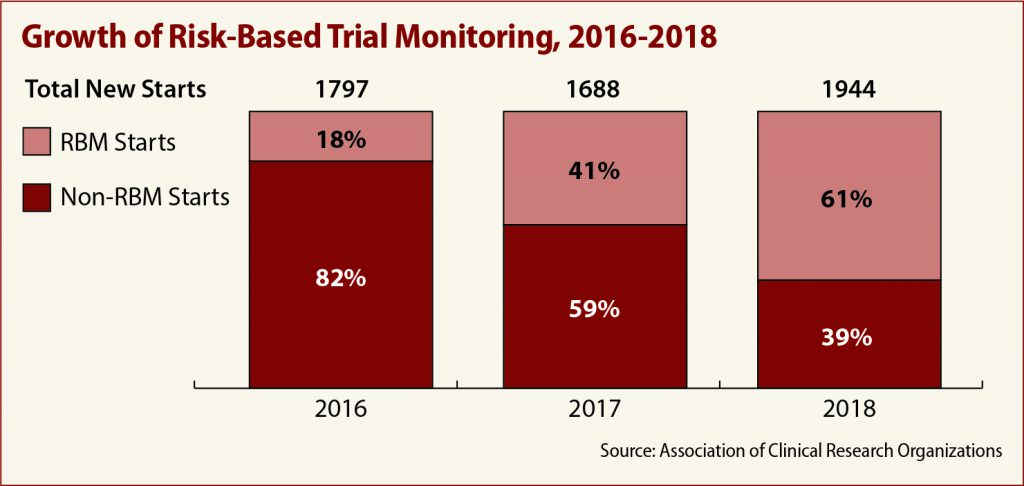
ACRO’s comments include member data showing a marked increase in the use of RBM over the past three years. Only 18 percent of members were involved in trials using RBM in 2016, the association told the FDA. In 2018, that number jumped to 61 percent.

20-GrowthOfRiskBased-1024x486

The commitment to RBM appears to be paying off, ACRO reports, in the form of reduced data management time, data entry lag and error rates, as well as cost savings of up to 15 percent.

Findings in the member survey include:

  • A 16 percent reduction in critical and major findings in site audits;
  • Seventeen percent better detection of significant deviations; and
  • Forty-five percent fewer missing pages in RBM trials versus trials using traditional monitoring methods.

But challenges remain, the association says, laying responsibility at the feet of the FDA’s inspection program, which it implies does not recognize the value of RBM. FDA investigators, ACRO told the agency, continue to cite failures in non-critical data results that a trial using risk-based oversight would not address.

Pfizer’s comments on the draft guidance strike the same note regarding inspections. “To encourage robust adoption of risk-based approaches across industry, we suggest that FDA take proactive steps to diminish any perception that an individual inspector may be unwilling to accept this strategy.”

Further, Pfizer would like to know how the FDA intends to measure success of a risk-based approach. “If the Agency intends to measure success through the same parameters of inspection readiness and quality that are used today for non-Risk-Based approach, Pfizer suggests including this language in the guidance.”

ACRO also says it’s unfortunate that the draft document “does not resolve questions within the industry about the definition of central monitoring.”

“Specifically, does centralized monitoring include traditional data cleaning activities, like listings reviews, programmed complex edits, frequencies, etc., in addition to newer, technology-enabled activities, such as statistical analyses, key risk indicators, outlier identification?” the association asks.

Also requesting clarification of the guidance, Bristol Myers Squibb urges the agency to introduce “process-driven categories” of risk-management, noting the draft guidance seems to suggest that “issue management categories” are essential, when, in fact, a good risk management plan focuses on the end-to-end process and teamwork.

SQA’s comments include a recommendation to align the guidance more closely with the international guideline on good clinical practice, ICH E6, and to encourage root cause analysis methods in investigating important deviations.

Read the draft guidance and the full text of all 19 comments here: https://bit.ly/2JHPtYN.

Verily ( A Google company), Pharma Join Together To Develop Clinical Research Programs With Project Baseline

Today Verily, an Alphabet company, announced strategic alliances with Novartis, Otsuka, Pfizer, and Sanofi to develop digitally innovative, patient-centered clinical research programs using Project Baseline’s evidence generation platform and tools. The Baseline Platform is designed to engage more patients and clinicians in research, increase the speed and ease of conducting studies and collect more comprehensive, higher quality data, including outside the four walls of a clinic.

Unknown

Verily and its industry partners aim to implement a more patient-centric, technology-enabled approach to research, and increase the number and diversity of clinical research participants. They will also explore novel approaches to generating real-world evidence using the Baseline Platform to collect, organize and activate health information from electronic health records, sensors and other digital sources. Over the coming years, Novartis, Otsuka, Pfizer and Sanofi each plan to launch clinical studies leveraging the platform across diverse therapeutic areas, such as cardiovascular disease, oncology, mental health, dermatology and diabetes.

action-2277292_1280

“Evidence generation through research is the backbone of improving health outcomes. We need to be inclusive and encourage diversity in research to truly understand health and disease, and to provide meaningful insights about new medicines, medical devices and digital health solutions,” said Jessica Mega, M.D., chief medical and scientific officer, Verily, in a press release. “Novartis, Otsuka, Pfizer and Sanofi have been early adopters of advanced technology and digital tools to improve clinical research operations, and together we’re taking another step towards making research accessible and generating evidence to inform better treatments and care.”

Verily launched Project Baseline in 2017 with the Project Baseline Health Study to develop the technology and tools to help researchers create a more comprehensive, precise map of human health. The company’s interdisciplinary team of engineers, clinicians, scientists and partners have since developed and continue to expand:

User-friendly devices, dashboards and analytical tools that create an engaging experience for patients and provide research decision support to study coordinators and researchers;

An interoperable platform that provides access to timely, normalized data in order to streamline enrollment and management of studies; and

A robust infrastructure that enables collection of dynamic data, like electronic health records, biometric or self-reported information, which may provide significantly more context about the value of an intervention.

Verily’s Project Baseline has also built a connected ecosystem with the aim of linking patients and advocacy groups with clinicians and health systems, integrating clinical research with clinical practice and making the process engaging. It started with a community of researchers, study sponsors and study volunteers, including Duke University School of Medicine, Stanford Medicine, Google and the American Heart Association (AHA) who helped test tools and technologies in the landmark Project Baseline Health Study.

Next, Verily launched the Project Baseline Advisory Board of luminaries spanning healthcare, technology, medicine and patient advocacy. Then, in early 2019, Verily and the AHA announced Research Goes Red, which will leverage the Baseline Platform to engage more women in research, and an ongoing collaboration to connect patient communities with relevant research opportunities. Finally, this month Verily launched the Baseline Health System Consortium with vanguard health systems in the United States to explore the use of new tools and technology to improve research broadly and help bridge the gap between clinical research and clinical care.

“If we are truly to achieve the realization of patient-centered care, we must advance innovative research methodologies that focus on the patient and their needs, values and lifestyles,” said Reed Tuckson, M.D., chairman, Project Baseline Advisory Board. “Project Baseline, in collaboration with these innovative companies, is well positioned to achieve this vision and have a transformative impact on research.”

Verily’s initial strategic alliances with Novartis, Otsuka, Pfizer and Sanofi strengthen the innovative research ecosystem that will continue to expand and could help foster greater scientific discovery through the creation of next-generation research and development programs.

Relationships, Not Money, Key to Avoiding Conflict of Interest

Although there are plenty of horror stories about bad actors who manipulate investigations for their own financial gain, conflicts of interest can also be subtle and even unintentional.


Unknown

And those potential conflicts aren’t always captured when reporting requirements are focused only on financial conflicts and the reporting thresholds set by government entities such as the FDA, HHS and NIH.

Instead, COI policies should require investigators and executives to disclose all external relationships, not just ones where the investigator received monetary compensation, said experts speaking at the 2019 MAGI East clinical research conference last week.

Focusing on conflict in relationships can be a “real cultural shift” for professionals used to thinking in terms of money,” said Katherine Cohen, research compliance director at MedStar Health. Cohen said MedStar has set its financial reporting threshold at zero in order to uncover some of those relationships that might not have been disclosed under a policy with a higher dollar amount.

“Even the appearance of a conflict can undermine subjects’ and the public’s confidence in research integrity,” said Quincy Byrdsong, executive director for research administration for the WellStar Research Institute. One way to avoid the appearance of conflict is to avoid having such relationships in the first place, Byrdsong and Cohen agreed.

Case in point: Memorial Sloan Kettering recently adjusted its COI policy after media reports surfaced that several of its top executives and board members had profited from relationships with drug companies, outside research ventures or corporate board memberships.

An internal review at the New York- and New Jersey-based cancer center concluded that hospital leaders’ ties to pharmaceutical companies were likely considered on an ad hoc basis rather than through rigorous vetting and that researchers were often unaware that some senior executives had financial stakes in the outcomes of their studies.

The organization made a number of changes to its COI policy, including barring executives from sitting on boards of pharmaceutical companies altogether.

But adopting relationship-based COI policies requires careful messaging, Cohen said, to encourage compliance with the rules and to avoid painting all relationships as a negative. “We don’t want to discourage people from having these relationships,” she said. “This is about transparency.”

Byrdsong agreed. “We can’t talk about disclosure of relationships the same way we talk about disclosure of [financial] conflict of interest,” he said.

Because they don’t always see relationships as conflicts, researchers may get defensive about disclosing them, Cohen said. “Plenty of our investigators don’t think this is our business,” she said, adding she does sometimes get pushback. But she’s firm about the rules: “It is my business and I do get to ask about it,” she told the audience.

Further, once you have a policy about disclosing relationships — or any other COI disclosure requirements — be sure to manage and enforce it consistently, Cohen added. All of your positive messaging could be undone if one investigator finds out she has a different management plan than a colleague with similar interests.

“Connections, relationships and other arrangements can result in conflicts, but with the right policies in place, they can be managed,” Byrdsong said.

-By Gienna Shaw

China isn’t yet ready to conduct clinical trials for the pharma industry

China, with its huge population and its position as the second-largest pharmaceutical market in the world, should be poised to become a world leader in clinical trials for new drugs and devices. But it isn’t quite ready for that.

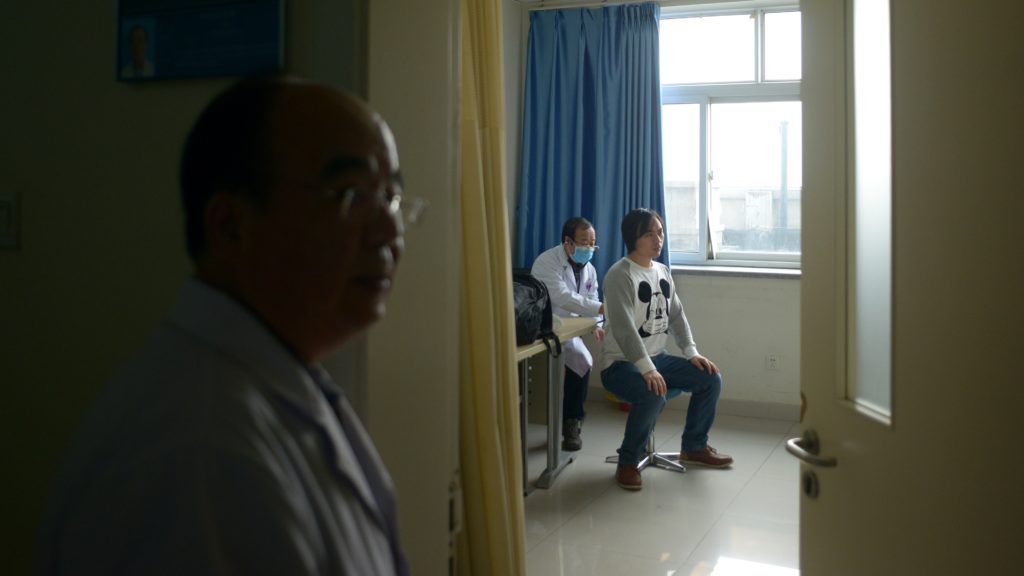
Gao Yongda (back L), chief physician at the respiratory department of Wangfu Hospital, treats a patient at Wang Fu Hospital in Beijing on December 9, 2015.  Seeking treatment for respiratory illnesses, Beijing hospital-goers complained on December 9 that their conditions were being worsened by toxic smog, now in its third day and which prompted authorities to declare a pollution "red alert".     AFP PHOTO / WANG ZHAO / AFP / WANG ZHAO        (Photo credit should read WANG ZHAO/AFP/Getty Images)

Nearly all clinical research sites in China are hospitals. Because of that, clinical trial participants are treated exactly the same way as regular patients.

Problems with protecting clinical trial participants, inadequate clinical trial infrastructure, and poor transparency make China an unreliable country in which to conduct a clinical trial. As a clinical research professional with more than a decade of global industry experience, I’ve seen clinical trials conducted in many countries but have yet to work with a U.S. company that has opted to conduct a clinical trial in China.

Protecting human subjects is a fundamental part of clinical trials. When deciding where to conduct one, pharmaceutical and medical technology companies must select countries that have adequate protections in place. China has had issues and challenges with protecting human subjects for years. A historical lack of clinical research infrastructure in China has led to problems adhering to Good Clinical Practice, the international gold standard for maintaining ethical and quality standards in clinical trials.

As an example, nearly all clinical research sites in China are hospitals, as there are no private practices. Because of that, clinical trial participants are treated exactly the same way as regular patients. That’s a problem because study staff — who are regular hospital employees — don’t have experience complying with Good Clinical Practice, putting the trial’s integrity, not to mention patient protection, at risk.

Another concern is the transparency of clinical research. Several documented cases of falsified or fraudulent clinical data have emerged from China in the past few years. That prompted China’s Food and Drug Administration (CFDA) to launch an initiative in 2015 to inspect more than 1,600 new drug applications that were pending approval. This initiative uncovered a mass of inauthentic data, and the CFDA was forced to withdraw or reject around 90 percent of those applications. Since then, the CFDA has required applicants to include a self-inspection report for each clinical trial. That should help minimize fraudulent data and increase transparency.

Despite new Chinese laws and regulations aimed at improving the conduct of clinical trials and protecting trial participants, issues with quality, proper oversight, and adherence to these protections still remain.

On the surface, the current protections appear to be in line with the Good Clinical Practice guidelines established by the International Conference on Harmonization. But a closer look reveals some big differences in the way these laws are followed. For instance, the new laws generally aren’t enforced, and there are no detailed guidelines for ensuring informed consent, an essential part of clinical trial participation.

China recently joined the International Conference on Harmonization as a regulatory member. According to the U.S. FDA, China has pledged “to gradually transform its pharmaceutical regulatory authorities, industry, and research institutions to implement the international coalition’s technical standards and guidelines.”

The Good Clinical Practice guidelines, while helpful in standardizing the ethical oversight of clinical trials, can be subject to interpretation. When implementing these guidelines in problematic countries such as China, trial sponsors must go above and beyond to ensure adherence and responsibility for the ethical conduct of their trials. Recent regulations have put more layers of oversight in place, including the pledge by China to implement International Conference on Harmonization recommendations, but we have yet to see if this will have any real effect on the overall quality of clinical trials being conducted there.

Part of the issue is that clinical trial investigators have substantial power in Chinese society, and they are the ones who are relied upon to interpret the regulations. CFDA officials, instead of acting as overseers, typically follow the investigators’ interpretation.

On paper, the protections of clinical trial participants that China has put in place are becoming more and more sufficient. And its membership in the International Conference on Harmonization and pledge to enact its Good Clinical Practice guidelines should help improve protection of human research subjects. Yet the actual implementation of these protections, laws, and regulations remains inadequate.

If a U.S. pharmaceutical company asked me today if it should conduct a clinical trial in China, I would say no. How I would answer next year, or the year after, will depend on whether China can improve its protection of human clinical trial participants, increase transparency, and establish a clear delineation of clinical research infrastructure.

China could someday become a global clinical trial mecca. But it has a lot of work to do before that happens.

Anne Poli is a senior consultant with expertise in clinical trial management at Halloran Consulting Group in Boston.

Visit Us On TwitterVisit Us On Google PlusVisit Us On LinkedinVisit Us On Facebook