Innovation in Investigator Site Contracting

In the perpetual pursuit of a more efficient clinical research process, biopharmaceutical sponsors and contract research organizations (CROs) have traditionally focused their resources on the more costly and time-consuming aspects of study start-up such as protocol development, regulatory and ethical review, and data management and analysis. Investigator site contracting and management of site payments are often overlooked as opportunities to accelerate study start-up and to reduce the expense and complications of managing study site contractual relationships. However, by targeting this smaller, yet still significant, aspect of study start-up, sponsors and CROs can expedite the process of contract negotiation, reducing both the cycle time and burden on the legal infrastructure.

images-1

Historically, it has been common practice for sponsors and CROs to adopt a standard Clinical Trial Agreement (CTA) and budget template to use during negotiations with clinical trial sites. While a standardized template might seemingly appear to streamline the negotiation process, many sponsors are finding that they are wrought with inefficiencies of their own.

As the legal landscape has evolved, the CTAs themselves have become longer and more complex in an effort to address the increasing intricacy of clinical trials and the changing legal landscape in which they reside. This has led to a more embattled negotiation process, lengthier review times, and undue scrutiny on the negotiation process itself.

In order for sponsors to truly remove these barriers and delays from the contract negotiation process,
they need a partner that specializes in this area. At the most basic level, a well drafted contract provides the sponsor with the essential retention of its proprietary rights and intellectual property, as well as the unambiguous authority to fully realize the information generated by each study site for the development of the drug.

When choosing a partner to assist with the negotiation process, sponsors and CROs should look for partners who will ensure that the sponsor’s rights and interests are adequately protected and the burden on the sponsor’s legal department is minimized. An ideal partner will:

  • Establish the proper framework for negotiations from the outset of the study – aligning competent resources with legal and budget experience.
  • Have trained negotiators who understand the specific laws and institutional policies of each country in which a sponsor is conducting trials, and can utilize their local knowledge of language, site personnel, regulatory scheme, legal nuances, customs, and country budget.
  • Embrace a strategy of marrying the budget development, negotiation, and payment processes to one another.
  • Work with the sponsor to prioritize each facet of contract language.
    For example, some sponsors might place a higher value on the protection of intellectual property, while others might prioritize strict indemnification and insurance requirements.
  • Handle a large enough volume of contracts yearly to establish professional relationships with sites, greatly increasing their ability to negotiate each
    contract with an understanding of each site’s requirements and negotiation styles.
  • Offer strategies for global investigator site payments and reporting that reduce operational burden on the sponsor, and ensure compliance with each country’s laws and regulations.
  • By enlisting the support of an experienced partner who specializes in contract negotiations, sponsors are able to decrease negotiation cycle timelines and avoid additional unproductive steps in the negotiation process.

    Contract negotiation is more than a function; it is an outcome-driven art. A successful negotiator should be a subject matter expert who brings best practices to the table and is allowed the freedom and flexibility to offer proactive solutions that address the other party’s concerns while advancing the sponsor’s position. Flexible solutions inevitably cut down on unnecessary negotiation and escalation, minimizing execution times and allowing the trial to begin and produce results.

    About the Author:

    Steven Jones, JD is the General Counsel and Corporate Secretary for Clintrax Global, Inc.

    A seasoned corporate attorney with over 17 years of experience in legal and financial negotiation, Mr. Jones has worked inside both large pharmaceutical companies and CROs, globally implementing new legal and business engagements through effective, timeline sensitive negotiation while limiting the exposure to constantly changing regulatory and financial risks. Prior to Clintrax, Mr. Jones directed contracting and financial processes for a large, global pharmaceutical company, ushering $100+ million in outsourced, time-sensitive Phase I/II and large-scale Phase III studies from initiation to closure.

Clinical Trials Are About Hope and Possibilities, Author and Trial Veteran Says

In 2011, Mary Elizabeth Williams was diagnosed with metastatic melanoma, a finding that usually means a patient has six to seven months to live. Knowing melanoma doesn’t respond well to traditional cancer treatments, she decided to take a chance on a phase I immunotherapy trial of a new drug. Williams wrote about her experience in her book, A Series of Catastrophes and Miracles: A True Story of Love, Science and Cancer. It was a journey, she says, from last resort to hope and possibilities.

Unknown

Lindsay McNair, chief medical officer of WCG, spoke with Williams in a webinar last week, discussing the patient perspective on clinical trials, what they do right and how to change what they do wrong.

Q: Given your options — treatment that didn’t offer a good success rate, death or participating in a clinical trial — do you feel that you were well informed on your options and what participation in a clinical trial entailed?

A: At the time, Yervoy (ipilumumab) was a very new drug on the market and had a 30 percent success rate. It’s scary embarking on a course of treatment for which there is very little precedent. There were not a lot of human subjects who had come before me, and I knew that the risks could be great. There was a risk, not only of it not working, but of dying from the treatment, which did happen to some people on this trial. I had great conversations with the immuno-oncology team and they were very clear about why I would be right for this trial. It was a choice that was made, not just based on the drug and the cancer, but very much on the patient. And that was a turning point for me — that I was being listened to and that I was going to be collaborating with a group of people who believed in me as a patient.

Q: When you were approached about the trial — the informed consent process — what was the hardest thing for you to understand as people started to talk to you about what the trial entailed, etc.?

A: My understanding of clinical trials was limited, and my understanding of immunotherapy was nil. I had a lot of questions and concerns and there was a lot for me to process. My oncologist did the best she could in terms of explaining treatment. My initial conversation with the immunotherapy team at Memorial Sloane Kettering was the first time that I really felt that maybe I wasn’t going to die. That maybe treatment in a clinical trial would work, but with the understanding that maybe it wouldn’t. I was in a state of desperate, deep panic. I had a conversation with someone who said that maybe participating in a clinical trial didn’t have to be a last resort for me. Maybe it could be my first resort. And that really changed the game for me.

Q: How much of your information and your understanding about what the study would entail for you came from the process, this conversation you had with study team members as opposed to literally reading the paper document that you were handed?

A: I had an initial meeting with a nurse. I was handed the document, and we sat down together and the expectation was that I would sign it on the spot. Even though we went through the document thoroughly, I remember feeling that I would have to sign the document whether I fully understood it or not. I also recognize that there were a lot of things that just couldn’t have been understood at that time because it was such a process and a new form of treatment, but I am really struck with how vulnerable I was, how much I didn’t know and that there was such an expectation of me. And I don’t know, in retrospect, if there was a lot of understanding by the study team that I was not fully competent. I wasn’t. I was a complete mess — physically, mentally, emotionally. These decisions often need to be made under very difficult circumstances, quickly, and you do the best you can with the timeframe that you have. But I recognize now how hobbled I really was. And I don’t think that is unusual.

Q: How do you believe that the informed consent form and process in a phase I trial should talk about the possibility of benefits? How should we express the truth about the odds of success in a very early study, which are low, but still leave people with hope? How can we balance that?

A: That’s a very difficult question especially because in phase I trials, there is not a whole lot of expectation of success. My consent form was pretty clear about that. I felt that I had an understanding that there was a hope of success. But at that point, we were not talking about the word cure. There was no evidence of possibility that I would have all of my disease eradicated. It was really just about efficacy and potential tumor reduction. That is what was communicated to me. And the bar was set low. And my expectations were reasonable.

I’m grateful that the way it was communicated to me was, “We are going to try.” It was about time rather than about the disease. That is a smart way to approach it. Maybe this is about, “We can extend your life.” Because, ultimately, that’s really what we want. I would be happy to live with tumors if it meant I would live longer. That’s what I think most people approaching cancer now are really looking at management. So, I think that’s fine to communicate it that way.

For the rest of the interview, please go to WCG’s website: https://bit.ly/2U9qzqu.

Intentional or Accidental, Bad Data Can Kill Trials and Careers

Two kinds of data integrity problems cast shade on research results and erode trust in scientific inquiry: questionable research practices and flat-out misconduct, a data integrity expert says. And while intentional misdeeds can result in regulatory, or even criminal, action, both categories can cause irreparable damage to clinical trials, companies and individuals.

images

Most data integrity problems in research fall into the questionable practices category and are not due to intentional acts, said Donna Kessler, research integrity officer at Duke University, during a recent CenterWatch webinar. They result from professionals who take shortcuts, rush research or just make bad decisions.

Questionable research practices (QRP) are generally understood across the research community and include failure to properly cite sources and methods, sloppy or incomplete documentation of results or, most commonly, failure to retain data and results.

Intentional misconduct, however, is defined by regulators. Researchers who fabricate data, falsify existing data or plagiarize the work of others can be subject to legal penalties and or debarment from participating in government-funded research.

Misconduct and questionable practices across the spectrum are more prevalent than some think, Kessler said, citing research that found 2 percent to 3 percent of researchers admit to fabricating or falsifying data, 14 percent have observed a colleague falsifying or fabricating data, and 33.7 percent admit to using QRPs. More than 70 percent observed others committing QRPs, Kessler added.

Research misconduct can be a result of bad judgment, lack of training or poor oversight, she said. In other cases, misconduct stems from competition for funding and recognition, or a sense of entitlement.

Researcher Eric T. Poehlman, for example, served a year in prison and was barred from getting any additional federal grants after he falsified data in 17 NIH grant applications and 10 of his papers. He later said he was motivated by his desire to advance as a respected scientist. He felt his area of study was important enough to warrant what he considered “minor” misconduct.

The repercussions of QRPs and misconduct are many, Kessler said. They can not only skew results and erode public trust, they can do serious clinical harm, as well.

In one of the most notorious and harmful cases of research misconduct, British surgeon and medical researcher Andrew Wakefield in 1999 published a paper claiming a link between childhood vaccines and autism. Not only did he falsify his data, his sample size was only 12 children, and he did not have ethics board approval for the study.

Wakefield was ultimately barred from practicing medicine and the study was retracted, but the ripple effects and the debate over childhood vaccines continues. Vaccination rates dropped globally thanks in part to intense press coverage of the Wakefield study. Further studies have shown there is no link between vaccines and autism.

Both the Wakefield and Poehlman cases and others show the potential long-term effects of misconduct on public health and the harm it can do to the credibility of researchers and scientific knowledge, Kessler stressed.

Not all data integrity issues are covered in federal regulations, and Kessler stressed that researchers and institutions must go further to protect the reliability and validity of research results. “The regulations are really the floor; they’re the starting point. To have integrity in research, you have to go beyond the regulations,” she said.

You can’t really prevent wrongdoing if a researcher is bent on misconduct, Kessler said. But researchers and institutions can step in when problems are caused by lack of training, sloppy methods or bad judgment, especially if the problems are caught early in the research process.

You also can prevent intentional misconduct by providing integrity education and training, reviewing and improving research and data practices, and encouraging reporting and investigation of possible misconduct.

To encourage integrity review, Kessler said, make reporting easy, with anonymous or online reporting options, stand firm against retaliation and take credible allegations seriously. Organizations also can implement tools for mentors and trainees, such as plagiarism detection software.

“Raising awareness of these types of wrongdoing is helpful, but you have to have some more active programs and changes in order to create a culture and a climate where integrity is at the forefront,” Kessler said.

To listen to the webinar, go here: https://bit.ly/2V2m8uR.

Avoid Enrollment Pitfalls: Find Your Best-fit Clinical Trial Sites

Selecting the right site is the single most crucial decision you’ll make about your next clinical trial. And perhaps the single most important consideration in selecting a site is whether it can make its enrollment. Many don’t; in fact, 20-25 percent of all clinical studies close because they fail to meet enrollment targets.

Unknown-2


The startup process is often more complicated than either sponsors or sites anticipate. Research2 from March 2018 finds that:

  • Average time from site identification to study start-up completion is 31.4 weeks; that’s a month longer than 10 years ago.
  • On average, 11 percent of investigative sites initiated were never activated; what’s more, that figure hasn’t changed in 20 years.For decades, CROs and sponsors have found their “best fit” sites and returned for future studies. But in the era of precision medicine and adaptive trial designs, that may not always be the best course of action. It is becoming increasingly necessary to turn to untapped resources to find potential enrollees. As research increasingly focuses on rare diseases with highly targeted patient sub-populations, the percentage of new sites is expected to increase.

    According to Tufts research released in March 2018, sponsors and CROs report that 28 percent of their sites are new relationships with no prior history or familiarity. Those relationships can be tricky. The overall site initiation cycle time is nearly 10 weeks longer for new sites compared to repeat or familiar ones.4Moreover, sites with insufficient experience are more likely to violate protocols or have low-quality data, which leads to more on-site visits and more request for clarification—even additional training. And all of that takes time and money.5

    Finding Your Best Fit

    ——————————————————

    In this environment, how do sponsors determine the best-fit sites for their studies? Much of what constitutes “best fit” is specific to the study, the patient population and similar factors, but we’ve identified five characteristics that apply more broadly.

    A Best-fit Site Has a Strong Record of Success——————————————————

    Unlike what they say about securities, past performance does predict future results. A site that regularly hits its enrollment goals will likely hit them for your study. But how much do you really know about past performance of the site or the investigator?

    Most sponsors rely on site-reported data. So Clinicaltrials.gov and Citeline can give you insights into whether a site has participated in studies for, say RA or Alzheimer’s, but other than that it doesn’t give you much to go on. Not only is the data self-reported, it’s often not current.

    Without the right partner, it becomes difficult to assess past performance. With the right partner, however, you have access to verified data to help you make an informed decision. For instance, WCG has been able to partner with our clients and give them the data they need. Because we have five IRB companies in our portfolio, we have access to 95 percent of all protocols, allowing us to provide FDA-verified intelligence to support the site-selection process.

    A Best-fit Site Has a Strong Community Presence——————————————————

    No matter how diligently they scour their records and recruit their own patients, no site is going to fully enroll a study from its own patient population.
    A site that’s active in the community and has built community relationships is more likely to be successful at enrollment.

    Among the signs of a practice engaged in its community:

    • Participation in programs such as “lunch and learn,” which demonstrate presence in and commitment to the community.
    • Relationships with patient-support and condition-specific groups, which engender trust and can provide potential pools of trial participants.
    • Established referral pathways: Ideally, physicians are tapping colleagues in other practices as a source of participants.
    • A social media presence can, at the very least, keep patients alert to research opportunities and build connections with patient advocacy groups. What’s probably more useful is participating on sites such as www.inspire.com/, a social network for patients and caregivers that provides peer support and connects patients to clinical trials.

      A Best-fit Site Takes an Integrated Approach

      ——————————————————

      The best-fit sites embrace clinical research as another offering of care to the patient. It’s fully integrated into their practice, and they promote clinical research in much the same way they’d promote a fitness class or a smoking-cessation program.

      These practices are proactive. The approaches may use include:

      • Showing a list of opportunities on a monitor in the waiting room.
      • Talking to patients who may be eligible to participate in trials.
      • Engaging their colleagues in the practice —including nurses, NPs, PAs, etc.—to help them spread the word.These percentages are higher in practices that are clinical trial sites, but you’d be surprised at how many of even those fail to successfully promote their studies to patients.

        It comes down to a failure to see clinical research as an integrated part of the medical practice. Not only does that suggest that the practice devotes inadequate resources to the research, but it also suggests a lack of passion. As we’ve helped clients look for best-fit sites, we’ve learned that passion counts for a lot. Successful sites have a passion for research. Being a clinical trial site is an added responsibility for someone—and very few people want extra responsibility. A commitment to research is driven by passion more than revenue.

        But passion alone isn’t enough: The practice has to dedicate the resources.

        A Best-fit Site Has a Plan and a Dedicated Clinical Research Team to Execute It

        ——————————————————

        A clinical trial site can’t just do a study or two on the side. They need a plan and the right people to execute it. Enrollment is always top of mind for best-fit sites. The coordinator needs to be able to explain how they will identify and connect with potential research participants. Given that 68 percent of sites fail to meet their projected enrollment targets,8 you’ll want your coordinator to be able to explain how it will make up any potential shortfall.

        Still, a plan isn’t enough, either. Can the team execute? You can get a sense of this before or during the pre-selection visit. Here are some common red flags.

        • They are managing too many protocols with too few staff.

        • They don’t return questionnaires or other material in a timely fashion.

        • They can’t explain their recruitment strategy to you.

        • They seem harried and overworked.

        There’s one other element that may not be a red flag today, but it will be tomorrow: The site lacks some of the technology tools sophisticated sites use, such as e-consent and a clinical trial management system. In our experience, the more open to technology a site is, the better their enrollment.

        A Best-fit Site is Open to Innovation

        ——————————————————

        Small and emerging biopharma companies will always have unique challenges—but there’s help available. Small companies are in a great position to adopt new technologies, take advantage of the services that partners can provide, and to leave behind the “that’s the way we’ve always done it” mindset that has prevented the clinical trials operations field from moving forward at the same speed as medical advances.

        Finding Your Best Fit

        ——————————————————

        Everything rests on site selection: Pick the wrong
        site, and your trial could end up in rescue—or worse. Everyone understands that, yet roughly a third of sponsors and CROs say they are unsatisfied with their site initiation processes.9

        By working with sites that meet the aforementioned criteria, and by availing yourself of the data and other resources available, you can dramatically improve the likelihood that your next clinical trial will succeed.

Removing Barriers: Reimbursement and Compensation for Participation in Oncology Clinical Trials

It is an often-repeated statistic that only 3% -5% of patients with cancer participate in clinical trials for cancer therapies. The reasons for this are myriad. One survey found that only 16% of patients were aware of relevant clinical trials when discussing treatment options with their providers,1 although more than 50% of patients will agree to enroll in a trial when approached. About 20% of cancer clinical trials will never be completed, because they fail to enroll enough participants to be able to answer the research question.

To better understand the reasons for low clinical trial participation, the American Cancer Society’s Cancer Action Network (ACSCAN) commissioned a committee to investigate this question and to develop a report on the barriers to research participation, and consensus recommendations for overcoming these barriers.2 One of the findings in the report was that concern about the potential costs of research participation prevented patients from finding out more about trials, or from participating in trials.

In this paper, we look at the issue of the costs of research participation, and best practices for the reimbursement and compensation of research participants.

Unknown-1

How Payment Impacts Participation

Financial considerations related to participation in clinical trials can include both medical and non-medical costs. Medicare and most private insurance plans are now required to cover the costs of routine medical care that occurs during cancer clinical trials, with trial sponsors usually covering the expenses for procedures or medications that are necessary only for the research study. However, participants may be asked to cover out-of-pocket non-medical costs, such as for travel, lodging, parking and meals. This is often due to the need to travel greater distances to take part in a clinical trial, or the need to visit the clinic more frequently for additional trial-related treatment or monitoring. Even if these ancillary costs are comparable to expenses experienced during normal medical care, participants often perceive that they may be spending more money, and frequently cite this as a reason for not considering trial participation.

This sensitivity to costs manifests itself in disparate trial participation rates between high and low-income cancer patients, resulting in underrepresentation of low-income populations in clinical trials. Researchers have also found that individuals from poor neighborhoods travel over three times as far as individuals from non-poor neighborhoods for clinical trial participation (58.3 vs 17.8miles), so there may be a true difference in the expenses of participation, in addition to sensitivity to extra costs.7 Researchers have found that individuals with an income under $50,000 per year are more than 30% less likely to participate in a cancer clinical trial compared to those with incomes over $50,000.8 Providing funding to cover the non- medical expenses has been shown to boost overall enrollment, especially among those experiencing greater financial stress.

The significance of the issue of financial compensation has been considered to have such a considerable impact on cancer clinical trials that the American Society of Clinical Oncology (ASCO) convened a roundtable meeting to discuss the foundations of this problem, and to develop recommendations for policies and actions both at individual institutions and for the overall clinical research system. The discussion and outcomes of this roundtable was published in the fall of 2018.

The Ethical Perspective on Payment for Research Participation

The underlying concern about the financial payments to research participants is related to the concept of undue influence. In general, the worry is that potential research participants may be willing to accept study risks or discomforts that they would ordinarily find unacceptable, but that they are willing to allow only because they want or need the financial compensation that comes with study participation.

Research sponsors and investigators have often been wary about offering payment of any kind to research participants, out of concern that they will be seen as trying to act inappropriately in persuading patients to participate in clinical trials. For that reason, they will sometimes offer no reimbursement of expenses or other compensation, or only very low amounts of compensation that don’t cover actual expenses, to research participants. One pharma company, for example, has an internal policy that they will not allow token gifts (small toys, low-value gift cards or other treats, etc) as a thank you to children who participate in their pediatric clinical studies, out of concern that any form of payment could be interpreted as “bribing” children to participate in research. Unfortunately, this discomfort has resulted in the cost burden of participation being shifted to the participant.

Recently, however, this attitude has been shifting. While the concern about undue influence has always been a hypothetical one, newer research with potential research participants has shown that, in fact, they do not accept increasing levels of risk even when potential payments continue to increase. No research (that is subject to current regulations) can be conducted without approval by an Institutional Review Board (IRB); one of the criteria that the IRB assesses in the approval of research protocols is whether the risks of the research are reasonable in relation to the potential benefits (direct benefits to the participant and/or the benefit to society of having the knowledge to be gained from the study). Therefore, as Largent and Fernandez Lynch have argued, no potential participant could be unduly influenced, because the research would not be proceeding at all unless the risks had already been determined to be reasonable—payment, by itself, could not make those same risks be unreasonable, whether the payment offered was $5 or $5000.11

There are a number of ethical arguments in favor of participant compensation. The financial burden of research also becomes an issue of distributive justice. If participating in a clinical trial costs a participant $40 each time they have to come in for a study visit to pay for their gas, parking in the hospital garage for 3 hours, and a meal from the hospital cafeteria, then only people who can afford those extra expenses will be able to participate in the clinical trial, as evidenced by lower participation by those making under $50,000/ year.7 Therefore, both the risks and the potential direct benefits of research participation accrue only to people who have financial means, and people who can’t afford these expenses are effectively prohibited from participating. Importantly, the requirement of the Common Rule to avoid undue influence through the use of financial payments was meant to avoid unduly shifting research onto low-income patients, but excessive caution in financial support has created the opposite effect.

In addition, ethicists often point out that a clinical trial which cannot answer the research question it is designed to address puts participants at risk but does not achieve the expected benefit of the scientific knowledge that was expected to result when the study was designed and was approved by an IRB. A study cannot answer a research question with sufficient confidence (or statistical significance) if it cannot accrue the necessary number of evaluable participants from whom to collect outcomes data. Therefore, there is an ethical imperative to ensuring that clinical trials are able to enroll enough participants and compensation, and sometimes payments above fair compensation, are not just appropriate but necessary if they are needed to achieve this goal.

Best Practices

It is often easiest to consider payment for research in three separate categories; reimbursement for expenses, compensation for time and inconvenience, and incentive payments. Essentially all parties involved in clinical research agree that reimbursement for study-related expenses is ethical and appropriate,12 and many feel that it is ethically necessary for participants to not have financial costs for research. In research studies sponsored by biopharma companies, research costs are almost always covered. This includes study-related doctor visits, tests, and procedures that would otherwise be out-of-pocket costs for participants. It also usually includes incidental expenses such as transportation to study visits, parking, and meals during long study days. In studies that are funded by other sources, or that do not have specific funding sources, such as investigator- initiated trials, there may be no financial resources to draw from to cover the reimbursement of expenses. There are some organizations, including non-profit groups, who are trying to change this and who may be able to assist in covering these costs.

Sponsors are now using new methods to provide things like study visit transportation by, for example, setting up accounts with ride-sharing companies that are direct-billed to the sponsor. When study transportation is more extensive and may involve flights and hotels, there are study concierge services who can make all those arrangements on behalf of the participants. While some IRBs were initially wary of these new arrangements, most are comfortable with them as they become more familiar with the arrangements, particularly since there have been no apparent ethical concerns or issues raised by participants.

In most cases, compensation for the time and inconvenience of research participation is also considered ethical and appropriate.10 There are many opinions on what constitutes “fair” compensation; some authors suggest that compensation should

be based on local minimum wages. Others point out that only people with high-paying jobs are unlikely to accept that payment rate if it means losing time from (higher-paid) work, and low compensation rates disproportionally shift the burden and benefits of research onto less well-paid members of society. The payment rates that can be offered are also likely to be dependent on the available funding. While there is no “right” amount of payment, the general message should be that compensation for research participation is ethical, acceptable, should not be prohibited, should not be avoided or reduced out of concern for undue influence, and should be determined out of respect for the time and inconvenience of the participants and the available research funding. IRBs which are in line with the current ethical thinking on compensation issues should not restrict or limit these payments.

Finally, in some studies, incentive payments that go above and beyond what might be considered to compensate for time may be appropriate in some studies. As discussed above, a study that fails to fully enroll and cannot answer the study question asks participants to accept risks, but there is no benefit to society. If incentive payments are a feasible way of ensuring full enrollment, and as discussed above, the risks of the study have been determined to be reasonable through IRB review, there is no regulatory or ethical prohibition on higher payments to participants. In fact, incentive payments are routinely used to recruit healthy volunteers into early phase drug testing, where the participants are exposed to risk, but have no prospect of direct medical benefit.

Conclusion

The issues around reimbursement and compensation in cancer clinical trials are complex, and solutions to address these issues will need to be multi-factorial and integrated into multiple parts of the clinical research ecosystem. But in order to increase participation in research studies to allow us to move new and promising therapies forward, we need to address these barriers in comprehensive and thoughtful ways. Solutions for policies and procedures should involve the participation of patient voices, as well as those of the professional research community.


Small Biopharmas Face Unique Challenges Outsourcing Early-Stage Drug Development Issues

By partnering with external drug development service providers, small biopharmaceutical start-ups can move their products out of the lab and into clinical development more efficiently.

Unknown


At the forefront of the biopharmaceutical revolution are hundreds of small start-up companies with promising drug candidates but limited staff expertise in drug development and regulatory affairs. These “virtual” biopharmaceutical companies all face the same tough question: How do we find and manage the resources we need to move our products out of the lab and into clinical development quickly and cost-effectively so we can validate our concept, achieve our company goals, and increase our chances for success? The answer: Partner with external drug development service providers who have the knowledge, experience, and resources to guide small companies through their critical proof-of-concept clinical studies while avoiding costly delays and missteps.

The mounting challenges of taking new biopharmaceutical products through development and regulatory review to reach worldwide markets have been well documented. All pharmaceutical companies are facing increasingly stringent regulatory requirements, intense competition, pressures to control costs, and demands for lower prices. For the rapidly growing biopharmaceutical segment of the industry, there is a second set of hurdles: constantly changing technology, evolving regulations for biologics, and intense public and political scrutiny of biotechnologies such as gene therapy and stem-cell research.

Within the biopharmaceutical segment, hundreds of small start-up companies have emerged in recent years, representing a tremendous source of potential new therapies for serious, unmet medical needs. However, these companies face additional marketplace challenges that make the already complicated process of moving promising drug candidates out of the discovery lab and into development even more daunting.

IDENTIFYING THE DEVELOPMENT HURDLES

These additional challenges begin as a matter of size — because in pharmaceutical development, size does matter. The process of preparing for and launching human trials for a potential new drug, especially a complex biologic, requires significant resources and expertise in regulatory affairs, clinical development, marketing, manufacturing, and other disciplines — a depth of expertise that small companies often cannot afford to fully staff in-house.

Small biopharmaceutical companies must also overcome the many obstacles faced by nearly every start-up company: limited funding, depen- dence on a single product, the need to find addi- tional investors or partners to move their product forward, and pressure from investors to show results quickly — pressure that is compounded by the traditionally slow pace of pharmaceutical development.

The very nature of biologically derived products is challenging, because it differs substantially from traditional small-molecule drugs and requires different designs for early clinical studies. Add to that the fact that many of the products being developed by small biopharmaceutical companies are aimed at very difficult indications that present unique scientific and development demands.

Equally important, senior management personnel at many small companies possess impressive scientific, academic, or entrepreneurial background but have little or no experience in preparing regulatory submissions, interacting with regulatory agencies, designing and managing clinical trials, or producing investigational drug supplies for clinical trials under Good Manufacturing Practices (GMPs).

MOVING THE PRODUCT FORWARD

The immediate objective for most small biophar- maceutical companies is to transition their prod- ucts from the discovery lab to early-stage clinical trials (phases 1 and 2a) as quickly and cost- efficiently as possible. These first-in-patient safety and proof-of-concept studies are essential if the products and the companies are to move forward, whether the ultimate goal is to attract additional investors, draw the attention of poten- tial corporate partners, pursue out-licensing opportunities, or advance to phase 3 trials.

Partnering with an experienced and knowledgable external drug development service provider is one strategy. But additional questions must be answered before a biopharmaceutical company can proceed: What specific services do we need? How do we select a partner with the qualifications and services to meet our requirements? Should we license our discovery to a major pharmaceutical company or should we use a consulting firm or contract research organization?

The better-than-anticipated success of some recently approved biopharmaceutical products has created a shortage in the worldwide manufacturing capacity for biologics. With small biopharma’s dependence on outside sources — such as contract manufacturers — to produce drug supplies for their upcoming clinical trials, these companies must address manufacturing issues as early in preclinical development as possible.

Finding the right answers to these questions can spell the difference between success and failure for a small company in the highly competitive pharmaceutical business. As if that’s not enough pressure, finding the answers quickly is also cru- cial. Given the competitive environment, it is more important than ever for small biopharma- ceutical companies to involve these outside resources early so they can avoid costly mistakes and reduce development times.

UNDERSTANDING SERVICE NEEDS

Before small biopharmaceutical companies can select appropriate development partners, they must understand the types of services that are available to meet their specific product and business needs. External drug development service providers offer a vast array of services, but there are some major service categories that most small companies will need in the early stages of clinical development.

Product and indication analysis. Fundamental to developing a potential new therapy is determining the most appropriate clinical indication for which to conduct clinical trials. Some products emerging from the lab are targeted at a very specific condition, but most offer the possibility of efficacy in more than one clinical indication.

One of the most important services a development partner can offer at the beginning of the development process is the ability to determine the best indication to pursue. This analysis must balance many factors, including medical need, competition, available patient study populations, clinical trial costs, regulatory requirements, reimbursement issues, market potential, and the likelihood of clinical success. Even for products where the indication decision is more clear-cut, there are other factors to consider such as whether the product meets the criteria for orphan drug designation or fast track development status.

Clinical development strategy. The next key step in the product development process is the creation of a clinical development strategy. This process typically begins with a gap analysis of the existing pre- clinical data to assess strengths and weaknesses and how to address any shortcomings in support of proposed first-in-patient trials. From that assessment comes the actual clinical trial design and protocol development for phase 1 and 2a studies.

The development provider must use its experi- ence to weigh numerous considerations to arrive at a cost-effective clinical plan for the client, in- cluding trial size and length and patient inclusion and exclusion criteria; advantages and disadvan- tages of conducting studies in North America, Europe, or Latin America, such as differences in standards of care, medical practices, and regula- tions; and the difference in the types of studies and data required for biologic products. By mak- ing the right strategic choices for the clinical development plan, clinical trials should produce the required data in the shortest time at a reasonable cost.

Regulatory strategy. Another essential element is a clear-cut regulatory strategy. Regulatory re- sources need to be assessed early in the development process. Regulatory issues should be considered when determining the appropriate indication, the clinical trial design, and the right mix of pre- clinical product characterization studies to support first-in-patient studies. Regulatory expertise is crucial to understanding the medical and data requirements for approval in target markets, and for ensuring that the clinical trials focus on providing the type of information that the regulatory agencies want to see.

Regulatory knowledge is also critical to shaping a global dossier that will speed worldwide approvals. A development partner’s experience in working with various regulatory bodies provides the client with valuable information about submission requirements and even about which agency to approach (CDER versus CBER, for example). Knowing how to prepare for and conduct the many meetings and phone conferences with agency per- sonnel can help the client avoid tactical errors and speed approval times.

Manufacturing strategy. At the earliest stages of development, it is essential to characterize the processes that will be used for manufacturing a potential new therapy and to determine whether a product can be manufactured in sufficient quantity, at a high level of quality, in an appropriate dosage form, and at a reasonable price. Understanding manufacturing processes is particularly important for biological products, with their inherently complex manufacturing process and product characterization requirements. These processes should be validated and performed in conformance with GMPs to ensure that any manufacturing changes made to scale-up produc- tion do not change the way the drug performs.

It is important that validated procedures and analytical assays are in place to ensure that the manufacturing process is able to inactivate or re- move adventitious agents (viruses, for example) from the product before clinical testing in hu- mans. It is also essential to develop and validate analytical methods to measure serum levels of a drug (pharmacokinetics), as well as to detect the presence of neutralizing antibodies typically gen- erated by a patient’s immune system against a protein-based drug.

OTHER SERVICES

Depending on the stage of development and the business strategy of the company, small biopharmaceutical companies can turn to external providers for expertise on a number of other important clinical development issues, including program management, medical marketing strategy, and business development services.

Program management. Some providers offer a comprehensive clinical development program management service. This allows the small bio- pharmaceutical company to select a single partner to manage its complete drug development effort, reducing the amount of management time the client would otherwise spend finding, managing, and monitoring multiple service providers.

Medical marketing strategy. Many virtual bio- pharmaceutical companies elect to sell or out- license their product before they reach later-stage clinical trials, but an increasing number are stay- ing involved throughout the product life cycle. A sound medical marketing strategy — which determines the best ways to prepare the healthcare community for the launch of a new product — is vital to later-stage development. It bolsters the acceptance and market penetration of a new product by building pre- and postlaunch aware- ness, helping to maximize the product’s period of market exclusivity.

Business development services. External service providers with extensive experience in clinical development can provide their clients with access to other experienced service providers that offer valuable services to small biopharmaceutical companies, such as venture capitalists, law firms specializing in patent and intellectual property issues, and companies that provide preclinical services and analysis.

MEETING THE CHALLENGE

Success in pharmaceutical development is more than a matter of product efficacy. Even the best product can fail if its regulatory submissions are faulty or if it experiences substantial delays dur- ing the development process that allow a com- petitor to reach the market first.

Small biopharmaceutical companies whose future may depend on the success of a single new product cannot afford such failures. They face con- siderable challenges on the road from lab to mar- ket, but they can overcome those obstacles and in- crease their chances for success by selecting external development providers with the right knowledge, experience, and resources to help them through the clinical development process.

Are remote clinical trials cheaper?

In 2014, The Tufts Center for the Study of Drug Development estimated the cost of bringing a drug to market to be $2.6 billion.1 With such escalating costs and drug pricing discussions at an all-time high, many companies are exploring ways to continue to innovate and bring novel drugs to patients while reducing the overall costs of drug development process. Enter… remote clinical trials.

375_250-ipad_medical_remote_digital_istock_905865354

Sometimes known as digital or virtual trials, remote clinical trials are a distinct sign of the times we live in and the future we are marching toward. With the digital age as its guide and patient-centricity at its core, the remote clinical trial model aims to accomplish better results (and less costly ones) through a significantly reduced number of investigator sites, the use of digital apps and equipment, remote monitoring, and protocol requirements that center around the patients and their homes. But in addition to the patient-centric aspect and the competitive advantages that remote trials offer, such as efficiency and speed, do these trials also present cost saving opportunities, or can additional costs be expected? While virtually (no pun intended) every aspect of a clinical trial is impacted when going from a traditional to a remote model, in this article we will explore some of the main categories where we already see cost savings and potential cost challenges. Let’s first look at some of the main areas that offer opportunities for cost savings.

Saving Costs Through Remote Trials

Investigator Fees

With investigator fees responsible for about 40 to 60 percent of a total clinical trial budget, it is no surprise that when this cost category is impacted, it brings significant change to the bottom line. While various investigator fee subcategories are impacted due to the nature of remote trials, some of the top ones are derived from the actual number of investigator sites involved in these trials, costs for patient visits (procedures and staff costs), and other site costs (i.e., start-up fees, pharmacy fees, overhead costs, other administrative fees, etc.).

For example, remote trials will not require what we sometimes refer to as the traditional brick-and-mortar setup of multiple study sites. Instead, by using technology to reach and engage the patient directly throughout the trial, remote clinical trials use fewer physical sites, requiring fewer investigators. Some trials may only have a few, or even just one central site coordinating patient involvement in the trial. Although site staff will still be required to a certain degree, the number of actual sites participating is significantly less than in traditional trials. The sheer reduction in the number of investigator sites is one of the biggest, if not the biggest, driver of cost savings when conducting remote clinical trials.

Another example in this category is the reduction in patient visits and site costs. Remote clinical trials look to also streamline protocol visit procedures and requirements in addition to many of the procedures being conducted directly by the patient alone without the need for oversight by site staff. This has a direct impact on costs for site staff time and effort and overhead associated with such procedures. Additionally, with the elimination or at least significant decrease of traditional on-site patient visits, associated site fees costs that are currently covered by many sponsors are reduced, even for central coordinating sites participating. You can read a previous article on this specific topic here.

Site Monitoring And Site Management

Monitoring is another very costly aspect of clinical trials, with on-site monitoring making up around 25 to 30 percent of the overall cost of clinical trials.2 As a direct result of drastically reducing the number of investigator sites, traditional on-site monitoring and management costs are also reduced. Additionally, remote site monitoring is likely used, which further reduces the need for site monitors and all the travel, hourly rates, and expenses associated with this type of personnel.

Patient Travel Costs

Patient travel is a cost that is significantly reduced with remote trials due to the simple fact that most of the protocol visits take place in or around the patient’s home. This is not only helpful to the bottom line but also for the convenience of the patient and is especially helpful for patient populations for whom travel is challenging.

Patient Recruitment And Retention

While not a cost savings at the level of the previous categories, patient recruitment and retention are areas where many sponsors may see some cost savings, especially if they have not already been utilizing digital means for these activities in their traditional trials. Social media and other digital efforts drive patient recruitment and retention strategies in remote clinical trials and have innately lower investment costs. Retention is also expected to be greater for these trials, as many of the barriers to patient participation, such as travel to the investigator site, are eliminated. This in turn reduces the cost of having to recruit new patients to the trial, although this piece is still something to keep an eye on.

Potential Cost Challenges

It is important to note that despite the cost savings associated with remote trials, there are also potential cost challenges. Let’s look at some of these…

Harmonizing Platform

The first area to consider when thinking about potential cost challenges in remote trials is the investment in a technology platform to harmonize all the different digital efforts in the trial. From patient wearables and apps, to data from local labs and data at central coordinating sites, there is a fundamental need to make sure all the data is harmonized for analysis, monitoring, cleaning, and eventual submission. While likely one of the biggest costs associated with remote trials, it is imperative that the right platform and partner are used to pull everything together. The ROI on this expenditure will only be seen over time and with the scaling of these types of trials for the sponsoring company.

Patient Equipment

One forgotten area of cost is the equipment the patients will use for remote trials. With a traditional trial, sponsors are accustomed to having investigator sites that own standard equipment for standard visit procedures. This is different for remote clinical trials, as the patients are essentially performing most of the study visit procedures themselves in their homes. When the strategy is laid out for these trials, the costs for any equipment, app, wearable, service, or other items that will be needed at or near the patient’s home in order to accomplish the protocol requirements must be considered.

Learning Curve Associated Costs

As these trials are relatively new to our industry, there is a natural learning curve and thus associated costs with it. For example, there may be a need for additional training of all stakeholders, additional personnel time across the different vendors, sponsors, coordinating sites, patients and ancillary staff, or even the additional costs associated with a major failure of an early clinical trial in this space. This is a cost that companies considering embracing this model need to anticipate, at least for the near future.

Commercial Impact of Reduced Physician Involvement

Although sometimes forgotten in the clinical development stage, from a commercial perspective, it is very important that physicians remain engaged throughout the drug development process, even within remote clinical trials where the number of investigator sites and, as a result, the number of physicians are drastically reduced. If physicians do not feel involved throughout the clinical development process, they may not feel comfortable enough with what they know about the drug itself to recommend it to their patients once the drug goes to market.3 This is something that, if not well-planned by study sponsors, may have a negative budgetary impact post-approval.

Conclusion

Although the mentioned cost observations showcase the current state of remote clinical trials, it is important to note that such trials are relatively new to our industry. Lessons are being learned and things are constantly changing, as would be expected in our digital age. These trials should not be thought of as something that will necessarily decrease costs in and of themselves, simply because remote clinical trials should cost less. Rather, it is the scaling of such trials over time that has the greatest potential for cost savings and opportunities. Lastly, due to the fluidity of the topic, there is a good chance that new costs, of which we are not yet aware, may arise. But I guess that is the beauty of diving into an exciting and new way of doing something – there is great potential for risks and amazing rewards with it.

“Hey Alexa, find a Clinical Trial for me….”

In this age of smart phones, cloud-based voice helpers and all things “Google” the public and medical profession have many ways to find a clinical trial. The most comprehensive listing of clinical trials in the world can be found at www.clinicaltrials.gov but when you get to that site it’s often difficult to navigate and understand, even for those of us in the research field and biopharmaceutical industry. Imagine a patient or caregiver who has received an unexpected diagnosis and is searching for information.  “Frustrating,” “confusing” and “not helpful” may best describe their first impression.

Unknown

To be most patient centered, researchers and industry must consider the how and where information is available for clinical trials and treatments. It’s important to provide high quality information in a way that can be easily understood while helping to direct patients and their caregivers to centers of excellence for additional consultation.  If we don’t take the lead for our areas of interest, some other information source will likely fill the void.

Important Considerations for Clinical Trial Awareness:

  • Each of our organizations should consider  a “wiki” page for the compound or treatment being investigated. Is someone in your organization monitoring associated and relevant Wikipedia content?
  • If “newly diagnosed xyz” is searched, what is the search result? Where does that information lead the searcher? Is the information helpful/harmful?
  • How buried is the trial in the www.clinicaltrial.gov  ocean of information? Would you or your family be able to navigate to the right information to find a center of excellence or an expert?
  • Would your trial benefit from a stand-alone digital presence? Would a social media presence be helpful? Knowing how often the public is searching for information for patients seeking treatments or trials in a specific disease area provides good insight into whether or not a digital presence is important to patients and caregivers.

These questions are relevant and timely for researchers and industry. Enrolling clinical trials is time intensive and costly, speeding or slowing new treatments being researched to potentially be available to help more patients. The more transparent clinical trial information is to patients and their families, the more informed questions they can ask their healthcare providers.

There are many ways to find medical information, but they are not all equal. We place great trust in our medical professionals to give us the best information, but they cannot be expected to keep track of every new biomarker and treatment option being investigated. They too turn to “Google” hoping to find updated and understandable information to share with patients. We should always consider how best to help provide good information to the medical community in the forums they are using! It’s likely they might say be the one asking, “Hey Alexa, find me a clinical trial…..”

CRAs are at risk of work-related mental health disorders

Clinical research associate (CRA) turnover has long been a complex and challenging issue. We can recruit more CRAs, increase publicity in colleges, and introduce assessment standards. I could quote various statistics regarding turnover, but I won’t. This article is not about those things. This article is first in a four-part series that will look at how employers can make effective changes in the workplace that will empower both line managers and CRAs to take control of their own mental health resilience in light of their demanding role. A happier CRA is more likely to stay with an employer and will lead to greater productivity, resulting in better efficiencies within our clinical trials. To quote the renowned American thought leader on positivity psychology, Shawn Achor, “The greatest competitive advantage in the modern economy is a positive and engaged brain.”1

Exhausted

This article is the first of a four-part series that will investigate the disillusionment CRAs today experience with their role, why they do, and what we can do about it. I conducted a survey completed by 700+ CRAs, so let me start by explaining why I did.

An Inherently Stressful Lifestyle

The idea for this article came when I read a book by Stephen Ilardi, “The Depression Cure: The 6-Step Program to Beat Depression without Drugs.”2 I read this book because I have severe depression, and when you have depression you try to “fix yourself,” so you read a lot of self-help books. Due to my background in sciences and clinical research experience, the book made me think about how vulnerable CRAs are to developing mental health issues in the working environment.

The book outlines six key lifestyle elements that can protect against depression by reducing your stress-response-circuit activity. By reducing your “runaway” neurological stress response, you increase your resilience to depression and anxiety.

So, taking it back to the daily role of a traveling CRA, how are they at risk? Let’s briefly look at the six lifestyle elements researched by Ilardi:

  1. Exercise – This tricks your stress response into down-regulation. CRAs have a sedentary lifestyle due to office work and traveling. Reduced exercise does not lower stress hormones, so the body can remain in a fight-or-flight status.
  2. Natural sunlight exposure – Natural daylight is 100 times more powerful than indoor artificial lighting. The lighting levels have a direct impact on stress hormones and levels of vitamin D, and low levels of Vitamin D have been found in people with depression. Sunlight exposure allows our bodies to convert cholesterol into vitamin D3. CRAs monitoring inside, working in offices, and on transport may not get enough natural sunlight, so they are potentially at risk.
  3. Restorative sleep pattern – This is required for processing of neurochemicals accumulated in the day. CRAs’ sleep patterns can be affected by travel, staying in hotels, and workload. This was mentioned by some CRAs who completed the survey I conducted.
  4. Social connectedness – Brain activity is regulated by social connections. Periods of isolation can up-regulate stress hormones. CRAs who often work in isolation, are home-based, and travel have reduced social connectedness.
  5. Value-related activity – This is engaging activity related to your own personal values. If work takes precedent and you are unable to construct a meaningful work/life balance around your values, your stress response will increase.
  6. Omega-3 fatty acids – Studies indicate these help regulate brain function more effectively. Our bodies cannot make omega-3 fatty acids, and our diets do not provide the optimal omega-3 to omega-6 ratio necessary for antidepressant effects. The ratio should be 1:1 Omg3:Omg6. In the average diet, it is now 16:1, and this can affect a person’s stress-response resilience. CRAs may not be any more at risk of this than the average person; however, a CRA’s food choices may be limited when traveling, working late at the office, and monitoring on-site.

I remember what it was like to be that typically tired CRA — traveling on my own somewhere strange; tired; checking into a hotel room late at night; searching for some high-calorie, high-sugar processed snack in my bag; powering up my device to do some work (when it is already 11 p.m. and I need to be on-site at 9 the next morning).

The CRA Role — Then And Now

I was that CRA 15 to 20 years ago, and my on-site monitoring day looked like this:

  • Review hard copy medical patient notes and source data, including patient diaries and questionnaires.
  • Review the hard copy case report form and perform a source data verification check, noting any monitoring discrepancies.
  • Visit the pharmacy, and conduct drug accountability. Return to the clinic for a short meeting with the site staff, hopefully the investigator! Go home; write the visit report and follow-up letter the next day. No mobile phones, no technology.

Nowadays, we may expect to see this type of daily routine:

  • all of the above tasks, although now working on much more complex, higher-risk trials involving biological agents, rare orphan diseases, and advanced technology
  • managing constant information notifications via mobile phones and other devices, i.e., we don’t stop working
  • conducting teleconferences on the road
  • more guidelines and documents to review in line with the risk-based approach
  • perceived organizational and cultural expectations that multitasking and extreme busyness are now the norm and to be expected
  • being out of the office for an increased number of days at a time (on-site visits).

I am not suggesting CRAs 15 or 20 years ago had it easier or harder than CRAs today. I am saying recent developments in the way employees work and the technology that has since developed are not conducive to good mental health, i.e., never completely switching off from work and increased expectations of multitasking. However, each trial is unique and affected by factors such as study training, user-friendly guidance documents, a good team structure with clear line-of-sight objectives, and feeling supported by management.

The Relationship Between Mental Health And Burnout

After reading the book, I was interested in how CRAs manage their mental health in line with their day-to-day roles. So, I conducted an anonymous survey with nine questions, the results of which will be revealed in the subsequent parts of this series. The survey was distributed via several forums, such as The Association of Clinical Research Professionals, Clinical Leader, a clinical research group on Facebook, LinkedIn CRA-specific groups, and my personal connections.

I vastly underestimated the huge response to this survey — over 700 responders from many different countries and organizations. There were no monetary incentives, just the chance for CRAs to provide their own perspectives and ideas.

For the majority, this survey provided an outlet for current difficulties our CRAs face in their day-to-day lives. It also prompted some strong feelings about what mental health actually is, e.g., a few responders were very unhappy I asked about mental health, as they feel it is a private matter and not related to burnout. I believe chronic stress can result in burnout and if burnout is left untreated, it can lead to a decline in your mental health.

What is burnout? Here is an explanation from Robert Ballard, head of the American Psychological Association’s Psychologically Healthy Workplace Program:3

“Burnout is an extended period of time where someone experiences exhaustion and a lack of interest in things, resulting in a decline in their job performance. A lot of burnout really has to do with experiencing chronic stress. In those situations, the demands being placed on you exceed the resources you have available to deal with the stressors.”

According to the World Health Organisation,4 overall health is a state of complete physical, mental, and social well-being and not merely the absence of disease or infirmity. This definition was established in 1948 and has remained unchanged since. I believe any individual’s mental health is always in a fluid state, moving along a continuum.

So, where do you think a CRA should be on this continuum?

The answer is anywhere. No one “should” be in any particular zone at any dictated time. Where you are depends on you as an individual, your coping resources, and your external environment.
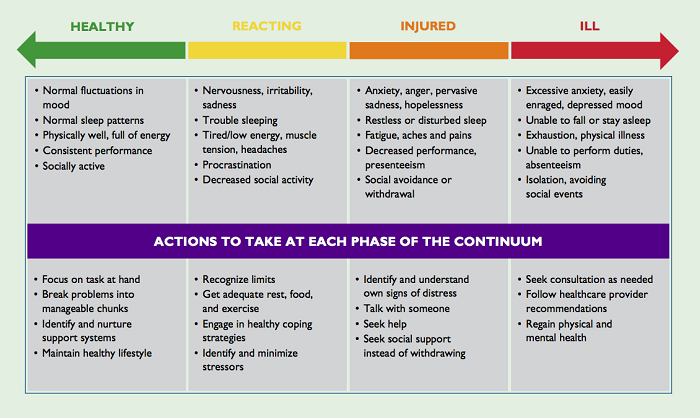
figure1

Figure 1: Mental Health Continuum Model

It is important to recognize that someone with a diagnosed mental health condition can be in the healthy green zone, and someone who has not been diagnosed with any mental health conditions and was in the green zone two weeks ago can be in the orange or red zone now, perhaps due to a house move or database lock.

A 2013 National Survey6 found one in five Americans lives with mental illness. And, according to a U.K. survey conducted in 2017,7 three out every five employees (60 percent) experienced mental health issues in the preceding year because of work. Just 13 percent felt able to disclose a mental health issue to their line manager. Those who do open up put themselves at risk of serious repercussions. Of employees who disclosed a mental health issue, 15 percent were subject to disciplinary procedures, demotion, or dismissal. This also came up in the CRA Burnout survey.

As the statistics above show, there is much stigma surrounding mental health. Even more so in the clinical research industry, where importance is placed on being a productive, professional academic working to high standards within regulations, usually on a tight timeline.

In part two, we will reveal what CRAs had to say about their jobs and their mental health. We will look at the answers to questions such as:

If you have depression and/or anxiety, have you been able to inform your employer and/or your line manager? Have you ever left a CRA role because you were concerned your mental health would deteriorate?

Stay tuned.

CROs Deliver Shorter Cycle Times, Says New Tufts Report

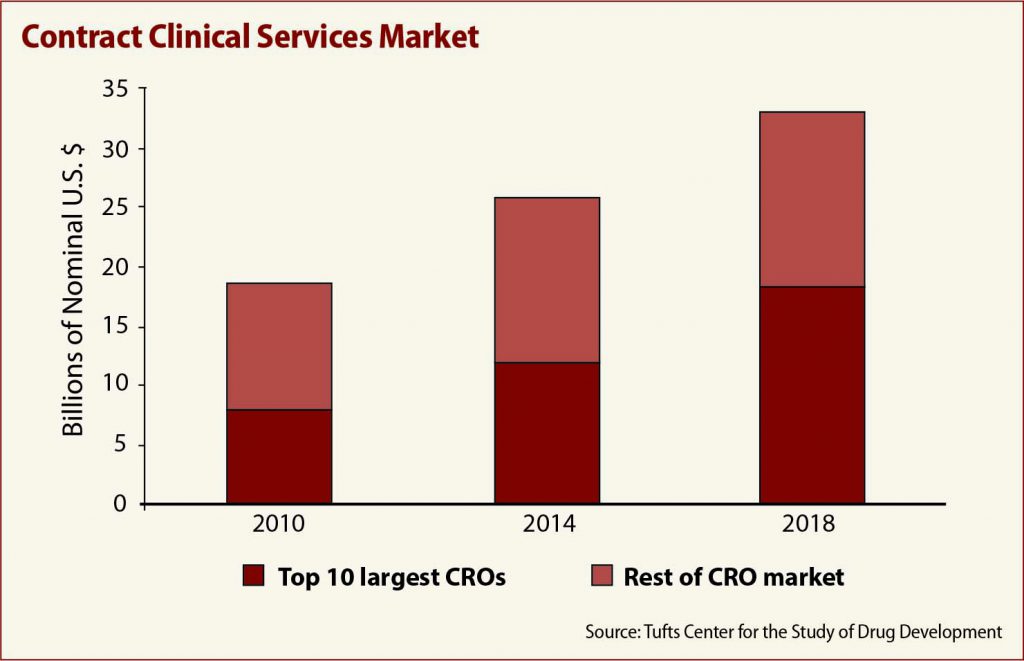
Contract research services are now the largest single cost category in pharma R&D spending, accounting for almost $90 billion last year, according to Tufts Center for the Study of Drug Development.

All in, CROs raked in about $33 billion last year for services including project management, trial monitoring, biostatistics, site management and medical writing — an increase of 12 percent from 2017, Tufts researchers found.

And it looks like sponsors are getting their money’s worth in terms of development speed. Sponsors that used CROs with established relationships with sites shaved 39 days off study initiation compared to sponsors that retain control. And CROs working with sites for the first time got studies started 77 days faster, on average. Time to build and release a database was 21 days faster when handled by CROs.

This kind of acceleration in trial timelines may be a factor in recent increases in drug development. The number of active drugs in worldwide research or development has risen steadily from almost 8,000 between 2007 and 2010, to nearly 11,000 between 2015 and 2018. There were nearly 3,500 companies with at least one drug in the development pipeline over the same period, a dramatic increase from the 2,000 companies between 2007 and 2010, Tufts found.

10-ContractClinicService-1024x661

CRO advocates were cheered by the results of Tufts’ study. “The report clearly shows that clinical research and technology companies get you there faster,” said Matt Feldman, spokesman for the Association of Clinical Research Organizations. “Whether it’s risk-based monitoring (RBM) or decentralized trials, CROs are continuing to innovate and drive improvements in the drug development process in ways that are valuable to sponsors.”

Still, sponsors aren’t completely on board with the outsourcing model. Few companies reported using contract researchers in any kind of systematic way and only one-third of drug sponsors surveyed reported feeling satisfied that outsourced oversight processes are well established. Fewer than one-fifth of the drug companies, in fact, rated these processes “highly effective.”

The outsourcing rush also has led to more concentration in the CRO market, Tufts found. The 10 largest CROs controlled 57 percent of the money spent on outsourcing in 2018, a 12 percent increase in the past seven years.

Niche, or specialty, CROs have seen strong growth — about 10 percent per year — but medium-sized companies have grown only about four percent per year since 2011, Tufts researchers found.

But it’s not clear that outsourcing has cut drug development costs, which have continued to rise between six percent and seven percent per year. Tufts has previously reported that the average drug costs $2.6 billion to bring to market.

Visit Us On TwitterVisit Us On Google PlusVisit Us On LinkedinVisit Us On Facebook