
CPhI report forecasts India to have strongest global growth in 2019


Unknown-1

The India specific findings of the CPhI Annual Report highlight that India has seen significant jump across all (six) categories, improving its overall score by a massive 11.06% in a single year.

The country showed the largest gains in terms of perceived ‘quality of API’ and ‘finished product’ manufacturing, proving that industry efforts to align standards more closely with the USA and Europe have clearly been noted. But perhaps most significantly, these efforts are also being transferred into reported growth potential for 2019, with India forecast to grow faster than all other major pharma economies, scoring an average of 7.16 – placing it ahead of the USA (7.04) and China (6.81). Survey respondents cited India’s ‘high-growth domestic market’ and ‘expanding manufacturing exports’ as the major drivers. The rise in exports growth potential is believed to be in response to concerted reforms by the CDSCO (Central Drugs Standard Control Organisation) and industry quality improvements in the last few years.
 

Unknown

Such was the confidence in India’s pharma market, the nation was ranked joint second for ‘overall competitiveness’ of its pharma industry. India scored an average of 6.53, placing it behind only the US (6.98) and level with Germany (6.53). In addition to this, India saw the largest percentage shift in score for quality of finished formulations, improving by 14.72% since 2017. Most impressively, should the same change be seen in 2019, the country’s reputation for finished product manufacturing will likely see it achieve parity with many European nations (who’s scores have remained the same year-on-year) – a dramatic improvement on just a few years ago.

With these hugely positive results as its backdrop, the 12th Annual CPhI & P-MEC India will take place on 12th-14th December 2018, alongside India Pharma week (9th- 14th December). To help further drive forward the market’s growth potential, the event has moved to the Indian capital, taking place at Delhi’s India Expo Centre, Greater Noida, and will return to single venue format. These changes are expected to bring a wider international audience, help more closely integrate vital regulatory pathways into the events content, and allow an even more diverse cross-pollination of partnerships – meaning visitors can meet with API suppliers, distributors, contract providers and machinery specialists all in the same morning.

In keeping with the international nature of this regional hub, India Pharma Week once again returns for its third edition, with five events running from December 9th until the 14th – including the Pharma Connect Congress, the India Pharma Awards, CEO Roundtable, Networking Evening and Women in Pharma panel amongst others.

“What has been achieved in this country in the last decade is truly remarkable, and it’s clear from the sentiments we hear in the market that we are set for another wave of significant growth and advancement over the next few years. It’s undoubtedly a hugely exiting time for anyone looking to do business in this region.. There is a notable excitement about CPhI & P-MEC India this year, and the feedback we get from visitors and exhibitors is that they have an extremely confident outlook for 2019 – with all looking for new partners to help drive the country’s next wave of growth. This, coupled with a new single-site location at the India ExpoCentre, will deliver economies of scale and more partnerships and networking opportunities at this event than ever before.” Cara Turner, Brand Director – Pharma at UBM (part of Informa PLC)

Highlights from this year’s pharma connect congress include sessions on topics as diverse as ‘transforming the pharma industry architecture through collaborations’, ‘strategies to strengthen regulatory policies in India’, ‘efficient clinical trial data management’, ‘winning with biosimilars’ and ‘leveraging latest innovations in technology’. Finally, this year will also feature the third annual Women in Pharma Summit, which will deliver keynote addresses and panel discussions revolving around leadership, entrepreneurship and gender diversity.


FDA Commissioner Warns of Shutdown’s Impact on Clinical Trials

As the partial government shutdown entered a record-setting fourth week, FDA Commissioner Scott Gottlieb said it was no longer “business as usual” at the agency — calling the shutdown “one of the most significant operational challenges in FDA’s recent history.”


5205198800_afbc523eb7_b

Over the past few weeks, Gottlieb has announced multiple shifts from normal at the FDA, including that new INDs sent to the FDA won’t be considered “accepted” while the shutdown continues. Normally, INDs are considered automatically approved if the FDA doesn’t respond within 30 days. The FDA announcement stops the legal clock.

And he’s indicated that drug user fee money has been reallocated to postmarket drug safety efforts. The FDA is currently able to use carryover user fee funding from fiscal 2018 to support ongoing reviews, but Gottlieb has estimated a prolonged shutdown will exhaust the available funds, beginning with the PDUFA program, which currently has about three weeks of funding remaining.

“With no indication of a resolution to the shutdown in sight, it is likely that the effects on clinical trials and drug development programs will continue to multiply,” WCG Clinical Chief Medical Officer Lindsay McNair said last week.

“Sponsors are unsure whether they should proceed with planned screening and dosing dates at research centers; limited space at research centers may be booked far in advance, so forgoing the currently scheduled dates may mean that it takes months to get the study rescheduled,” she added.

The bigger drug sponsors seem to be in better shape at the moment than smaller companies. Spokeswomen for Novartis and GlaxoSmithKline each said that their companies’ trials haven’t yet been affected by the shutdown.

Smaller companies aren’t so sure. Biopharma company Aimmune said last week that its marketing application for a peanut allergy treatment had been thrown into limbo.

Deprived of his usual media relations team, Gottlieb has been communicating with the trials industry through his Twitter account.

When the mother of a child with a rare neurological disease said that her child’s trials had been delayed by the shutdown, Gottlieb tweeted, “Nobody should be unable to access a clinical trial or compassionate use drug owing to the funding lapse. We will help her. Our drug review staff remains at their posts across our centers.”

Since 1980, there have been at least nine government shutdowns and since the mid-1990s, they’ve grown increasingly protracted. There were two in 2018. Whether or not they directly affect trials, they’re creating a long-term uncertainty, says Michael A. Swit, a lawyer who concentrates his practice on FDA regulation.

“The lesson is, if you’re concerned about shutdowns impacting your process, make sure you get everything done in the middle of a budget cycle,” he says. “Frankly, look at everything that FDA does — the danger to the public health by the public shutdown is inexcusable.”

President Trump and Congress will take up the government funding issue again this week.

Pharma R&D returns fall to lowest level in nine years

A new analysis that finds the soaring costs of clinical trials are eating away at return on R&D investments should serve as a wakeup call to the entire industry, a top executive says.

Clinical trial professionals need to rethink the way they do business, says Jill Johnston, president for site activation solutions at WCG Clinical.

Unknown

Johnston was reacting to “disheartening” findings from a new Deloitte study that drug companies’ returns on R&D investments have shrunk to 1.9 percent, the lowest since the consulting firm began monitoring research economics in 2010.

“Individual initiatives are not going to do it — it needs to be a series of initiatives closely linked together that build upon each other so that the sum of the parts is greater than the whole concept — creating more value in speed and reduction in costs,” Johnston says.

“Focusing on initiatives across the whole clinical trial lifecycle is not going to do it either — the initiatives need to be focused in one area to start and then built upon in other areas,” she adds.

The Deloitte report cites rising clinical trial costs as the cause of shrinking returns. All in, every successful treatment to reach market costs nearly $2.1 billion — nearly double the costs of a decade ago. Johnston, who worked with Deloitte in a previous analysis, says that clinical trials have become too fragmented to work together properly.

“I think the challenge in the clinical research space is mostly about the lack of appropriate communication between the different specialized areas or across the clinical trial team,” she tells CenterWatch. “Either people think someone else is doing it and they are not, or they simply did not know they needed to do something when they should have — which results in confusion, time delays, and in many cases, re-work.”

It makes sense, then, that smaller drug companies are doing better at getting their R&D investments to pay. Deloitte says that smaller firms attained a 9.3 percent return on their investments in part because they’ve focused on “high-value” assets.

Johnston says that smaller companies have an advantage because they can communicate — sometimes even over-communicating — through the lifecycle of a drug. The silo effect that she sees in bigger drug companies applies to trials professionals, as well, though.

Early in her clinical trials career, she says, “I did many things, from study startup, negotiating contracts and indemnification language, managing SAEs, writing safety narratives and sections for the clinical study report, managing data entry and query process, TFL reviews, forecasting clinical supplies and managing the third-party laboratories.”

That breadth of experience, however, is a thing of the past. “Today, people who start their careers in clinical research are often much more narrowly focused on one small piece of the overall clinical study process [and] often don’t have an appreciation for how it all comes together.”

Read the Deloitte analysis here: https://bit.ly/2QX9BLi.

The power of digital tools to transform mental healthcare

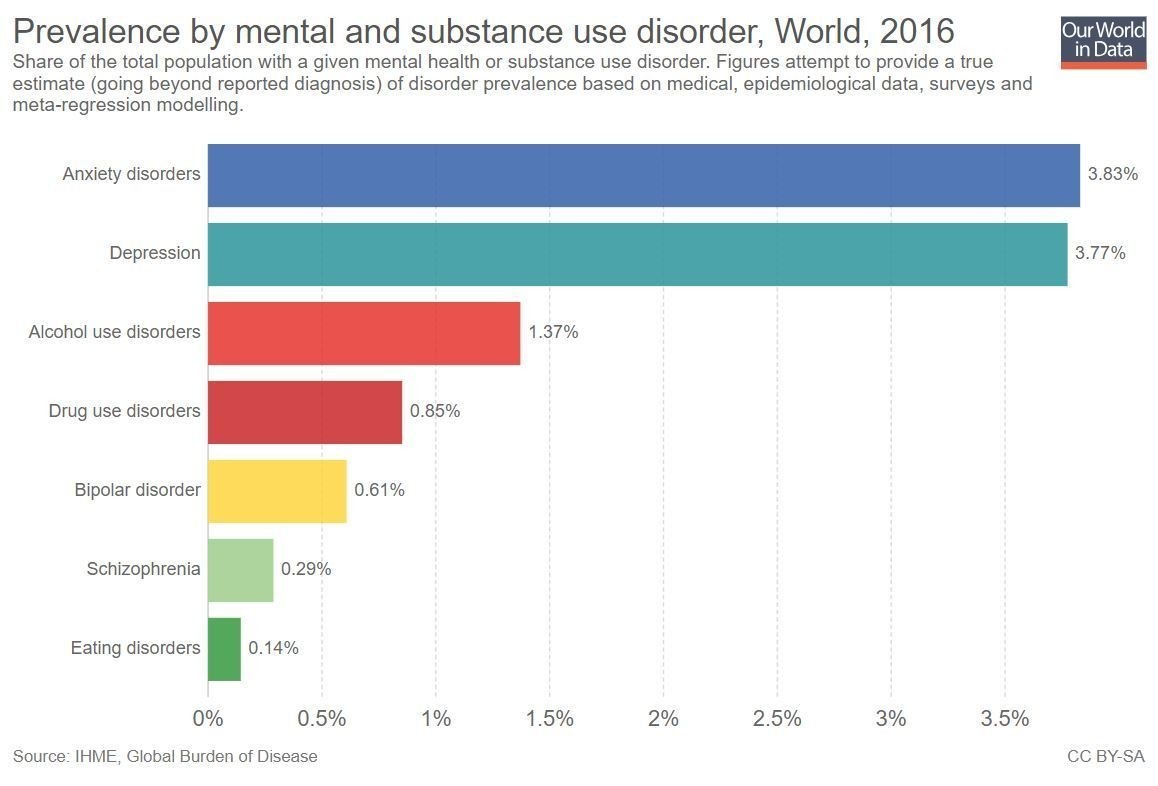
The global burden of mental illness, both in terms of human suffering and economic loss, is catastrophic and rapidly growing. Worldwide, mental health conditions affect more than a third of the world’s population. Just two conditions alone – depression and anxiety – result in a staggering estimated $1 trillion in lost economic productivity.

large_TQWA9K1qqfvNEaPmLyIWA7vOZvaDNgHDXZg2DC9XO1Q

When committing to the United Nations’ Sustainable Development Goals in 2015, world leaders emphasized the importance of promoting mental health and well-being worldwide. Yet three years later, the situation remains grim. Every year, 800,000 lives are lost due to suicide. In the United States alone, one in five people is living with a mental illness, and 60% of them receive no treatment. The situation is far worse in many low- and middle-income countries. Existing programmes are often underfunded or fragmented, and stigma continues to restrict individual and collective response. There is an overwhelming need for well-funded and sustained global action.

International organizations are redoubling their efforts on this issue. Forward-thinking members of the World Economic Forum’s Global Future Council on Neurotechnologies recently convened to explore the many ways that rapid advances in telecommunications, big data analytics (including machine learning), mobile technologies and biosensors – loosely grouped together under the umbrella term “digital technologies” – are poised to have a profound impact on diverse aspects of mental healthcare and treatment. Digital technologies are becoming increasingly available worldwide and will only continue to advance. Those that relate to our understanding of the brain and behaviour may have a particularly important role to play in improving mental health outcomes.

AirX13zh-9nIDmsMHGKfdpITN2JhmPu4vqRV_bHrdjY

At their most basic, such interventions could include straightforward telepsychiatry applications. These can deliver care effectively in areas with a low density of mental health professionals, using “remote psychiatrist” videoconferences and low-bandwidth text/SMS services to send medication and appointment reminders, and disseminate information around mental health.

Furthermore, the small, unobtrusive sensors on our ubiquitous mobile devices can capture streaming data on aspects of patients’ physiology, behaviour and symptoms in real time. Though any implementation of policy or practice in this area must be ethically and carefully developed, it is clear that the growing volume of data generated by these devices, and our ability to collect and upload it into centralized servers, presents a tremendous opportunity.

These tools can help enable early diagnosis, track disease progression or course-of-illness data, and predict decline or relapse. This data can also provide physicians with objective information on how patients are doing between clinical visits. As more longitudinal data is collected, machine learning-based models may be able to predict serious oncoming events such as suicide attempts, depressive relapses, psychotic episodes, or panic and anxiety attacks. Use of such predictive tools could also allow for more timely interventions, either digitally or through referral to hospital-based clinical care.

Digital-based mental health interventions have already been shown to work in experimental settings and, in some cases, have been successfully scaled for use in larger populations. The first wave of digital interventions has been based on the web-based administration of cognitive behavioural therapy (CBT). This is often assisted by trained psychologists, and is increasingly delivered by autonomous AI-powered chatbots that offer personalized counselling and psychosocial interventions through highly scalable platforms with minimal incremental costs.

Encouragingly, simple and readily accessible technologies such as mobile phone-based interactive voice response systems have already been used in some of the most impoverished communities in Pakistan to identify and assist the families of children with developmental disorders. At the other end of the economic spectrum, programmes such as the MoodGym, developed in Australia, have delivered web-based psychotherapy to more than one million young users, mostly in high-income countries.

Despite the extraordinary promise of such interventions, the Council also discussed the need to develop ethically driven policies and practices in this area. The current landscape is littered with thousands of “apps” with nebulous or misleading claims, backed by little or no evidence. This is true even as increasing numbers of digital therapeutics with specific efficacy claims are going through the regulatory process. Another fundamental hurdle concerns generalization – the ability to scale interventions beyond the scope of the initial study to the general population.

Ethical matters such as the existence of sound evidence to support the utility of any intervention, its ease of use and interoperability, and privacy and security issues must remain at the forefront of any attempt to use digital technologies to improve mental health outcomes. It should be remembered that while seeking and obtaining mental healthcare, people share some of the most personal aspects of their life. Any breach of privacy can be catastrophic for their further well-being. Another key concern is the potential of digital technologies to increase existing inequities across diverse populations in terms of access to care, whether due to economic factors, bandwidth access, language barriers or the possibility that only the most privileged users may have the ability to take advantage of digital technologies.

Humanitarian, social and economic imperatives demand action from global leaders on mental health. Individuals and families are suffering. Economic costs are soaring. Lives are being lost. Nevertheless, the Council sees a promising path forward, driven by the growing ability to harness these ubiquitous technologies and apply them in an ethical manner to improve mental health outcomes worldwide.

Turnover Within CRO Companies Remains Persistently High, According to BDO Report

CHICAGO–(BUSINESS WIRE)–Clinical Research Outsourcing (CRO) companies are battling high turnover levels, but a new report from BDO USA, LLP, finds that compensation strategies generally have not made significant enough adjustments to their compensation strategy to address this issue.


Unknown

The 2018/2019 CRO Industry Compensation, Turnover, and Plan Design Trends Report, which will be available in January, examines compensation and benefits trends in the CRO industry over the last 10 years, with a special focus on clinical research associates (CRAs). The report analyzes and summarizes data from the last 10 years of our annual CRO Industry Global Compensation and Turnover Survey. This survey provides companies with valuable information about the industry, enabling effective benchmarking of compensation and benefits programs. The 2018 survey results were published this September.

Total cash compensation for CRAs increased an average annualized rate of 2.3 percent per year between 2009 and 2018, with pay increasing at a faster rate over the last five years. Pay increases for CRA historically average close to 3 percent (based on the CRO Industry Global Salary Planning Survey). Overall, pay levels for more senior positions increased at a much faster rate than junior-level positions.

Meanwhile, turnover remains problematic, with turnover levels at or above 20 percent for seven of the past 10 years. Findings from the 2018 survey show that turnover levels for clinical monitoring positions in 2017 (25.5 percent) were higher than that for project management (21.3 percent) or database management jobs (12.3 percent).

Turnover rates were higher in the U.S. than outside of the U.S., where turnover levels hovered around 14 percent in 2017. However, the 10 countries with the highest turnover levels, which lie at or above 28 percent, are well above the U.S.

“One clear take-away is that pay levels aren’t increasing as fast as expected, given the high turnover rates,” said Judy Canavan, managing director and leader of BDO’s Compensation Surveys practice. “CRAs have a particularly fast learning trajectory in the first few years of their careers, so standard pay increases are not keeping pace with the increased value of the employees.”

Annual incentive (AI) plans have been used fairly consistently over the past decade, while long-term incentive plans have more sporadic use. Since privately held companies comprise much of the CRO industry, long-term incentive (LTI) plans are not as common; however, some private companies do offer long-term bonuses or phantom stock.

The report also examined attraction and retention bonuses and found that attraction bonuses are used with a much higher frequency to attract new employees. The average number of sign-on bonuses in a year ranged from 68 to 163 per company, whereas the number of retention bonuses offered by companies averaged between two to 104.

“Companies may want to re-think their use of bonuses as a way to help improve retention rates. A well-designed plan that focuses on both team and individual performance can provide a nice reward to good performers,” added Canavan.

Factory CRO and Boston Biomedical Associates Announce Merger

BILTHOVEN, Netherlands & MARLBOROUGH, Mass.—Factory-CRO Group, a leading global contract research organization (CRO) focused on medical devices and in vitro diagnostics (IVDs), and Boston Biomedical Associates(BBA) a premier full-service Medical Device/Biotechnology CRO and Consultancy based in the United States announce that they have merged the organizations.

factory-logo-blue3674848_bba_cro_logo


The merger further advances the shared strategic vision to become the leading Global Medical Device and Medical Technology focused CRO. Following the recent acquisitions of MileStone Research Organization, Five Corners, and Clinical Device Group the Factory-CRO Group now has specialized operations and expertise in the United States, Australia/New Zealand, and Europe. This global expansion coupled with the diverse medical therapeutic expertise provides a means to efficiently service clients.

“BBA is excited to join Factory-CRO’s worldwide group as it will allow us to expand our comprehensive service offering to our clients,” said Lauren Baker, PhD, President and CEO of BBA. “The alignment of Factory-CRO and BBA’s core values and approach to engagements combined with our collective therapeutic competencies ensures that our clients now have improved access to our global clinical trial execution resources, and our regulatory and medical expertise.” Dr. Baker then added, “We are able to fully support our clients as their needs evolve and they strive to help patients globally.”

“We are honored to have the BBA team join the Factory-CRO Group,” said Dirk Meijer, MD, MSc,PhD, Factory-CRO CEO. “BBA’s ability to provide CRO/Consultative service in North America was a missing link in our global offerings.” Dr. Meijer then added, “Our clients have consistently asked us to expand our offerings in North America. This merger allows us to provide our specialized expertise and a continued commitment to the highest level of customized service to a larger audience. Now we are the only Medical Device and Medical Technology CRO that offers services in United States, Europe, Australia and New Zealand. We operate from our own offices located within each region housed with employees that have refined expertise to meet our unique client needs.”

FDA Proposes Informed Consent Waivers for Some Clinical Trials. Would this be possible anytime in India?

Researchers in low-risk clinical trials could experiment on patients without obtaining informed consent if they meet at least four conditions, the FDA proposed last week in a new rulemaking notice.

images

The agency will grant waivers if researchers can prove:

  • A trial “involves no more than minimal risk” to humans;
  • The waiver won’t negatively affect patients’ health or rights;
  • A trial can’t “practicably be carried out” unless a waiver is granted; and
  • Patients are given study details and findings after a trial wraps up.

The proposed rules firm up a 2017 guidance that laid out the same conditions for informed consent waivers and conform to the Common Rule.

David Borasky, vice president of IRB compliance at the WIRB-Copernicus Group, welcomed the draft guidance, noting the new rules will help sponsors embrace modern technologies for clinical trials. He added that many IRBs are already using waivers under last year’s guidance.

“As the FDA continues to express an interest in having sponsors utilize retrospective real-world evidence to inform the regulation of drugs and devices, there will be a greater and greater need for mechanisms to allow activities like retrospective chart reviews — which can involve human subject research — to go forward under a waiver of informed consent,” Borasky tells CenterWatch.

But he questioned why the FDA pegged its new rules to the old Common Rule. A revised Common Rule is scheduled to take effect early next year and offer another reason for informed consent waivers.

“It is not clear from the proposal why the FDA would harmonize to a rule that will be out of date within a few months,” Borasky says.

“The FDA has asked for comments on this, and I suspect that they will receive a lot of comments encouraging complete harmonization with the revised rule,” he adds. “Harmonizing to an outdated rule does not make sense in the big picture, even if the regulated community lacks experience implementing the new waiver criterion.”

Boost for MNCs as price cap removed for first 5 years on innovative drugs

New-Delhi: The government on Thursday exempted innovative medicines developed by foreign companies from price control for five years, giving Indian patients access to drugs that are currently only available abroad.

Medicinal-Products1

These include orphan drugs that are used for treating rare medical conditions.

In amendments to the Drugs Price Control Order (DPCO), the ministry of chemicals and fertilizers exempted producers of new drugs patented under the Indian Patent Act, 1970 (39 of 1970) from price regulation for a period of five years from the date of commencement of its commercial marketing by the manufacturer in the country.

Non-profits criticized the decision. “It’s a shocking move in an election year. That will deliver dividends to foreign companies for the foreseeable future and shrinks the policy space for government to make highly expensive medicines for life-threatening conditions more affordable to the public,” said Malini Aisola, co-convenor of All India Drug Action Network.

The move will restrict the government from putting expensive drugs under price control regardless of a public health emergency, according to an expert.


There are fears that some drugs for serious illnesses may become out of reach for regulating the prices of medicines through a National List of Essential Medicines, known as Schedule-I of DPCO. While any medicine that is included in Schedule-I automatically qualifies for price control, DPCO earlier exempted patented medicines that have been developed “indigenously” for a period of five years.

The US Trade Representative (USTR) in April announced that it was reviewing the generalized system of preferences (GSP) eligibility of India after the US dairy industry and the US medical device industry requested a review of India’s GSP benefits, complaining that Indian trade barriers affected US exports in these sectors.

The Advanced Medical Technology Association in its submission to USTR seeking suspension of GSP benefits to India wrote that its members were deeply concerned about the “draconian” Indian price controls on coronary stents and knee replacement implants, prices of which had been slashed by as much as 85% and 70%, respectively.

FDA-cleared, wearable blood pressure device hits market

Dive Brief:

  • A Chicago area health devices company said Thursday it would begin pre-sales of an FDA-cleared blood pressure monitor that can be worn on the wrist, the latest example of a medical device that has been adapted to smart watch format.
  • FDA granted 510(k) clearance in November to Omron Healthcare’s HeartGuide, a digital wrist watch designed to take oscillometric measurement, the same method used in medical-grade blood pressure monitors. Omron said that a cuff in the watch band inflates to capture systolic and diastolic pressure.
  • Marketing of the blood pressure-tracking product rounds out a year that also included the debut of wearable electrocardiogram and atrial fibrillation detection capabilities, all of which target a U.S. market at high risk for heart attack, heart disease and stroke.

ae0fe23f7588f4c3a0ffa210d366ca4f

Dive Insight:

Unlike wearables competitors like Apple and Fitbit, Omron is a medical device company first and a trendy consumer electronics company second. Omron’s more common blood pressure monitors are sold at pharmacies and big box retailers.The company said that in developing HeartGuide, it submitted more than 80 new patents for various components.

While HeartGuide is currently priced at a steep $499, market potential is still massive. CDC says that 75 million Americans, or one in three U.S. adults, have high blood pressure, which elevates risk of heart disease and stroke, both among the five leading causes of death in the U.S. An additional one in three U.S. adults has prehypertension.

Come January, the watch can be connected to a proprietary mobile app that translates what blood pressure readings mean for users and provides “personalized insights.” Omron also announced last week that its existing app for its other blood pressure devices can be connected to Amazon’s Alexa, with the AI tool reading back those blood pressure measurements and insights.

Another competitor in the wearables space, Garmin, announced a partnership last week with patient activity and sleep monitoring company ActiGraph to advance the use of wearables for clinical trials and academic research.

Broadly, the global wearable fitness trackers market could reach $48.2 billion by 2023, based on early 2018 estimates by P&S Market Research.

Modi Government Set To Remove Compensation Clause From New Clinical Trial Rules

Earlier the World Health Organisation had written to the Indian government, saying stringent rules would push away pharma companies from conducting clinical trials in India while also ‘hampering’ WHO’s work.

images

The Bharatiya Janata Party-led NDA government is reportedly set to remove a clause from the final version of the draft clinical trial rules that mandates compensation in case of death or injury from a clinical trial.

In February this year, the draft version of the New Drugs and Clinical Trials Rules, 2018 was released.

It included a provision that if a human subject participating in a clinical trial or a ‘bioavailability study’ or ‘bioequivalence study’ died or suffered permanent disability during the course of the trial or study, then the sponsor of the clinical trial shall pay upfront an interim compensation, amounting to 60% of the compensation payable within 15 days of the opinion of an ‘Ethics Committee’, which was proposed be set up.

After the Ethics Committee gave its opinion, the Central Licensing Authority (CLA) would have passed its order. The remaining 40% of the compensation was to be paid within 30 days of the order by the C. The interim compensation shall not be reimbursable regardless of the CLA order.

The compensation is to be calculated through a formula specified in the Seventh Schedule of the draft rules.

According to the draft rules, any institution or organisation that intends to conduct biomedical and health research shall be required to have an Ethics Committee in place to oversee the conduct of such research.

The Ethics Committee would have consisted of seven members, including medical scientists, non-medical scientists, non-scientific experts, legal experts, one lay person from community, and a woman member. The committee’s task would have been ensuring that medical research and experiments on human beings are carried out in compliance with ethical concerns and requirements, reviewing and according approval to a clinical trial protocol, etc.

“Every member of the Ethics Committee shall be required to undergo such training and development programmes as may be specified by the Central Licencing Authority from time to time,” say the rules.

While it is expected that the pharmaceutical companies and lobbies would oppose such a clause, the World Health Organisation (WHO) also lobbied on behalf of the pharma industry.

On June 19, WHO deputy director general Soumya Swaminathan wrote to Union health secretary Preeti Sudan asking the Indian government to “reconsider” the compensation clause as it would not only drive away drug companies which would find the clause “unacceptable” but also “hamper” the WHO’s work with India.

“I fear that if the rules are finalised as they currently stand, there is a possibility that sponsors will not conduct clinical trials in India and go elsewhere,” Swaminathan wrote in her letter, as reported by Mint.

“It will also hamper WHO’s work with India where we consider that it is a public health priority to conduct clinical trials on a particular condition in India, WHO ourselves may not wish to act as sponsor and other partners may be similarly discouraged.”

“Our major concern is the reaction sponsors are likely to have to the scenario, whereby the ethics committee determines a death or permanent disability is related to the product, but the sponsor disagrees,” she said.

Swaminathan said ethics committees lack expertise and internationally it was not the usual practice for ethics committees to make such decisions.

Even the Indian Council of Medical Research (ICMR) agreed with these objections, as ICMR’s director general Balram Bhargava wrote to the Health Ministry stating that some of the provisions in the draft rules would adversely impact the future of clinical trials in India.

The Mint report quoted him as saying, “At present most ethics committees in India are not appropriately trained with variations in quality and efficiency to review to deal with the issue of compensation.”

The Indian Express quoted a senior government official on the condition of anonymity, “There is a serious opposition to this provision of clinical trial rules by industry and even the WHO (World Health Organisation). In the final version, we may remove this clause as it can prove to be too onerous for companies and sponsor organisations that run various clinical trials in India.”

It is not surprising that the Modi government is once again kowtowing to the diktats of corporates — in this case the powerful global pharma industry — without caring about the well-being of its own people.

But it is also one of those occasions when the WHO has revealed its neoliberal moorings, making explicit how much value it attaches to human lives in the Global South in the face of global capital.

Telling Indians that if they ask for more, drug companies would go elsewhere where the compensation laws are not strict and more compliant to the pharma industry’s interests amounts to making the case that cheaper human bodies can be found in the rest of the developing world.

Visit Us On TwitterVisit Us On Google PlusVisit Us On LinkedinVisit Us On Facebook