Drug firms retaining old brand names for new medicines

Pharma firms prefer to go with the existing brand names for new fixed dose combinations (FDCs) as it is easier to market them

g_Changed_drugs_names

What’s in a name? A lot, according to pharmaceutical companies, many of whom have already launched or are gearing up to introduce new fixed dose combinations (FDCs) by tweaking the compositions but retaining the same brand name as the original product.

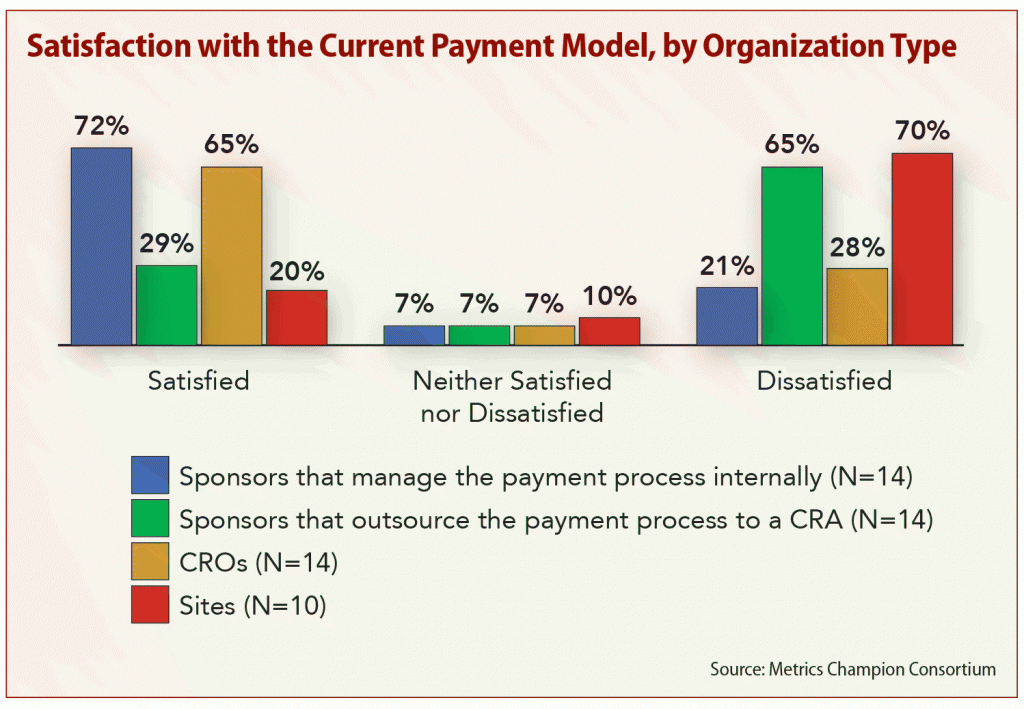
For example, in 2016, when popular cough syrup Corex was banned, Pfizer Ltd, the Indian subsidiary of US-based drug maker Pfizer Inc., was quick to discontinue the cough syrup Corex in its then form, changed the composition but decided to retain the brand name for its future respiratory products. The company decided to stop making the Corex cough syrup formulation, a combination of codeine phosphate 10 mg and chlorpheniramine maleate 4mg, changed the formulation and extended the same brand name. The new formulation is now called Corex T (Codeine + Triprolidine) .

According to Pfizer spokesperson “Pfizer discontinued the manufacture of ‘Corex Cough Syrup’ in 2016 as an outcome of a regular review of the product portfolio. However Corex remains an important umbrella brand for Pfizer that has long been associated with a broad range of safe and effective products and continues to be an essential part of our portfolio.”

Likewise, Glenmark Pharmaceuticals Ltd’s pain relief formulation called Vorth TP earlier contained tapentadol and paracetamol. It has now been tweaked to include tramadol and paracetamol. The brand name, however, remains unchanged.

Experts said companies prefer to continue popular brand names for new products containing different ingredients as it becomes easier to market them. “The companies want to retain the brand name as they spend a lot of money in building a name. As long as it is for the same indication by virtue of reformulation to make it a rational combination, the companies prefer to use the same name,” said D.G. Shah, secretary general of Indian Pharmaceutical Alliance, which represents large number of domestic drug makers. Shah said extending the brand names to new products also make it easier for doctors and chemists to remember while dispensing or prescribing the medicines.

“The brands have been in the market for decades and companies invest a lot on these brands. Hence, they would like to save them by moving to combinations that have been approved by the Drug Controller General of India for the same indication with the addition or change of a suffix or prefix to the original name,” said Sunil Attavar, president, Karnataka Drugs and Pharmaceuticals Manufacturers’ Association.

The Union health ministry on 12 September, banned about 328 FDCs after an expert panel formed under the chairmanship of Nilima Kshirsagar, professor of head clinical pharmacology at G.S. Medical College KEM Hospital, Mumbai, to review the safety, efficacy and therapeutic justification of these drugs, found these FDCs “irrational”, citing safety issues and lack of therapeutic justification, recommended the ban. The ban on FDCs included painkillers, anti-diabetic, respiratory and gastro-intestinal medicines.

While Glenmark, Wockhardt Ltd, Alkem Laboratories Ltd, Obsurge Biotech, Coral Laboratories, Lupin, Mankind Pharma, Koye Pharmaceuticals, Macleods and Laborate moved the high court against the ministry’s decision, some companies are busy tweaking compositions and launching their new formulations in the market.

Macleods Pharmaceuticals, which makes anti-fungal Panderm Plus is gearing up to launch its new combination called Panderm NM and is awaiting approval from India’s drug regulator.

“Panderm Plus steroid has been fixed with an antibiotic which is never allowed in any country of the world and that is the reason that it has been banned,” Chandra M. Gulhati, editor, Monthly Index of Medical Specialities (MIMS).

An FDC drug contains two or more active ingredients in a fixed dosage ratio. The ban covered about 6,000 brands from top pharma companies, including Pfizer, Wockhardt, Alkem Laboratories, Cipla, Sanofi India and Sun Pharmaceutical Industries Ltd.

Half of EU Clinical Trial Results Not Reported

Despite EU requirements for clinical trials to report results to the EU Clinical Trials Register within a year of a trial’s completion, sponsors have only reported about half of them so far.

The analysis, led by University of Oxford researcher Ben Goldacre, found trial sponsors only reported about 51 percent of 7,274 clinical trial results since publication of the European Commission’s guidelines in 2014. Of these, 68 percent of trials with a commercial sponsor posted the results, while only 11 percent of non-sponsored trials shared theirs.

The study found that 32 major universities did not report results for any trials they sponsored. Eleven drugmakers whose trial data the researchers analyzed reported all the trials they sponsored, including Genentech, Gilead and Boehringer Ingelheim. On the other end of the spectrum, Eli Lilly reported only 52 percent of its trials.

“The biggest offenders of not publicly releasing clinical trial data are academic institutions,” says Peter Pitts, president and co-founder of the Center for Medicine in the Public Interest, a nonprofit medical issues research group. “Part of the problem is academic institutions don’t feel the need to abide by the same standards pharmaceutical companies do” when it comes to reporting clinical trials data.

Another problem in reporting trial data is methodological, according to Pitts, because sponsors don’t feel obligated to release early stage data.

“Clearly what’s most important are human trials,” he says, “but oftentimes early studies aren’t released because sponsors don’t think they have any relevance.”

Independent researchers are often unable to verify and build on clinical trial findings without access to this data, but no entity has ever been penalized for failing to fulfill the reporting requirements, according to the study published in BMJ. The EU regulation calls on all trial sponsors to report results one year after a trial concludes, or within six months in the case of research involving children. Trials that miss reporting deadlines by three months or more are to be flagged by the EU, but there is no system in place to flag overdue trials.

“We need to reflect on how we can improve our communication with academic sponsors and smaller sponsor organizations. This study helps to spread the word on how important it is to post trial results once a clinical trial is over,”  Fergus Sweeney, head of inspections for the EMA Human Medicines Pharmacovigilance and Committees, said. “We … are firm believers that transparency and public availability and scrutiny of clinical trial information and results are fundamental for the protection and promotion of public health.”

Clinical Trials: There’s an App for That

When Apple introduced the latest iteration of its Apple Watch earlier this month, it was hailed by an unlikely source: FDA Commissioner Scott Gottlieb.

“The FDA worked closely with the company as they developed and tested these software products, which may help millions of users identify health concerns more quickly,” Gottlieb said about the tech company’s freshest entry into the world of wearables.

In what may be the first of its kind, the newest Apple Watch offers two FDA-approved apps: one an EKG and the other a pulse monitor, both designed to detect atrial fibrillation and heart arrhythmia.


Unknown

For some, the FDA’s embrace of these apps is further proof that the revolution in consumer electronics may finally be coming to clinical trials.

“The obvious benefit is that people are already using it. That’s a big plus. Compliance is going to be built in,” says Sofija Jovic, an advisor at MedAvante-ProPhase.

In the seven years since the first smart phone hit the U.S. market, the percentage of people who own one has more than doubled, according to a recent survey by the Pew Research Center. More than three-quarters of Americans now own a smart phone of some kind, Pew reports.

Wearable devices such as the Apple Watch seem like they may be the answer to long-vexing recruitment problems: the average clinical trial requires 11 site visits and soaks up hours of participants’ free time.

Wearables offer a chance to harvest massive amounts of data without the time-suck — and, in some cases, the gadget itself can be a recruiting tool.

For example, AOBiome recently gave patients in a skin treatment trial cell phones – and had them take photos of their acne and send them to researchers digitally.

The trial was coordinated by the telemedicine company Science 37.

“We’ve built a technology platform to support doing clinical research so that trials can be centered around patients in their homes,” says Belinda Tan, Science 37’s founder.

“Participants don’t need to drive four hours to a university to go to a trial every other week,” she adds, noting that she believes wearables may also help boost diversity in clinical trials.

The revolution is already well underway.

In March, Swiss pharma giant Novartis announced a deal with Science 37 to conduct at least 10 wearable-assisted trials over the next three years.

That doesn’t mean that sponsors and sites can shed their brick-and-mortar clinics, though.

Jovic says that writing a wearable, mobile device into a protocol presupposes enrolling people already comfortable wearing gadgets — which may limit recruiting to people who already have or are familiar with such devices or can afford to buy them if not provided as part of a trial.

Jovic notes there are also some concerns about privacy and informed consent. “Is there such as a thing as too seamless data collection?” she wonders.

Mobile devices are so good at tracking data subtly that most consumers forget that it’s happening. Whatever problems that raises for the larger society, it’s a lot more troubling in a clinical trial context.

“You want some visible way,” Jovic says, “in which people continue to give consent.”

In an effort to keep pace with the Digital Age, the FDA has asked Congress to set aside money in the fiscal year 2019 budget for what it’s calling a Center of Excellence for Digital Health.

Gottlieb says the center will be designed to help the agency deal with lingering questions and craft regulations to adapt to wearables in clinical trials and public health.

Global Regulatory & Consumer Insights company, Announces Strategic Collaboration Agreement with Indian Institute of Technology – Bombay

Cancer therapeutics currently have the lowest clinical trial success rate of all major diseases. Partly as a result of the paucity of successful anti-cancer Medical Devices, cancer will soon be the leading cause of mortality in developed countries.

Global Regulatory and Consumer Insights, a leading provider of drug development consulting and regulatory services, is pleased to announce a strategic partnership with Indian Institute of Management (IIT) Bombay – The Department of Biosciences and Bioengineering (BSBE) in IIT Bombay is a nodal center for applying science and engineering principles to further fundamental knowledge and applications in biology and biomedical engineering. The BSBE department aims to create an ambience for the smooth pursuit of scholarly activities in research and education, to make an international impact, and to produce future leaders in the field of Biosciences and Bioengineering.


final-logo-grics

Unknown


“The collaboration offers our early stage clients a streamlined service to move efficiently through preclinical development to creation of high quality IND submissions”, said Tarun Pandotra, Global Regulatory & Consumer Insights’ Founder & Director. “This approach, coupled with our expertise will provide our clients, with the ability to accelerate the development of their products and stay ahead of the competition.”

Prohibition and restriction of manufacture, sale and distribution of Fixed Dose Combinations (FDCs)


Unknown


The Ministry of Health and Family Welfare has prohibited the manufacture for sale, sale or distribution for human use of 328 Fixed Dose Combinations (FDCs) with immediate effect. It has also restricted the manufacture, sale or distribution of six FDCs subject to certain conditions.

Earlier, the Central Government had, through its notifications published on the 10th March, 2016 in the Gazette of India, prohibited the manufacture for sale, sale and distribution for human use of 344 FDCs under section 26 A of the Drugs and Cosmetics Act, 1940. Subsequently, the Government had prohibited five more FDCs in addition to the 344 under the same provisions.

However, the matter was contested by the affected manufacturers in various High Courts and the Supreme Court of India. In compliance with the directions given by the Supreme Court of India in its judgment dated the 15th December, 2017, the matter was examined by the Drugs Technical Advisory Board constituted under section 5 of the Drugs and Cosmetics Act, 1940 which furnished its report on these drugs to the Central Government.The Drugs Technical Advisory Board recommended, amongst other things, that there is no therapeutic justification for the ingredients contained in 328 FDCs and that these FDCs may involve risk to human beings. The Board recommended that it is necessary to prohibit the manufacture, sale or distribution of these FDCs under section 26 A of the Drugs and Cosmetics Act, 1940 in the larger public interest. With regard to six FDCs, the Board recommended that their manufacture, sale and distribution be restricted subject to certain conditions based on their therapeutic justification. Fifteen FDCs out of the 344 prohibited on the 10th March, 2016, which were claimed to be manufactured prior to 21stSeptember, 1988, have been kept out of the purview of current notifications.

Earlier, an Expert Committee appointed by the Central Government had also examined these FDCs and made recommendations in line with those of the Board as indicated above.

The Central Government considered the recommendations of the Expert Committee and Drugs Technical Advisory Board, and based on such consideration, it was concluded that it is necessary and expedient in public interest to prohibit the manufacture for sale, sale and distribution for human use of these 328 FDCs in the country.

Accordingly, the Ministry of Health and Family Welfare has, in exercise of powers conferred by section 26A of the Drugs and Cosmetics Act, 1940,prohibited the manufacture for sale, sale or distribution for human use of 328 FDCs through its gazette notifications dated 7th September 2018; it has also restricted the manufacture, sale or distribution of six FDCs subject to certain conditions. These notifications will take immediate effect.

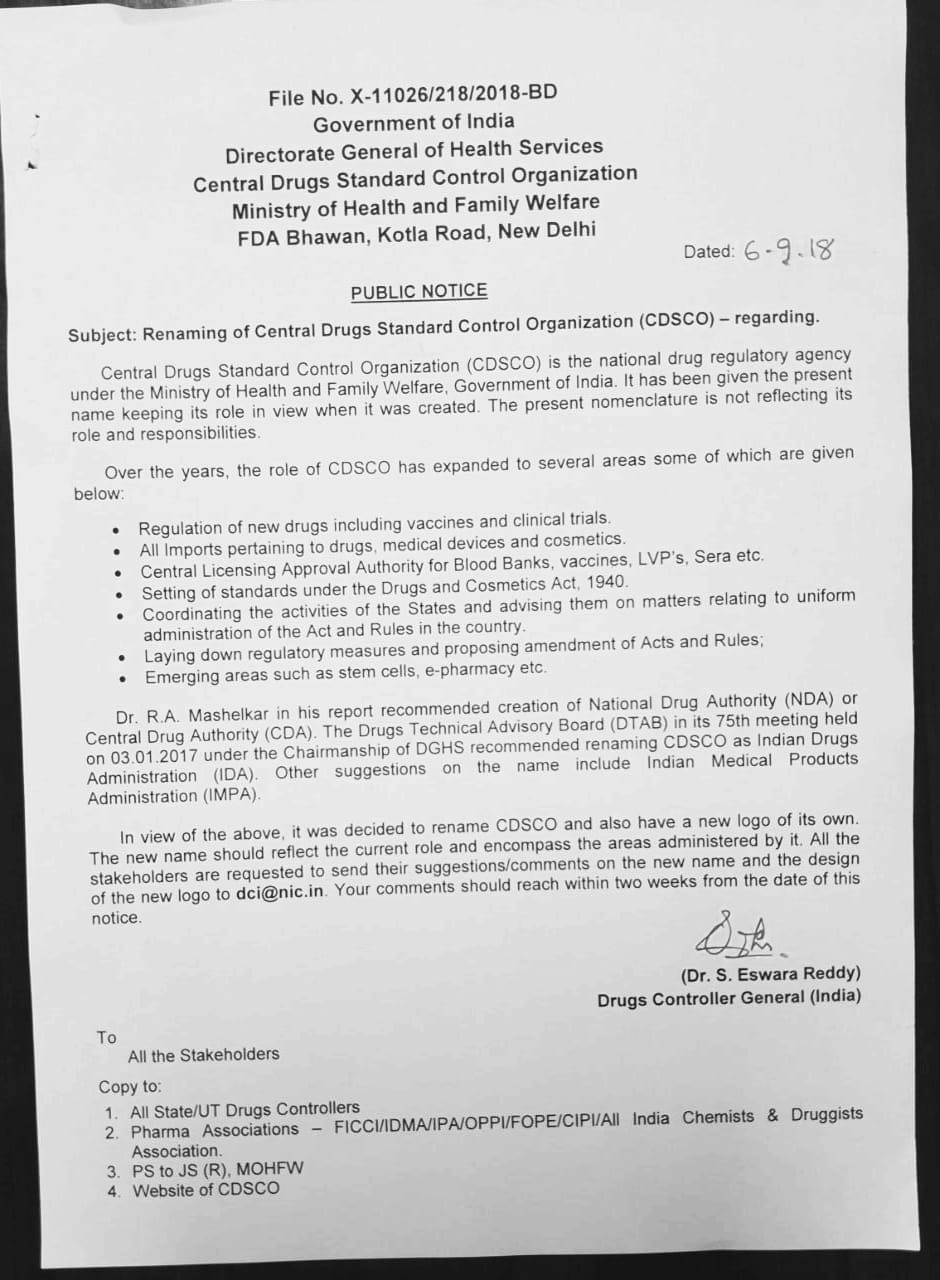
RE-NAMING OF INDIAN REGULATORY AGENCY (CDSCO)

Central Drugs Standard Control Organization (CDSCO) is the national drug regulatory agency under the Ministry of  Health and Family Welfare, Government of India.

Over the years, the role of CDSCO has expanded to several areas, for the same the Drugs Technical Advisory Board (DTAB) in its 75th meeting recommended renaming of CDSCO.

In view of this, CDSCO has asked for suggestion for re-naming and logo for CDSCO.

Notice

Experts highlight Ebola vaccine progress and suggest next steps

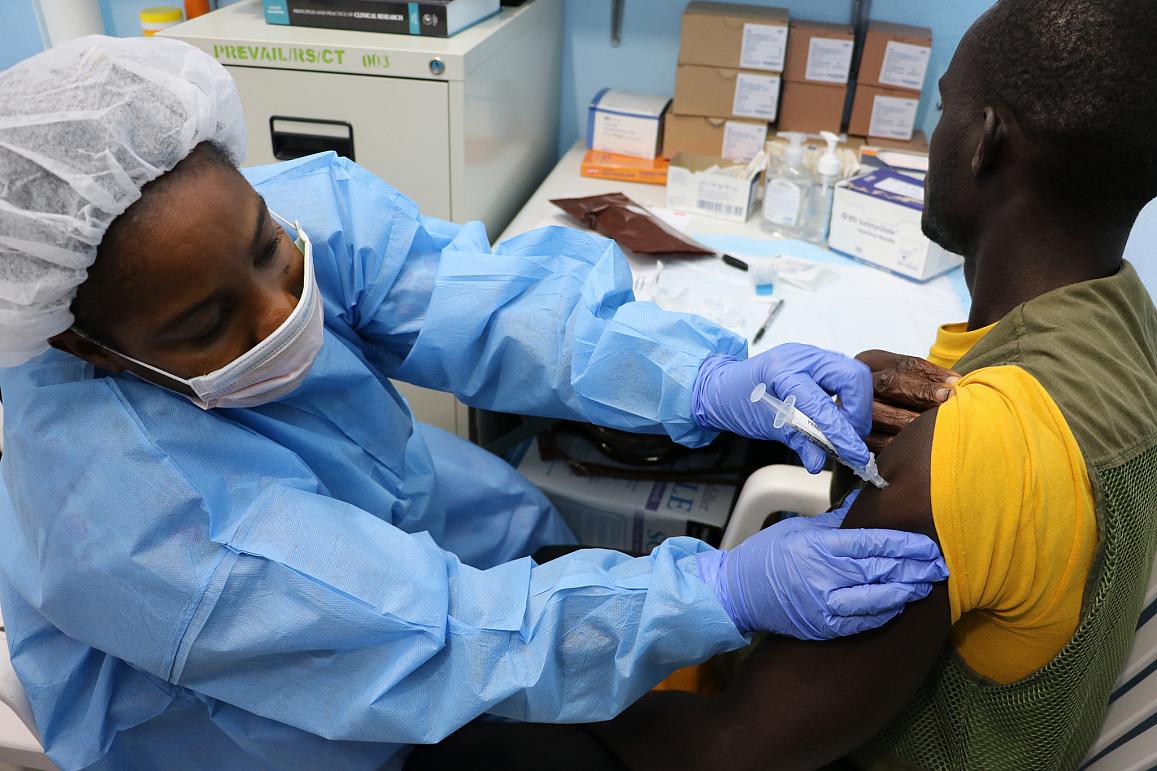
Despite promising advances, important scientific questions remain unanswered in the effort to develop a safe and effective Ebola vaccine, according to members of an international Ebola research consortium. In a Viewpoint published in The Lancet, the experts review the current field of Ebola vaccine candidates and clinical trials and highlight key gaps in knowledge that need to be addressed by future research.

Researchers at the National Institute of Allergy and Infectious Diseases (NIAID), part of the National Institutes of Health, are among the Viewpoint’s authors. All authors are with the Partnership for Research on Ebola VACcination (PREVAC). In addition to NIAID, the partnership, established in 2017, comprises experts from the French National Institute of Health and Medical Research (Inserm), the London School of Hygiene & Tropical Medicine (LSHTM), the West African Clinical Research Consortium and their collaborators. PREVAC is currently conducting a Phase 2 clinical trial in Guinea, Liberia, Sierra Leone and Mali to evaluate three Ebola vaccination strategies in people one year and older.

20180803-PREVAC-volunteer

Ebola virus disease remains a public health threat — the Democratic Republic of the Congo (DRC) already has experienced two Ebola outbreaks in 2018 —  underscoring the need for continued efforts to develop an effective vaccine. The authors note that 36 trials of Ebola vaccine candidates have been completed and another 14 are active, according to clinicaltrials.gov. The rVSV-ZEBOV experimental vaccine, which has been deployed in the DRC, is the only candidate with some clinical efficacy data, which were obtained in a clinical trial in Guinea conducted during the 2014-2016 Ebola outbreak in Guinea.

After reviewing the status of four additional vaccine candidates under study (Ad26.ZEBOV, MVA-BN-Filo, chAd3-EBO-Z, and the GamEvac-Combi vaccine), the authors highlight areas where more research is required. Specifically, they note the need for more data in pregnant women, children and immunocompromised populations, including people infected with HIV and the elderly. Additionally, they say more research is needed on the durability and rapidity of immune responses generated by various vaccine approaches. The experts also call for studies to identify reliable correlates of protection (the specific and measurable part of an immune response that would indicate a person is protected from Ebola) as well as large-scale trials to fully evaluate the safety and efficacy of experimental vaccines.

The authors conclude by underscoring the value of embedding social science research in clinical trial design to help build trust and engagement with the affected communities. They note that in addition to the need to investigate various vaccines and vaccination strategies to respond more effectively to future outbreaks, improving the global capacity to conduct clinical research and forming collaborative partnerships, such as PREVAC, are crucial for success.

Mid 2018 – Recap of Warning Letters, Import Alerts and Non-Compliances

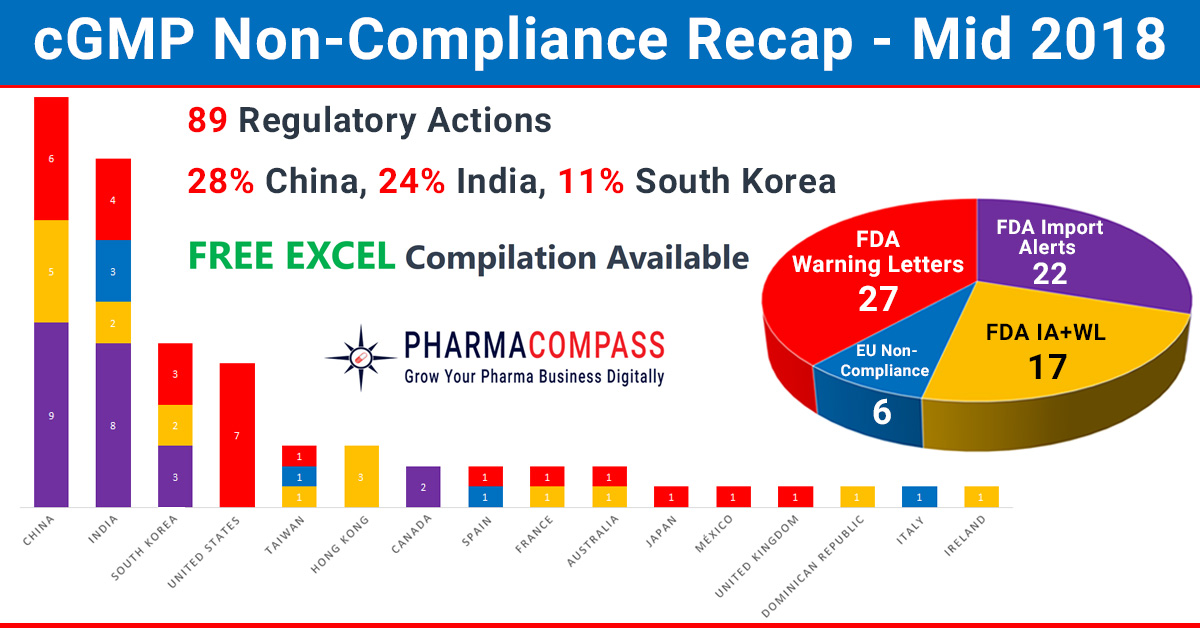
In our mid-2018 compliance review, we look at inspection challenges faced by companies across the world. In the first half of this year, manufacturing compliance challenges dominated headlines. But we also saw shortcomings at major pharmaceutical companies like Pfizer, Bayer and Akorngenerate news.

While China, India and the US continued to be the top three countries where regulators uncovered compliance issues, this year has also seen the FDA take action against many South Korean companies. The European authorities found concerns in India, Taiwan, Italy and Spain. However, there were no non-compliance reports issued to firms in China until the end of June 2018.

While data-integrity violations and a failure to thoroughly investigate deviations continued to remain a major concern for inspectors, this year the real concern emanated from the supply of product to market (which had the potential to impact product quality or patient safety).
 

Mid-2018-Recap-of-Warning-Letters-Import-Alerts-and-Non-Compliances-1532589468

China: API with a cancerous impurity, vaccine scandal and data-integrity woes

The most recent regulatory non-compliance issue pertains to the European Medicines Agency (EMA) raising concern over the active pharmaceutical ingredient (API) valsartan supplied by China’s Zhejiang Huahai Pharmaceuticals

The concern was the impurity — nitrosodimethylamine (or NDMA) — detected by the company in their valsartan API. NDMA is classified as a probable human carcinogen and its presence was unexpected as it was not detected by routine tests carried out by Zhejiang Huahai.

Zhejiang Huahai sold over US$ 50 million of the API in 2017 and supplies to most major manufacturers producing valsartan medicines available in the EU and United States.

While a review is underway, national authorities across the EU, US and Asia are recalling medicines containing valsartan supplied by Zhejiang Huahai.

Vaccine scandal: A major vaccination scandal has sparked off a huge outcry in China as vaccine maker Changsheng Biotechnology was found to have falsified production data for its rabies vaccine.

Changchun Changsheng Bio-tech Co, in Changchun, reported serious irregularities, including fabricating production records in the manufacture of rabies vaccines for human use, during an inspection by the State Drug Administration, China FDA said in a statement.

Although there has been no evidence of harm from the vaccine, the firm has been ordered to halt production and recall rabies vaccines. And Chinese Premier Li Keqiang has urged severe punishment for the people involved, saying the incident had “crossed a moral line”.

Data-integrity violations: This year, the FDA also posted the warning letter issued to Henan Lihua Pharmaceutical in China, a company that produces steroid APIs like hydrocortisone and prednisone.

The warning letter highlighted data integrity concerns that landed Henan on FDA’s import alert list in March 2018. 

During the inspection, the FDA investigator observed numerous blank batch manufacturing records in an open cabinet in the firm’s manufacturing workshop office.

Among these was multiple blank, product release forms marked with a red quality assurance release stamp stating ‘Permitted to Leave [the] Factory’.

The FDA also posted a warning letter issued to Jilin Shulan Synthetic Pharmaceutical, a manufacturer of caffeine API in China. The letter revealed flagrant data-integrity violations.

Another warning letter was issued by the FDA to API manufacturer Lijiang Yinghua Biochemical and Pharmaceutical, following an October 2017 inspection.

United States: Drug shortages due to Pfizer’s manufacturing problems 

Drug major Pfizer’s production problems continued to make headlines this year. An article in Fortune put the blame on Pfizer’s much-touted US$ 17 billion acquisition of Hospira in 2015 for turning the United States’ chronic drug shortage into a full-blown crisis. 

According to the article, as of May 11 this year, Pfizer — which is the world’s largest maker of sterile injectable drugs — had 370 products that are depleted or in limited supply, 102 of which the company has indicated will not be available until 2019.

“The simple answer to why America currently has so many shortages of generic sterile injectable drugs: America’s leading manufacturer of generic sterile injectable drugs hasn’t been making them,” the article said.

Mylan’s flagship product EpiPen is also likely to face shortages due to problems at Pfizer. Although Mylan owns the rights to the EpiPen, it subcontracts manufacturing of the auto-injector to Meridian Medical Technologies, a division of Pfizer.

While Mylan is putting pressure on Pfizer to do more to tackle shortages of this life-saving medicine, Pfizer has struggled to meet demand for the EpiPen and the FDA had put the medicine on its official shortages list.

In September last year, the FDA had issued a warning letter to Meridian Medical Technologies over serious component and product failures that had been associated with patient deaths. 

Pfizer’s troubles are far from over as an FDA inspection of an ex-Hospira sterile manufacturing facility in India resulted in the issuance of a 32 page Form 483.  The same facility was issued a warning letter  by the FDA in 2013.

Germany: FDA highlights contamination, data-integrity concerns at Bayer facility

In a shocking warning letter issued by the FDA to Bayer Pharma’s finished pharmaceuticals manufacturing facility located in Leverkusen, Germany, investigators found compliance shortcomings ranging from concerns over data-integrity to serious product contamination problems.  

While reviewing a drug product manufacturing operation, FDA investigators found residue on equipment which seemed most likely from a drug product that had been previously processed in the same room.

When Bayer tested the samples of the tablets being produced to “assess the potential of cross-contamination”, the testing confirmed contamination of the previously processed product inside the tablets which resulted in a recall of several lots of drug products.

India: Data-integrity violations, invalidation of OOS results continue

Alkem has ‘no quality control unit’: After eight days of inspecting Alkem Laboratories’ finished formulation facility in India in March 2018, the FDA investigators concluded — “there is no quality control unit”.

Alkem’s head of quality control (QC) and quality assurance (QA) confirmed out-of-specification (OOS) results for the assay for a batch of tablets. However, the company did not recall the product, which was distributed in the US market.

Less than three weeks before the inspection, the “firm’s QC department deleted two-thousand one hundred one (2,101) files” on its computer network. 

Alembic invalidated OOS results: In the seven days that the FDA investigator — Jessica L Pressley — spent at Alembic Pharmaceuticals’ oral solid dosage manufacturing facility in Tajpura, Gujarat, she uncovered that the firm invalidated 131 of the 140 OOS results (an invalidation rate of 94 percent) for products marketed in the US. 

The firm attributed the invalidation to analyst errors. In 2017, the invalidation rate was 91 percent.

The Form 483 shares a concern that the “OOS results that were invalidated by the firm’s QC unit were without rationale and supporting documentation.”

Alchymars falsified lab data: A September 2017 inspection by the USFDA at Alchymars ICM SM Private Limited in India uncovered that the firm “was falsifying laboratory data”. During the inspection, the FDA investigator found that an analyst reported far fewer colony-forming units (CFU) in a water sample than those observed on the plate by the investigator. 

The FDA raised serious concerns as Alchymars uses the water to manufacture APIs intended for use in sterile injectable dosage form drug products. 

Alchymars is part of a group of companies and the factory is controlled by Trifarma in Italy, a company which was cited by the FDA for data-integrity violations in 2014.

South Korea: Teva’s potential blockbuster gets delayed due to problems at Celltrion

As Korea emerges as a force to reckon with in the emerging world of biosimilars, the USFDA’s issuance of a warning letter to Celltrion (a major manufacturer of biosimilars that has also partnered with Pfizer for commercialization in the United States) came as a major setback.  

In an inspection conducted by the FDA from May 22 to June 2, 2017, the investigators raised concerns over multiple poor aseptic practices during the set-up and filling operations.

The warning letter highlights an example where during the aseptic filling of vials, an operator used restricted access barrier system (RABS) to remove a jammed stopper by reaching over exposed sterile stoppers in the stopper bowl. The RABS disrupted the unidirectional airflow over the stopper bowl, creating a risk for microbial contamination.

After the operator removed the jammed stopper, the filling line was restarted, but the affected stoppers were not cleared.

At Celltrion, the FDA raised concern over 140 complaints received between October 2015 to May 2017, which were identified to have occurred because of vial stoppers. 

The deficiencies at Celltrion impacted Teva as the Korean company is the main API supplier for Teva’s migraine drug fremanezumab.

Teva confirmed that the USFDA had extended the goal date of the Biologics License Application (BLA) for fremanezumab. The Prescription Drug User Fee Act (PDUFA) action date for fremanezumab is currently set for September 16, 2018.

The Celltrion warning letter was followed by an announcement by the US-based Evolusthat a USFDA pre-approval inspection of  Daewoong Pharmaceutical’s plant in South Korea, where a botox biosimilar is being produced, resulted in 10 observations.

Back in 2013, Daewoong had inked a contract with Evolus to export DWP-450 (a botulinum neurotoxin candidate), which was expected to be released in the US market around 2017-18.

While Daewoong said it expects “no significant further actions”, Evolus’ SEC filing highlights that “any failure to adequately resolve the FDA’s observations at the Daewoong facility would likely cause FDA approval of DWP-450 to be delayed or denied”. 

In May, the FDA declined to approve Evolus’ Botox rival citing deficiencies related to the chemistry and manufacturing of its potential treatment for frown lines.

New Report: Improving Clinical Site Payment Practices

Paying sites on time is critical to a trial’s success, sponsors agree, and most believe they’re making the grade. So why are sites so frustrated with how they’re paid? Are their expectations unreasonable or are sponsors operating in the dark?

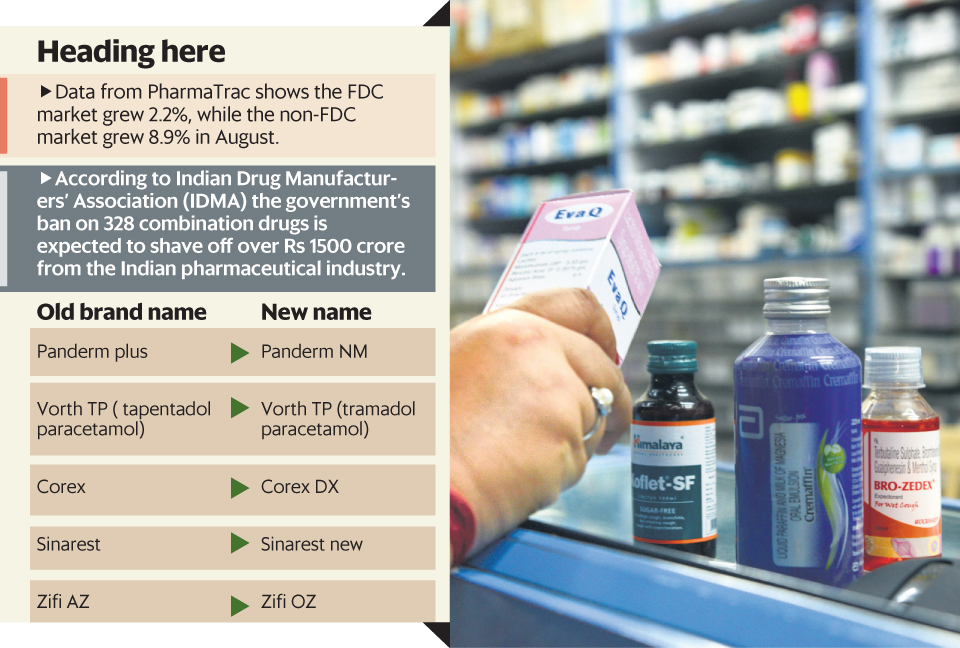
A recent survey by Metrics Champion Consortium (MCC) indicates the latter is true. More than 70 percent of trial sponsors who manage in-house payment procedures said they’re pleased with their processes; ditto 65 percent of CROs. But sites were overwhelmingly dissatisfied, with 70 percent expressing a negative view.

cww2229_20180723_UmCjpJ-5-1024x709

So what’s the deal?

The survey shows sponsors don’t pay attention to the kind of metrics that can help them solve payment woes. They may know they’re not ponying up promptly but they’re looking for answers in all the wrong places – if at all.

There are many details and data points that can help sponsors figure out how well their payment processes are (or aren’t) working, says Linda Sullivan, MCC’s executive director.

MCC discovered that sites aren’t the only ones unhappy. Sponsors that outsource payment to other entities (like CROs) have less control over the process and often have less insight into how it is working on the contractor’s end.

“Those who are running the process – a sponsor [managing payments] in house or a CRO – think the process is going a lot better than those who are outside of the process,” Sullivan says.

One reason CROs like the process may be the fact that they use more metrics – nearly twice as many as sponsors – to evaluate it.

Understanding how well a process is working requires knowing all aspects of its operations. Tracking a simple metric of how many payments were made “on time” provides no information on why the other payments were not.

Fewer than 50 percent of survey respondents said they use the kind of metrics that provide insight into the root cause(s) of payment problems, such as the number of:

  • Invoices submitted by sites with errors;
  • Payments that are correct the first time;
  • Outstanding invoices with queries;
  • Days it takes to reconcile invoice discrepancies; and
  • Site complaints about payment problems.

This kind of information allows payers to pinpoint areas that need improvement. Sponsors that manage their own payment processes should begin using such metrics; those that outsource payments should make sure their CROs do, too, and require them to share the information.

Sullivan says to truly grasp and fix payment problems, sponsors must shift their focus from overall performance to “quality metrics.” For example, a large number of invoices outstanding may signal glitches in the invoice reconciliation phase. Tracking the number and nature of payment complaints from sites paints a picture of the depth of the problem.

The survey recommends replacing outmodled clunky manual payment systems with speedy automated ones to eliminate time-consuming and error-prone procedures.

Another tip: Parties involved need to communicate more effectively to align expectations, improve transparency and develop solutions.

Visit Us On TwitterVisit Us On Google PlusVisit Us On LinkedinVisit Us On Facebook