2018 Pipeline Report

Amid the constant battle with biology and new complexities in fighting disease, persistence seems to be paying off for drug developers. Major driving forces include the rise of CAR -T and other gene therapy, newly discovered cancer targets, better patient identification methods—and the realization that failures have their place in shaping the pipeline of tomorrow.

Pharmaceutical and biotechnology companies face similar problems. The targets are so enticing, the results often wanting. Consider checkpoint inhibitors. They are quasi-miracle drugs: incredibly powerful for the lucky responders, ineffective for others.

There are many variations on this theme. Following the success of cancer drug Gleevec, targeted therapies seemed like a sure thing. They’ve helped, but not as much as many had hoped. Pivoting to the central nervous system, the quest for effective Alzheimer’s disease therapies has been fraught with failure. Ask Merck & Co., Lilly, Axovant, Accera, Lundbeck, etc.

Many articles, including this one—Pharm Exec’s 14th Annual Pipeline Report—offer competitive snapshots, which companies have the upper hand. But in the end, the competition is with biology, which seems to be saying: “Really, you thought it would be that easy?”
pipe-CNSBut adversity is good for people and companies. The race is on to match checkpoint inhibitors with other therapies to transform cold tumors into hot ones. Companies’ researchers are reexamining their Alzheimer’s strategies. New targets are being tested in multiple indications. It seems the best way to meet complexity is with more complexity

Skepticism with Alzheimer’s 

Bad news first. The Alzheimer’s Association projects there may be 16 million people with the disease by 2050, a crushing load for patients, caregivers, and governments. Statistics like this are generating a lot of urgency. Unfortunately, the pipeline keeps coming up short.

“There have been a lot of high-profile failures for amyloid plaque,” notes Joshua Pagliaro, partner in life science strategy at PwC. “I think a lot of people have had the question: Is this a sound scientific hypothesis?”

Pagliaro is not alone in his skepticism. “The amyloid theory may need some alterations,” says Les Funtleyder, portfolio manager at E Squared Asset Management and Pharm Exec Editorial Advisory Board member. “We may need to go back to the drawing board there.”

That’s not comforting for companies with amyloid therapies in the pipeline. They’ve gone this far, invested this much, they need to believe their science is better—their trial design superior.

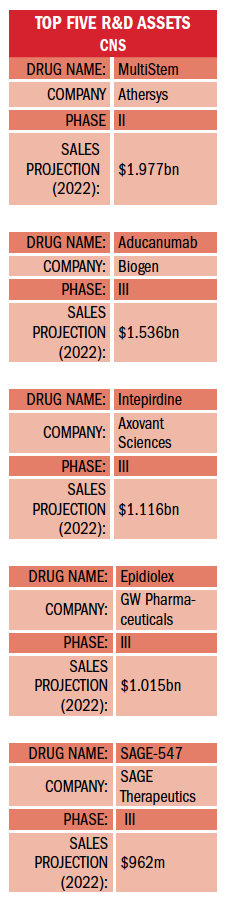
At present, Biogen’s aducanumab is being tested in two international Phase III trials (EMERGE and ENGAGE). The therapy, which targets beta amyloid, has been fast-tracked by the FDA. Recent findings in an extension of an early-phase study have been positive, showing the antibody therapy reduced amyloid plaque levels in patients treated up to 36 months. Given favorable results and ultimate approval, EvaluatePharma puts aducanumab sales at $1.5 billion by 2022.

Biogen has a particularly robust Alzheimer’s pipeline, including beta-secretase cleaving enzyme (BACE) inhibitor elenbecestat, which is being co-developed with Eisai. BACE inhibitors are designed to prevent amyloid plaques from accumulating. The drug has been granted fast-track designation in the US and is also in Phase III. Elenbecestat is projected to earn $296 million in 2022, mostly for Eisai.

In addition, Biogen is developing anti-amyloid antibody BAN2401, which is currently in Phase II trials. The company has a lot riding on the amyloid plaque hypothesis.

Amgen and Novartis have their own BACE inhibitor in the works, CNP520, a small molecule in Phase II, which has also been fast-tracked by the FDA.

AbbVie’s anti-tau antibody, ABBV-8E12, began Phase II studies early this year for Alzheimer’s and progressive supranuclear palsy. It has both fast-track and orphan-drug status in the latter indication.

Smaller vTv Therapeutics is in Phase III for its receptor for advanced glycation endproducts (RAGE) inhibitor, azeliragon. RAGE is upregulated in Alzheimer’s and is thought to play a role in inflammation, amyloid buildup, and tau phosphorylation. Azeliragon has a long checkered history, but is now moving forward.

Farther down the pipeline, companies like Cognition Therapeutics are trying different approaches. The company’s investigational drug CT1812, a small molecule that targets sigma-2 receptor complex on neuronal synapses to mitigate amyloid toxicity, was recently fast-tracked by the FDA.

These organizations may have better success with their Alzheimer’s therapies, or the industry may have to rethink its strategies.

“Some of the challenges have been around patient recruitment,” says Pagliaro. “We’re recruiting patients who have early signs and symptoms already. Is that really the right time to treat? Should we be treating Alzheimer’s prophylactically, like the way we treat cardiovascular disease?”

Given the development of accurate biomarkers, this could be a sound strategy. On the other hand, are private payers going to pay top dollar for prophylactic therapies when Medicare reaps the ultimate financial rewards?

For now, companies with Alzheimer’s therapeutics in late-stage trials are sweating it out. They’ve seen the carnage, are they next?

MS and epilepsy

Multiple sclerosis (MS) therapeutics offer a brighter picture. And, yes, this is cheating, since MS can be considered more autoimmune than CNS disorder.

Celgene’s ozanimod is one of the brighter spots in the pipeline. The oral, selective S1P 1 and 5 receptor modulator is in Phase III for relapsing MS, ulcerative colitis, and Crohn’s disease. In May, Celgene announced positive results for the RADIANCE trial. The drug’s safety profile may give it a leg up on Novartis’ fingolimod. EvaluatePharma predicts ozanimod could produce $1.4 billion in sales by 2022.

Novartis is not blind to fingolimod’s shortcomings and is working on its own next-generation S1P modulator, siponimod, which could generate fewer side effects. The drug is currently in a Phase III trial for patients with progressive MS. Evaluate estimates siponimod’s 2022 sales at $915.6 million.

Actelion, now part of Johnson & Johnson, is testing its S1P drug ponesimod with Tecfidera for patients with relapsing MS. Tecfidera is approved to treat psoriasis.

Epilepsy is one of the specialty markets that is getting much attention. GW Pharmaceuticals leads the way with its cannabinoid product Epidiolex, which treats Dravet syndrome, Lennox-Gastaut syndrome, and other severe forms of epilepsy. Epidiolex is in Phase III for both indications, as well as tuberous sclerosis, and has received orphan designation from the European Medicines Agency (EMA). Evaluate estimates Epidiolex’s 2022 sales at $1 billion. Despite delays, the drug seems poised for FDA approval.

GW’s picture brightened when Sage Therapeutics’ GABA modulator, SAGE-547, for super-refractory status epilepticus, failed recently in Phase III. The company continues to look for ways to move the drug forward, perhaps focusing on patient subgroups.

Zogenix recently announced positive Phase III results for its Dravet syndrome treatment, ZX008, which took some of the luster off GW. The drug is low-dose fenfluramine hydrochloride, a serotonin booster. It was both effective and well-tolerated. ZX008 has received orphan-drug designation from both the FDA and EMA. It has also been fast-tracked in the US for Dravet syndrome. Evaluate estimates sales of $219 million in 2022.

Another interesting specialty market is migraine. Novartis and Amgen are co-developing the monoclonal antibody erenumab (AMG 334 or Aimovig), which is in Phase III studies for episodic and chronic migraines. Erenumab targets the calcitonin gene-related peptide (CGRP) receptor to block pain. A recent analysis from Novartis showed the drug reduced the number of migraine days by as much as 50% for patients who failed previous preventive therapies. Amgen has exclusive commercialization rights in Japan; Novartis has exclusive rights everywhere else.

Cellectis gets FDA go-ahead to restart fatal CAR-T trial

The FDA has said Cellectis can restart trials of its ‘off-the-shelf’ CAR-T cancer immunotherapy, after revising protocols in a trial that killed one patient and left another with life-threatening complications.

CellectisBest

UCART123 is a CAR-T therapy produced independently of the patient, and doesn’t require autologous therapy, where cells are extracted, harvested and modified, as with Novartis’ Kymriah and Gilead/Kite’s Yescarta.

This could make Cellectis’ treatment a lot simpler and potentially cheaper than the two frontrunners, but the safety problems have set back the company’s hopes.

Another difference between Cellectis’ candidate and Kymriah and Yescarta is the cell surface antigen it targets – while the two approved drugs hit CD19,  Cellectis’ CAR-T targets CD123, an antigen expressed on the surface of leukemic cells in acute myeloid leukemia (AML).

In the phase 1 trial the US-French biotech was testing its UCART123 for acute myeloid leukaemia and blastic plasmacytoid dendritic cell neoplasm (BPDCN).

The FDA asked for a clinical hold in September after the first patient treated in a BPDCN arm developed cytokine release syndrome (CRS), a common issue with CAR-T treatments where the immune system becomes over-stimulated and attacks the patient’s own body.

Despite initially managing the CRS with drugs, the 78 year-old man’s condition worsened and he died on day nine of the trial after developing grade 4 capillary leak syndrome, where blood plasma leaks into body cavities and muscles.

The first patient in the AML arm, a 58 year-old woman, experienced moderate CRS and grade 4 capillary leak which was resolved on day 12.

In line with recommendations from an independent monitoring board, Cellectis has decreased the cohort dose, and the dose of cyclophosphamide chemotherapy used to deplete lymphocytes and prepare the body for treatment.

Cellectis will also screen out any patients with uncontrolled infection after the chemo dose, organ dysfunction since eligibility screening, and several other criteria considered risky.

The next three patients treated in each protocol will be aged under 65 and enrolment will be staggered so that 28 days elapses between each patient. This ensures that potential side effects can be detected before anyone else receives the drug.

Cellectis will now ask the trial’s independent ethics board for clearance before resuming treatments.

The problems facing Cellectis has some similarities to those faced by Juno Therapeutics last year – a total of five patients died from similar side effects in its CAR-T JCAR015, although this is another CD19-targetting autologous therapy.

After three deaths in patients treated with JCAR015 Juno, backed by Celgene in a decade-long billion-dollar partnership, put the trial on hold.

But despite modifying protocols to remove fludarabine chemo from the preconditioning regimen a further two patients then died, prompting Juno to axe development and switch to another therapy in its pipeline.

Cellectis will hope for a better outcome with UCART123, but the experience with Juno suggests that this could the candidate’s last chance.  Having said that, Juno recently demonstrated the possibility of a rapid reversal of fortune, with its follow-up CAR-T producing data which suggests it could be a best-in-class CAR-T.

Speedy review for Jazz’ high-risk AML chemo

Dublin, Ireland-based Jazz Pharmaceuticals’ Vyxeos is being given a speedy review in Europe as a treatment for certain types of high-risk acute myeloid leukemia (AML).

Nervous Game Show Players

The European Medicines Agency’s Committee for Medicinal Products for Human Use is considering the chemotherapy’s use treat adults with high-risk AML defined as therapy-related AML (t-AML) or AML with myelodysplasia-related changes (AML-MRC).

Vyxeos (daunorubicin and cytarabine) has also been awarded Promising Innovative Medicine (PIM) designation from the UK’s Medicines and Healthcare

Products Regulatory Agency, an early indication that it is a potential candidate for the Early Access to Medicines Scheme (EAMS), which is designed to accelerate access to novel therapies where there is unmet medical need.

“If approved, Vyxeos will become the first new chemotherapy treatment option specifically for European patients with therapy-related AML or AML with myelodysplasia-related changes,” said Karen Smith, executive vice president, research and development and chief medical officer at Jazz.

“We are passionate about bringing a new treatment option for high-risk AML to the appropriate patients in the EU as quickly as possible and look forward to working with the CHMP during this review process.”

Global Clinical Research NEWS From OCT-2017

October 31, 2017 | October was full of exciting news in the clinical trial and healthcare community, including partnerships, products, and promotions from Clinerion, Novaseek, goBalto, and more.

Clinerion expands the global coverage of its services in the Americas, adding 60 million patients in North America via partnership with Provisio. Clinerion now has a truly global footprint for its services for clinical trial patient search and identification, and data generation for real-world evidence and market access activities. Clinerion leverages the electronic health records of patients at its network of partner hospitals, hospital clusters, and hospital information system providers to provide patient data analytics services supporting clinical research, development, and marketing. In the past twelve months, Clinerion’s coverage has expanded across Europe, Asia, and South America. This partnership also brings Provisio’s Outreach Assistance service into Clinerion’s portfolio of patient recruitment capabilities for the USA. This service supports traditional outreach and enrollment efforts by providing data-driven intelligence on where pre-qualified patients are. Clients can optimize existing media and outreach programs by focusing on areas with high concentrations of pre-qualified patients and avoiding areas with few of them. With this partnership, hospitals, hospital clusters, and trials sites in the USA will gain exposure to the international clinical trials run by Clinerion’s clients. Trial managers for both academic and sponsored trials will benefit from a more efficient, single-point-of-access to patients on a global scale. Press release

Clinerion also announced that data integration to its Patient Recruitment System platform can now also process electronic medical records made available by hospitals using the Fast Healthcare Interoperability Resources (FHIR) standard. Hospitals using FHIR may now directly exchange data with Patient Recruitment System without the need for additional implementation effort. FHIR is a data exchange standard released by the Health Level Seven International (HL7) health-care standards organization for exchanging healthcare information electronically. FHIR is the latest connector technology which can be accommodated by Clinerion’s Patient Recruitment System. Clinerion’s highly flexible data integration system can handle different data models and standards. This covers i2b2 and more than ten other models used in different hospital information systems worldwide. In addition to FHIR, data exchange with Patient Recruitment System is also possible with the standards HL7, OMOP and RIM (the last two also released by HL7). Press release

goBalto announced its latest release of goBalto Activate. The third major release of 2017 offers new features that further accelerate clinical study startup. SSU is an array of activities performed at the outset of studies, including: investigative site selection and initiation, regulatory document submission, contract and budget negotiations, and enrolling the first subject. The process of initiating clinical trials remains unwieldy, challenging, and often behind schedule, making SSU one of the poorest performing aspects of clinical trials. At a time when SSU remains a perpetual bottleneck, leading companies are positioning themselves ahead of the curve by embracing solutions that confront these real challenges, thereby emphasizing differentiation and operational efficiencies. New APIs and functionality in the release allow for the exchange of alert or task information between Activate and the Shared Investigator Platform (SIP), and other industry site portals. Press release

Novaseek and hc1.com announced a partnership to help hospitals and clinical labs enhance their operations through improved performance and additional revenue streams. The collaboration enables hospitals and clinical labs to contribute to research by maximizing use of clinical information and lab specimens while reducing costs and growing lab revenue. Novaseek’s Clinical Data Network for Research (CDNR) platform is a cloud-based platform that transforms the way healthcare organizations and consented patients share biospecimens and clinical data with the research community.  The platform constantly scans for laboratory biospecimens that match researchers’ detailed clinical criteria, automating what was once a manual process of biospecimen selection and chart reviews. The CDNR makes it possible to fulfill complex requests, accelerating research and driving additional revenue for clinical labs as they assume a greater role supporting biomedical research. Press release

Almac Clinical Technologies has extended the functionality of its IXRS 3 IRT platform to include Accountability and Reconciliation Tracking (ART). ART captures all accountability data relating to the assignment, dispensation, and return of investigational medicinal products (IMP) throughout the course of a clinical trial. The toolkit provides total control over—and visibility into—the entire chain of custody down to the individual IMP unit level. This improves trial oversight, reduces dispensation errors, and strengthens patient safety. To conform to Good Clinical Practice (GCP) and Good Manufacturing Practice (GMP) sponsors must be able to prove that the IMP administered to patients was in a safe condition and that it was used only by subjects and according to the prescribed dose. All unused IMP must be accounted for at the end of the trial, and any discrepancies in records must be documented and explained. This process, when not supported by automation, is onerous and error-prone. ART is designed around a consistent and intuitive workflow across the full spectrum of the trial, providing insights on a single screen. Press release

Nanobiotix announced that it has completed patient inclusion for the Phase II/III trial of its lead product candidate, NBTXR3, in soft tissue sarcoma. The last patients are expected to start their treatment in two to three weeks. Elsa Borghi, Nanobiotix’s Chief Medical Officer commented: “We are pleased to have reached this important milestone in Nanobiotix’s soft tissue sarcoma study, and we look forward to reporting our first data next year.” The pivotal international Phase II/III study in soft tissue sarcoma was launched in Europe and Asia in October 2014 and aims to evaluate the safety and the efficacy of NBTXR3, a first-in-class radio-enhancer that could potentially target most solid tumors. The Phase II/III study is a prospective, randomized, multi-center, open label and active controlled two-arm study of 156 patients with locally advanced soft tissue sarcoma. The trial’s primary endpoint is the complete pathological response rate. The secondary endpoints are the objective response rate (ORR) by imaging (MRI); the evaluation of the safety profile in terms of clinical and laboratory adverse events; the tumor volume changes; the resection margins and the limb amputation rate. Furthermore, an exploratory analysis of the progression free survival is planned once the follow-up period has been completed for all treated patients. Press release

Cytel announced further expansion in Europe with the addition of an office in Basel, Switzerland. The new premises are scheduled to open by the end of 2017 and will join the company’s existing Geneva, Paris, Barcelona, and UK locations in Europe as part of a portfolio of 15 offices worldwide. During 2017, Cytel has added more than 150 biostatisticians, statistical programmers, and data managers in Europe and North America alone, and established new sites in King of Prussia, USA; Paris, France; and Ahmedabad, India. The company plans to hire up to 15 office-based members of staff in Basel by the end of 2018 as part of a wider global business growth strategy. Sébastien Gerin, Senior VP of Strategy and Performance at Cytel commented in a press release, “Switzerland is one of the leading centers for clinical development in the world. By establishing a new office in Basel, we will be able to cement our close collaborations with customers in the region and continue to build our team of statistical programmers, biostatisticians, and data managers.” Cytel’s Chief Human Resources Officer, Cary Morrill, commented, “At Cytel we are extremely proud of our excellent reputation as an employer. Therefore, we are confident that candidates will be as excited as we are about the opportunities at the new Basel site. We look forward to welcoming new team members on board over the next few months.” Press release

DCPrime and apceth report that they have entered into a strategic manufacturing agreement. The collaboration involves clinical batch production and the development of a commercial scale manufacturing process of cancer vaccines based on DCPrime’s technology platform DCOne. The companies also announce that apceth has recently successfully passed an inspection by the District Government of Upper Bavaria and the Paul-Ehrlich-Institute for the manufacturing license for production of DCP-001, DCPrime’s lead program. This will enable DCPrime to enter into a Phase II Proof of Concept study in Acute Myeloid Leukemia.

Factory CRO acquires MileStone Research Organization

Unknown

Factory CRO, a leading global CRO focused on medical devices and IVDs, has announced the acquisition of MileStone Research Organization. MileStone, located in San Diego, specializes in clinical research and reimbursement solutions for the medical device and biologics industries.

“The merger with MileStone is an important step in building Factory’s operational strength and service range in North America,” said Dirk Meijer, M.D., Ph.D., Factory CEO. “MileStone is an excellent fit therapeutically, as well as culturally, and complements our existing U.S. operations in Austin, Texas, and Princeton, N.J. Milestone’s extensive expertise in orthopedics, neurological and IVD clinical trials, as well as their reimbursement and site management service offerings, is a fantastic value-add for all our clients.”

“The combination of Factory and MileStone is good for everyone,” said Kevin Liang, Ph.D., founder of MileStone Research Organization. “Our specialization in clinical and regulatory affairs, as well as reimbursement for innovative technologies, aligns us perfectly with Factory. Factory’s full-service clinical offerings and extensive knowledge of the European regulatory environment will greatly expand our reach. The mutual commitment of both organizations to provide world-class solutions and superior client support will continue to motivate the company’s growth moving forward.”

Factory performs safety, efficacy and clinical economics studies as well as quality-of-life and post-marketing studies globally for medical device, IVD and drug-device combination products. Since 1992, the company has completed more than 450 projects in Class II and III medical devices in a wide range of therapeutic areas for some of the top global medical device manufacturers.

OCT expands presence in U.S.

images

OCT, an Eastern European CRO, expands its presence in North America. In October 2017, OCT’s representative office in the U.S. has been strengthened by additional employees. In particular, the U.S. team was complemented by Anna Yanaeva, Business Development Director.

“We believe that intensification of dialogue with our U.S.-based sponsors is a logical continuation of our business development in the region. We are convinced that the quality of our services meets the highest international standards of modern clinical trials. It is well known that high levels of service within the industry are determined by experience, knowledge and commitment to hard work. All these factors made us the biggest and the most professional CRO team in our native market,” said OCT President Dmitry Sharov.

Dirty Rooms, Equipment Found At Dr Reddy’s Plant, Banned From Europe Exports

medical_productinnner


Hyderabad, Oct 29 (PTI) A German government’s drug regulating agency, which audited one of Dr Reddy’s Laboratories manufacturing facilities here, found “dirty rooms and equipment”, among other violations, during an inspection.

According to the inspection report by Central Authority for Supervision of Medicinal Products in Bavaria (GMP/GCP) of the Upper Bavarian government, the inspection was conducted on August 1 at the drug maker’s formulation manufacturing unit-2 at Bachupally.

“Major deficiencies: (only examples are given for sub-items related to 5 major deficiencies)…3. cleaning of rooms and equipment. (9 sub-items) 3.1 dirty rooms and equipment 3.2 integrity of cleaning-documentation 3.3 cleaning-status labeling 3.4 status-label ‘clean’ of uncleaned equipment 3.5 dedicated-equipment labeling 4. validation of manufacturing process. (4 sub-items)…,” the regulator said as nature of non-compliance in its report.

The drug-maker’s German subsidiary betapharm Arzneimittel GmbH had received a communication from the Regulatory Authority of Germany (Regierung von Oberbayern) in August that the regulator had not renewed GMP (good manufacturing practice) compliance certificate of its formulations manufacturing following an inspection.

“Pending revocation of the non-compliance certification, the plant will not be able to make any further dispatches to European Union until the next inspection, to be initiated by an invitation from Betapharm,” Dr Reddy’s had earlier informed.

Dr Reddy’s Global Generics segment’s revenues from Europe are primarily derived from Germany, the United Kingdom and out-licensing business across Europe. It clocked Rs.  207.5 crore revenues from the region for the three months ended June 30, 2017, an increase of 28 per cent as compared to the three months ended June 30, 2016.

The increase was primarily on account of the increase in sales volume of existing products along with new products launched between July 1, 2016 and June 30, 2017, the company had said in filing with US Securities and Exchange Commission. When contacted, a company spokesperson refused to comment on the impact of the revenues from Europe following the German regulator’s comments.

The official said they are in “silent period” pending results announcement and hence cannot comment. DRL is slated to announce its July-September quarter results on October 31.

Regierung von Oberbayern also concluded an audit of the company’s formulations manufacturing facility in Duvvada, Vishakapatnam, with zero critical and six major observations recently. The products manufactured at the facility are not currently exported to the EU.

The Duvvada-facility’s compliance with the corrective and preventive action plan and other applicable regulations will be reviewed again by the regulator by November 2018 for continuation of the facility’s EU-GMP certification, Dr Reddy’s had said.

What Europe’s New Privacy Regulations Means For US Trials

In less than eight months, The European Union’s General Data Protection Regulation goes into effect. The GDPR applies to all types of data, but it will have a special impact on clinical trials, even ones run by US companies.

The GDPR was adopted in April 2016 by the European Parliament. The regulation replaces an earlier directive and includes provisions on a right to be forgotten; “clear and affirmative consent” to the processing of private data by the person concerned; a right to transfer your data to another service provider; the right to know when your data has been hacked; ensuring that privacy policies are explained in clear and understandable language; and stronger enforcement as a deterrent to breaking the rules.

But importantly, the GDPR doesn’t apply just to those in the European Union. “The key is, it is not geographical,” Peter Alterman, COO at SAFE-BioPharma Association, told Clinical Informatics News. The GDPR applies to any group or company with goods or services for whom EU data subjects are the envisaged audience. And the definition of sensitive data now includes genetic and biometric data. “Let me just give you a quick comparison, that is a broader set of data than is covered by HIPAA,” said Debra Diener, an attorney and Certified Information Privacy Professional.

“This regulation applies to a paper documentations and paper processing. Although the new emerging technology is what was the really motivating consideration…

a lot of clinical trial data is still paper based , a substantial portion of it”

Diener and Alterman believe the regulation will have a special impact on clinical trials, and groups conducting trials within the EU both now and years into the future.

images

Consent & Sensitive Data

Clinical trials are only mentioned specifically in GDPR twice, and the Regulation refers readers to another, older, EU regulation: “For the purpose of consenting to the participation in scientific research activities in clinical trials, the relevant provisions of Regulation (EU) No 536/2014 of the European Parliament and of the Council should apply.”

Consent, itself, has a section in GDPR and Diener says the consent terminology is an important departure from how some other countries, including the United States, may handle consent. Consent “has got to be unambiguous” and given in writing, Diener says. “That’s a very high standard: unambiguous, affirmative action by the individual.”

The regulation is broad, she adds. “This regulation applies to paper documents and paper processing. Although the new emerging technology is what was the really motivating consideration… a lot of clinical trial data is still paper based, a substantial portion of it,” Diener notes.

The regulation also forbids pre-checked boxes. Forms must allow individuals to actively opt into something, instead of only giving the option to opt out, or uncheck a box. “Those cannot be used by companies that fall within this regulation, that are governed by this regulation,” Diener emphasizes.

The GDPR doesn’t only raise the bar for consent, the regulation also paints a broader definition of sensitive health data. “Sensitive data now includes, under this regulation, genetic data, biometric data,” Diener says. “That is a broader set of data than is covered by HIPAA.”

A clinical trial group in the United States seeks to be compliant with HIPAA privacy rules, or the expanded HITECH Act. But if the group is conducting trials in within the European Union, that’s just not enough, Diener warns.

Implications for Clinical Applications

While meeting the requirements for consent going forward should be fairly straightforward, studies or trials consented in the past could bring challenges. The GDPR requires data protection impact assessments for big projects and clinical trials, assessments meant to evaluate the origin, nature, particularity, and severity of risk to the rights and freedoms of natural persons.

Regulation 536/2014 says that clinical trials conducted outside of the EU, but that are referred to in a clinical trial’s application within the EU, must comply with regulatory requirements that are at least equivalent with those applicable in the EU, which now includes the GDPR. In short, any clinical trials mentioned in trial applications within the EU must comply with the GDPR.

“So you’re sitting at university or a hospital. You’ve done a clinical trial, you’re partnering with a company or a hospital or a university in one of the EU countries,” posits Diener. “In your application to the relevant authority within that EU country, everyone wants to make reference to this prior clinical trial done outside of the EU. If that clinical trial has not been done at least in compliance with the GDPR and perhaps other regulatory requirements, that application will not be deemed acceptable.”

How far back does this apply? “Let’s just say the regulation does not specify a time limit,” Diener says, though individual countries may clarify this.

This point will have significant ramifications for trial sponsors and CROs worldwide, Alterman and Diener believe. It’s not enough to say, “We didn’t do this trial in the EU, but we’re just including it as background or as justification in this application to the EU,” Diener said.

And conversely, sponsors will need to consider trials today that are not taking place in the EU, and think about how they may be used years into the future.

CLN_GDPR2

“Even if you look at the GDPR, you can’t look at it in isolation without thinking: What is our group doing? What is our company doing? What is our hospital doing? What is our university research doing? Are we trying to do clinical trials that have extraterritorial application? Or do we want to use it to apply to a clinical trial elsewhere?”

Game Plan

It’s complicated for sure; Diener and Alterman didn’t deny that. But the repercussions for ignoring the GDPR could be staggering. The fines that can be imposed for noncompliance are up to 4% of a company’s total worldwide annual profits for the preceding year or up to 10 million Euros, whichever amount is higher, Diener says.

She and Alterman suggested that trial sponsors, CROs, and other groups do at least an internal mapping. “They have to be aware of what the GDPR does at a high level, and the way their business model could map to it, the way their data flows could map to it,” Diener said.

The implications for clinical trials are broad—reaching back to old trials and to ones not yet conceived. But the work of preparation is far less painful than having to defend against an international investigation or inquiry in an EU country, Diener pointed out. “The head in the sand approach is going to be the most disastrous.”

FDA approves first smartphone compatible heart monitor

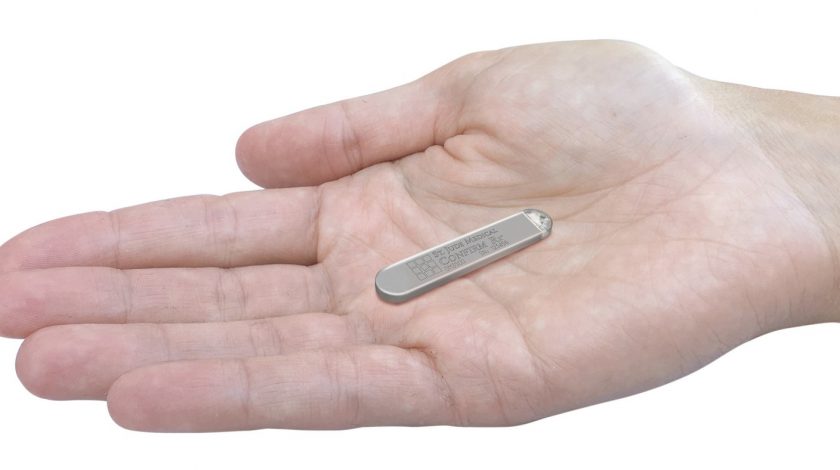
Abbott’s first-of-a-kind smartphone compatible heart monitor has been approved by for use in the US.Confirm-Rx-840x470

Now with the FDA’s blessing, the Confirm Rx Insertable Cardiac Monitor (ICM) can be used by US doctors to remotely monitor for abnormal heart rhythms. The device earned a CE mark in Eurpe in May this year.

The device, which is the slimmest of its kind available and is implanted just under the skin on the chest, transmits heart rhythm data to a smartphone app called myMerlin via Bluetooth. This data is then shared with a physician alongside symptomatic events recorded by the patients.

Doctors can then analyse this data for arrhythmias including atrial fibrillation (AF) – a condition caused by irregular electrical signals causing the heart to beat in an abnormal fashion. This leads to symptoms such as palpitations, dizziness, shortness of breath and fainting. Left untreated, AF can lead to stroke or heart disease.

According to the Centers for Disease Control and Prevention, an estimated 2.7-6.1 million adults in the US have AF alone. Approximately 9% of US citizens aged 65 or over have AF.

“Confirm Rx shows what we can do with cutting edge communication technology and the most advanced medical devices that provide new opportunities to improve patient care,” said Avi Fischer, divisional vice president and medical director of Abbott’s Cardiac Rhythm Management business.

“By offering a device that uses Bluetooth wireless technology from the patient’s smartphone, we can help physicians easily and remotely diagnose potentially dangerous abnormal heartbeats without requiring the patient to use a separate or cumbersome recording device.”

Combining smartphones with heart monitoring technology is a growing market, as companies attempt to create a far less cumbersome, yet just as accurate method of screening for heart conditions.

One competitor is AliveCor. The firm is racking up collaborative projects for its Kardia Mobile device which attaches to the back of a smartphone and allows for real-time heart monitoring at any time.

In July, it unveiled a new partnership with Mayo Clinic to screen for Long QT Syndrome – a condition caused by the heart’s ventricles taking longer than usual to return to normal after contracting, increasing the risk of fainting or sudden death.

Another company is Apple which is currently testing its Watch wearable to scan for heart rate abnormalities as part of the Apple Heart Study. If the trial proves successful, the Watch could become an attractive means of remotely monitoring patient heart health.

Microsoft, Parexel team to accelerate drug development

Microsoft is partnering with life sciences consulting firm Parexel to develop software capable of accelerating drug development.

Unknown

The collaboration will use Microsoft’s Azure cloud computing platform, onto which Parexel will move its Informatics software.

Informatics’ core technology is Perceptive MyTrials which gives researchers single point access to clinical trial management, regulatory information, medical imaging, and electronic patient-reported outcomes.

Using both sets of technologies, the partnership aims to create cloud-based solutions for improving patient engagement and clinical trial accessibility.

“Technology is disrupting the established model of research and development in health care,” said Xavier Flinois, president of Parexel Informatics. “Drug development is becoming more complex, while innovations including social media, analytics, mobile technology and the Internet of Things are enabling a more patient-centric approach.

“In combination, Microsoft’s leading innovations and commitment to security and regulatory compliance, along with Parexel’s industry expertise, will allow us to bring accelerated drug delivery timelines and improved patient engagement to the industry.”

For Parexel, the collaboration with Microsoft adds to its list of major partnerships in healthcare. Earlier this year, the firm struck a deal with Sanofi to test the effectiveness of wearables in clinical trials. Perceptive MyTrials is the key focus of the trial, as the study’s central data management platform.

For Microsoft, the deal expands its areas of research in the healthcare market. The company launched its own cloud-based initiative in February, called Healthcare NeXT, to develop digital tools to help healthcare providers deliver a better service to patients.

Around the same time, Microsoft announced a series of other tools, InnerEye – an AI-powered tool capable of creating 3D versions of patient scans in minutes to help in radiotherapy planning.

Toward the end of last year, the firm also announced its intent to ‘solve the problem of cancer’ by treating the disease like a glitch in the biology of human cells.

Visit Us On TwitterVisit Us On Google PlusVisit Us On LinkedinVisit Us On Facebook